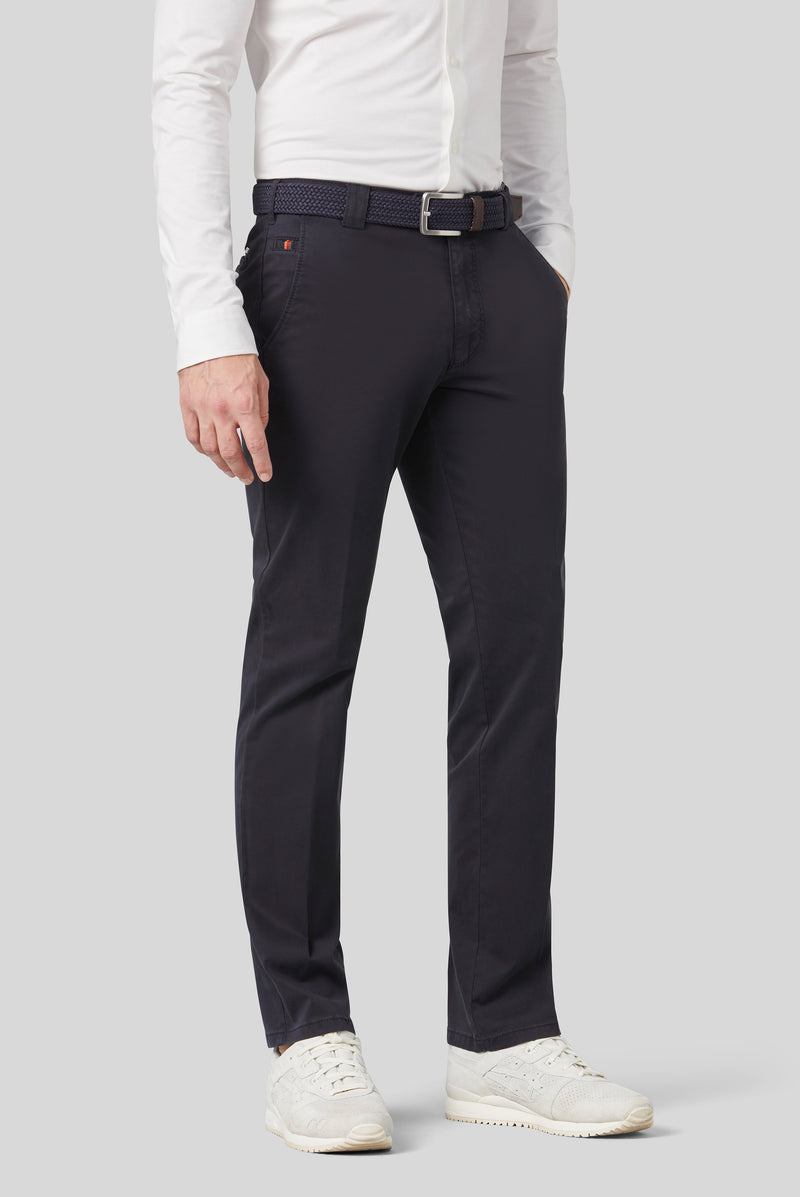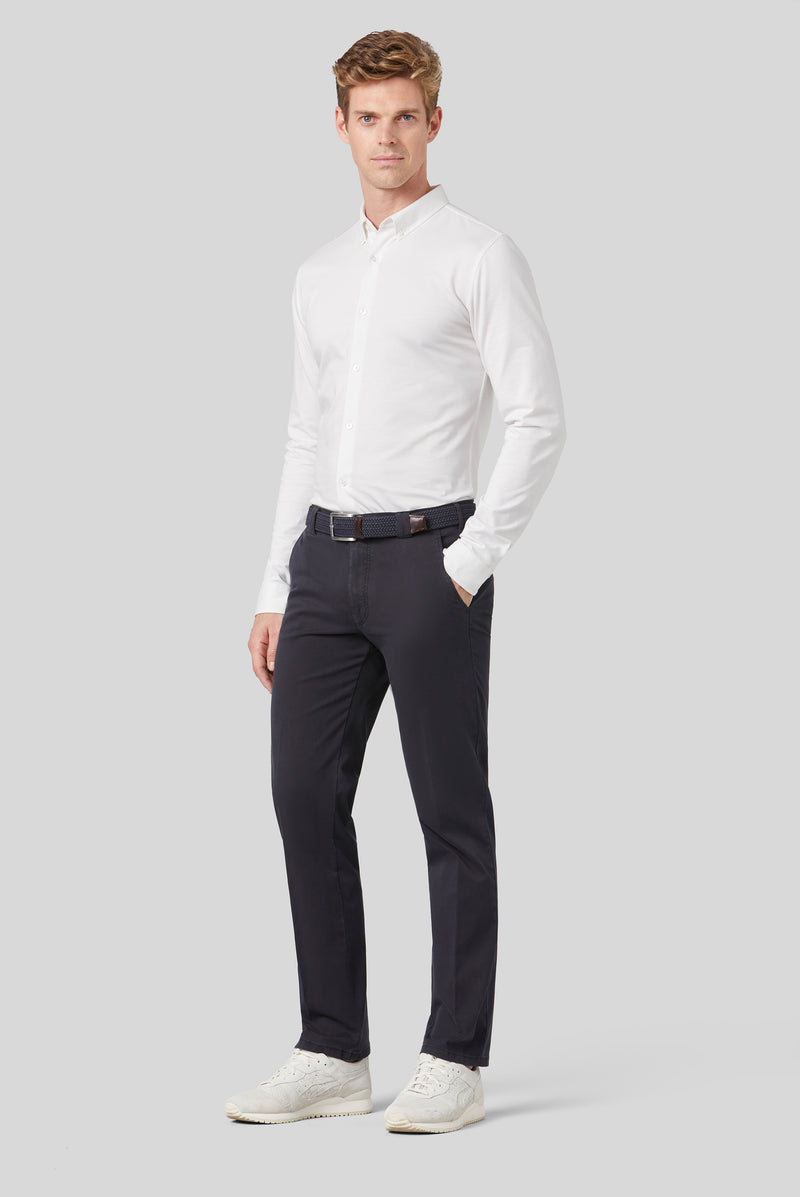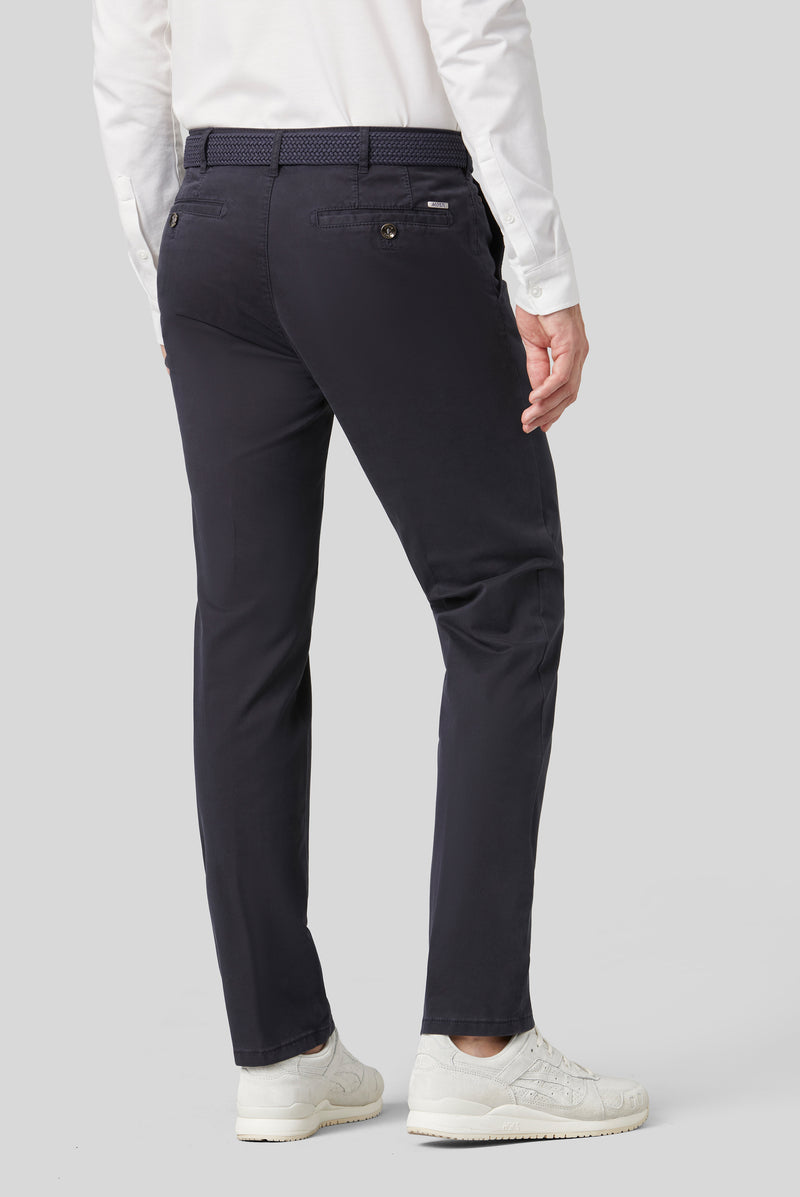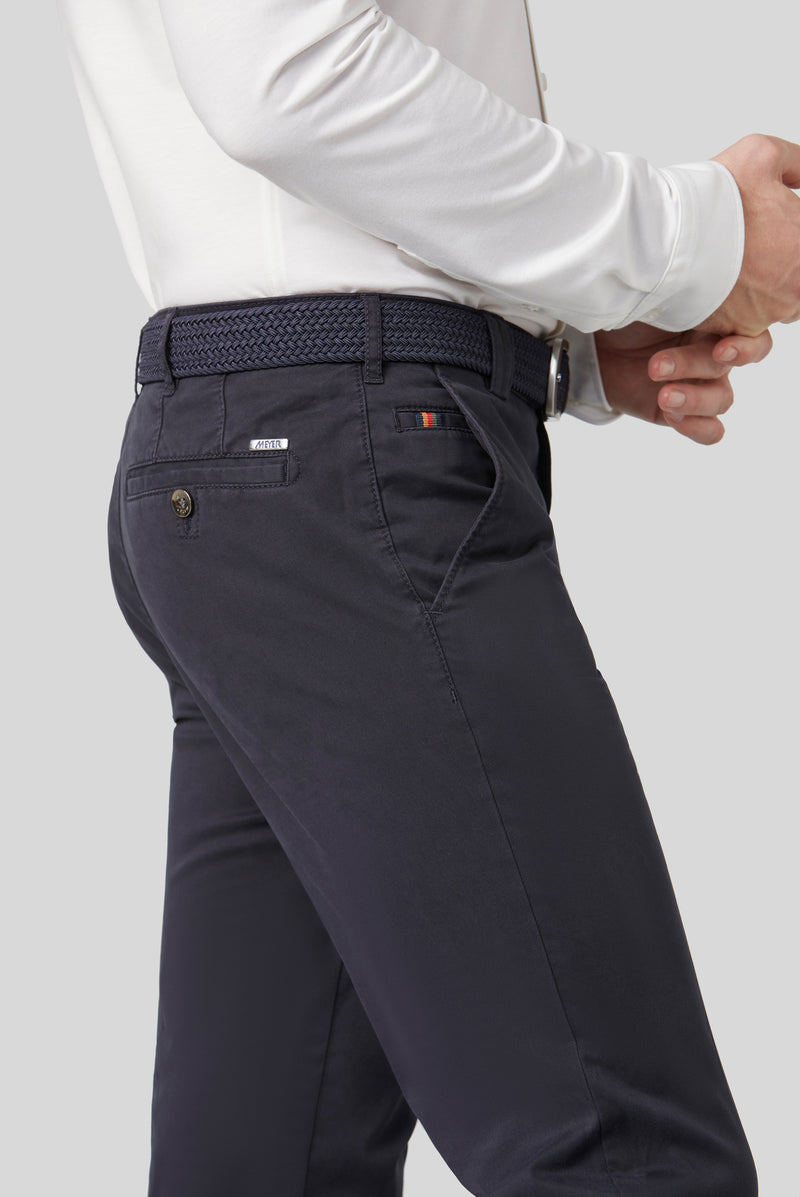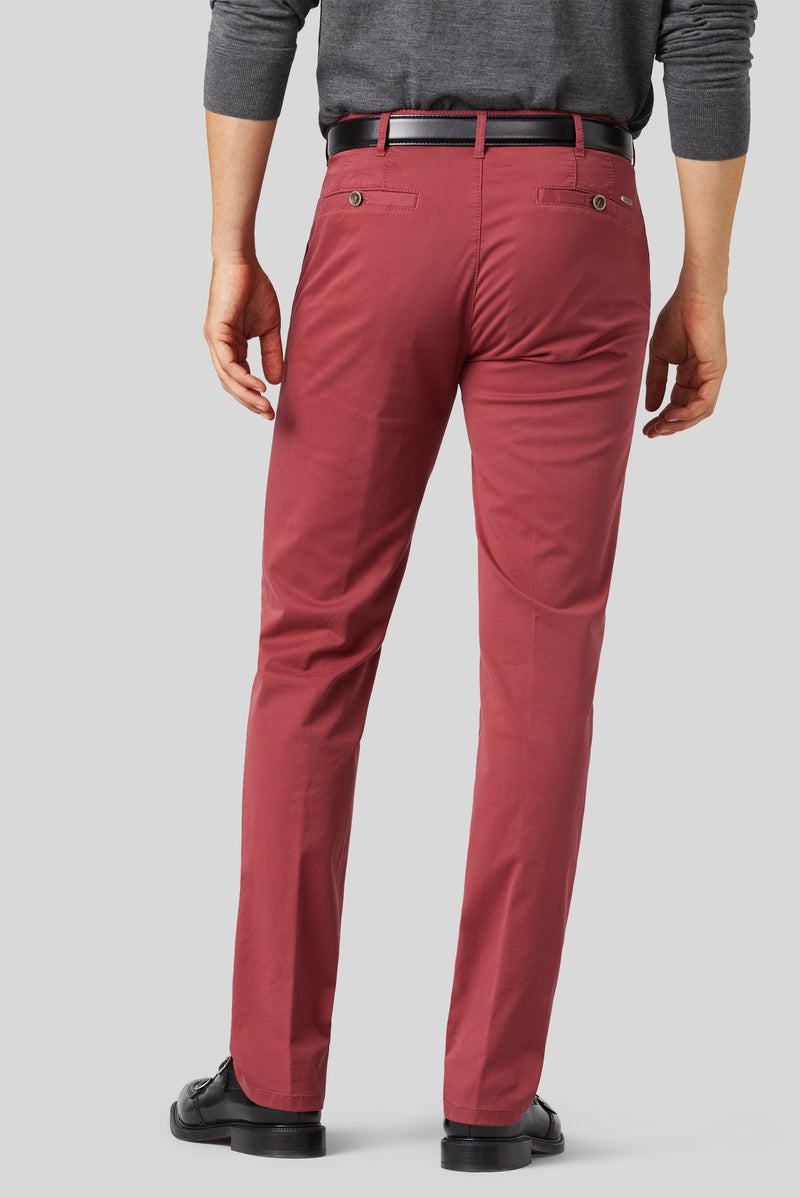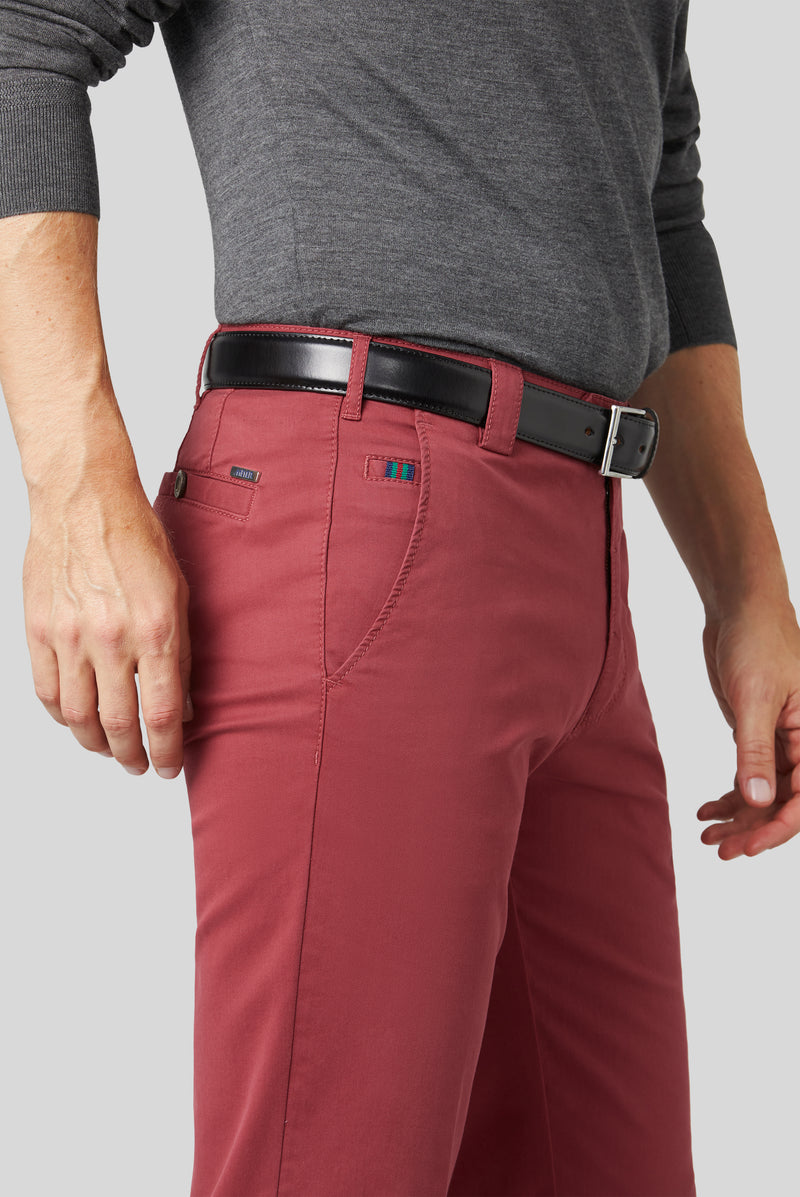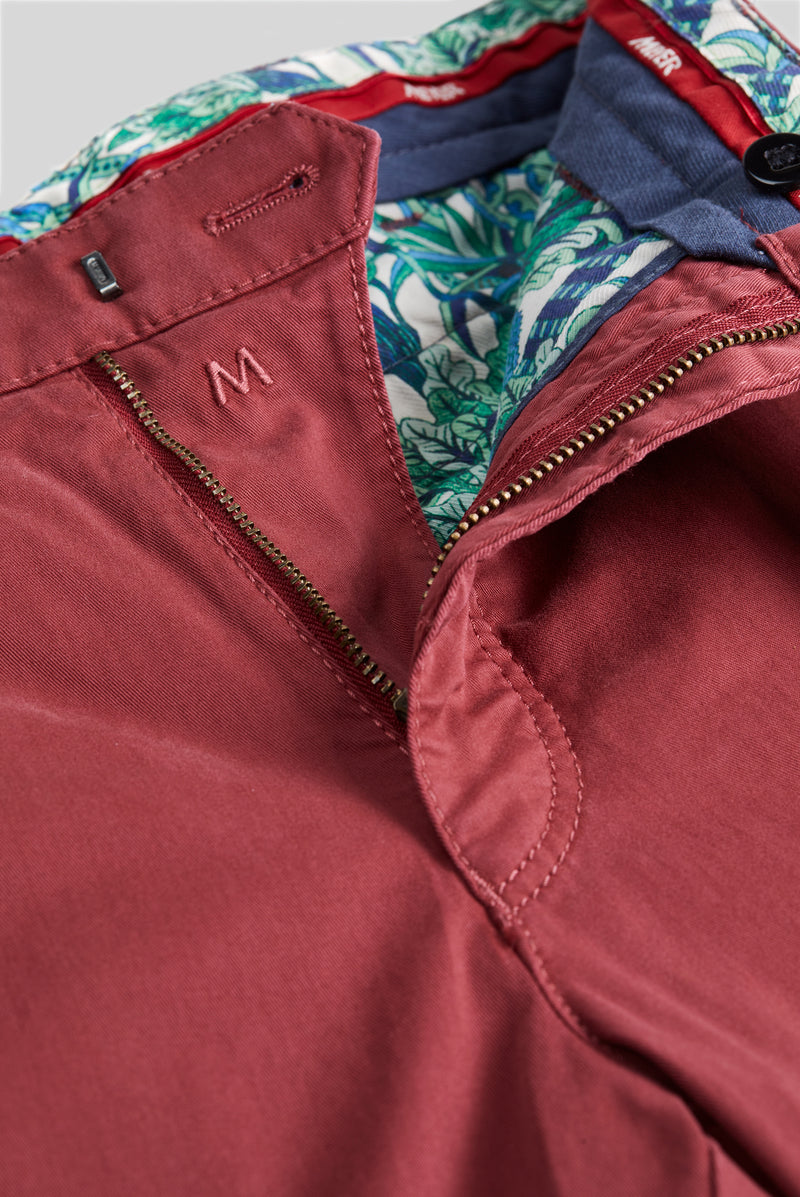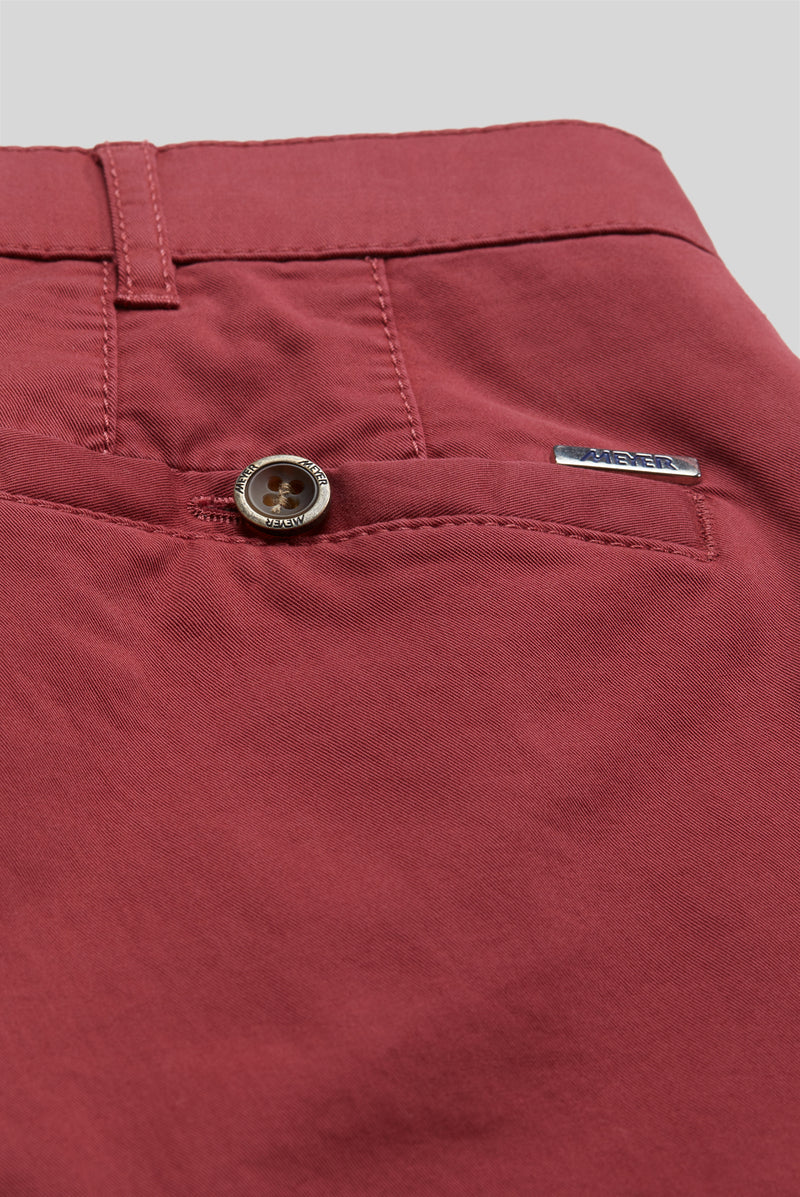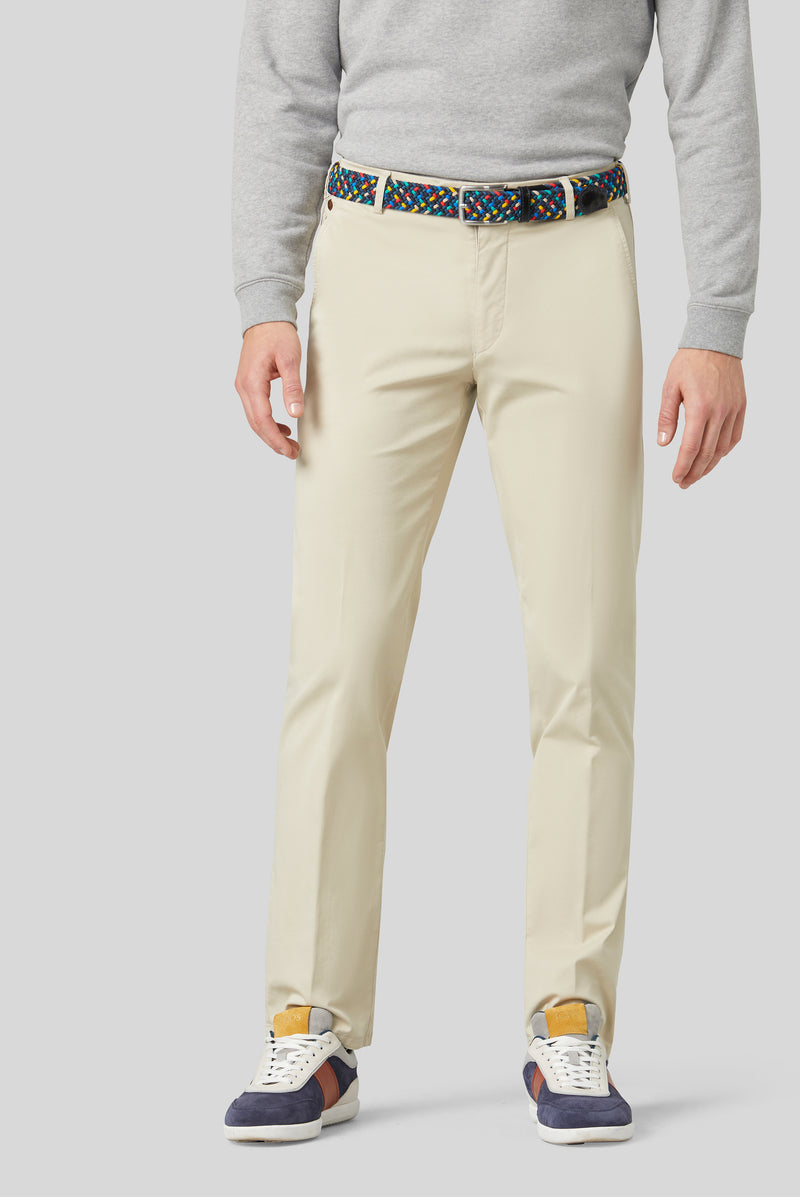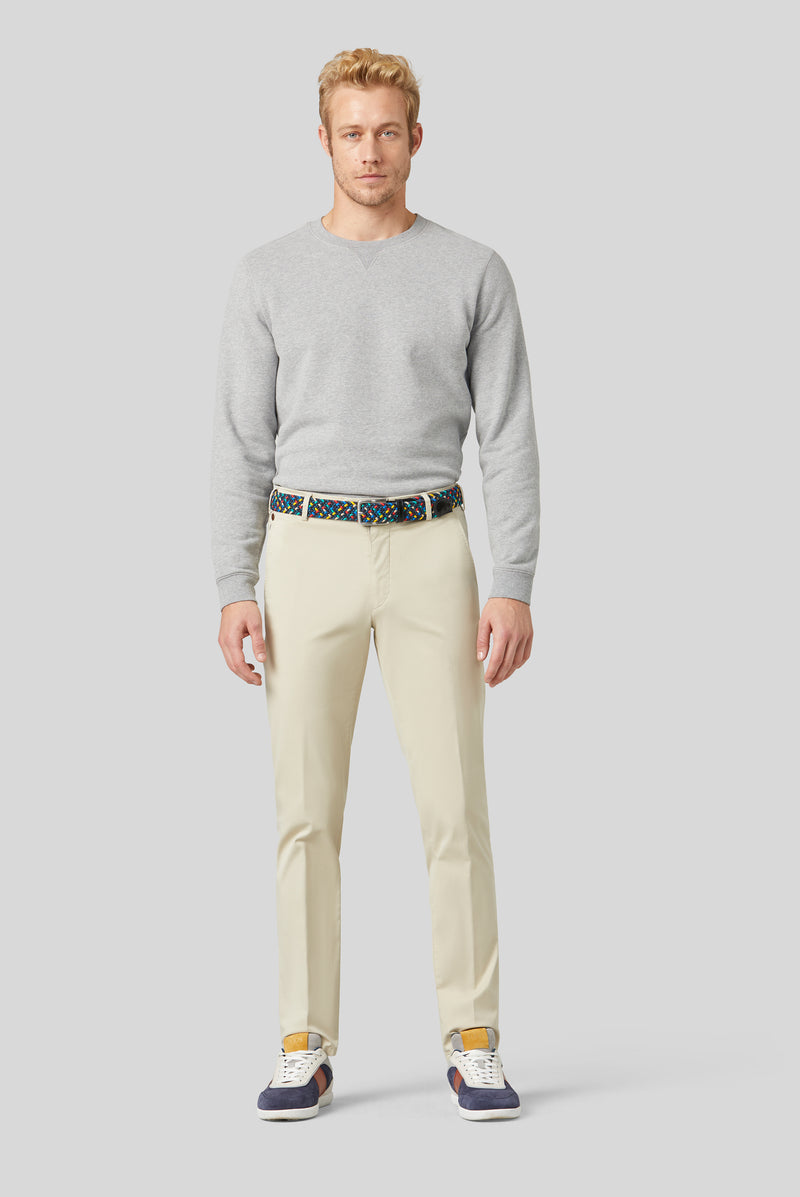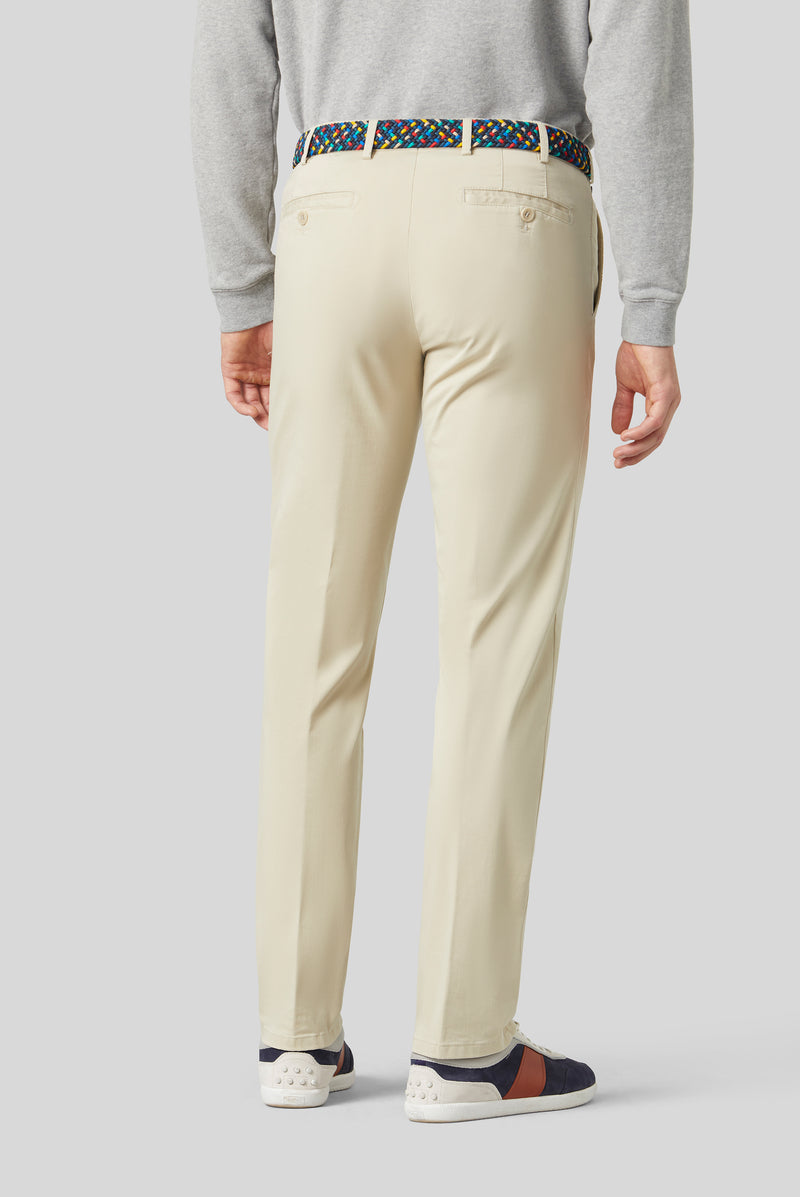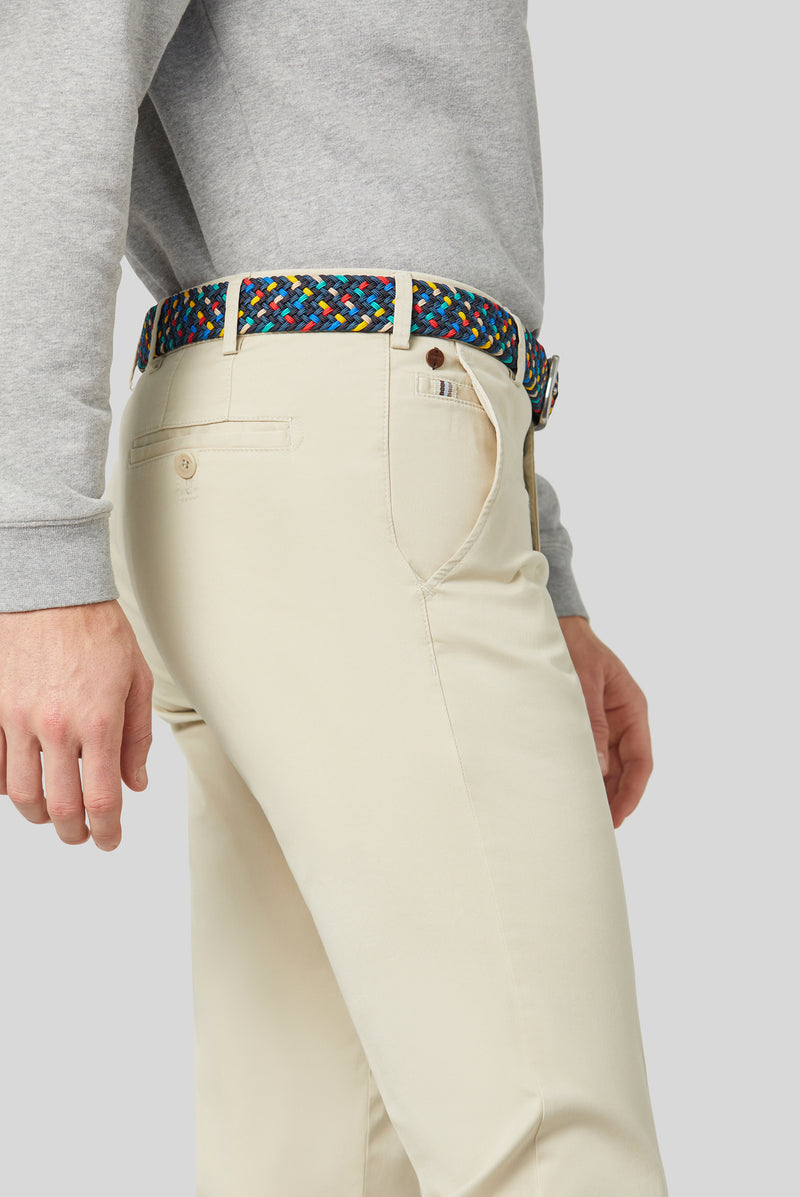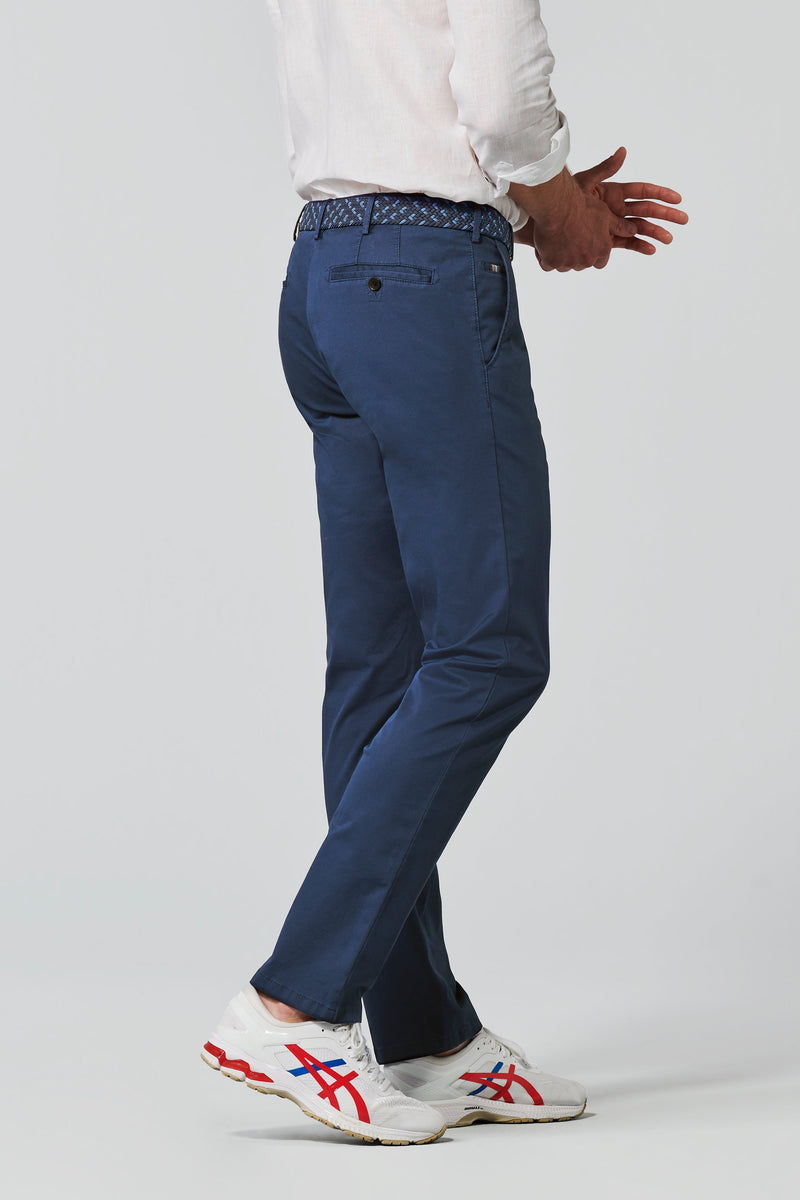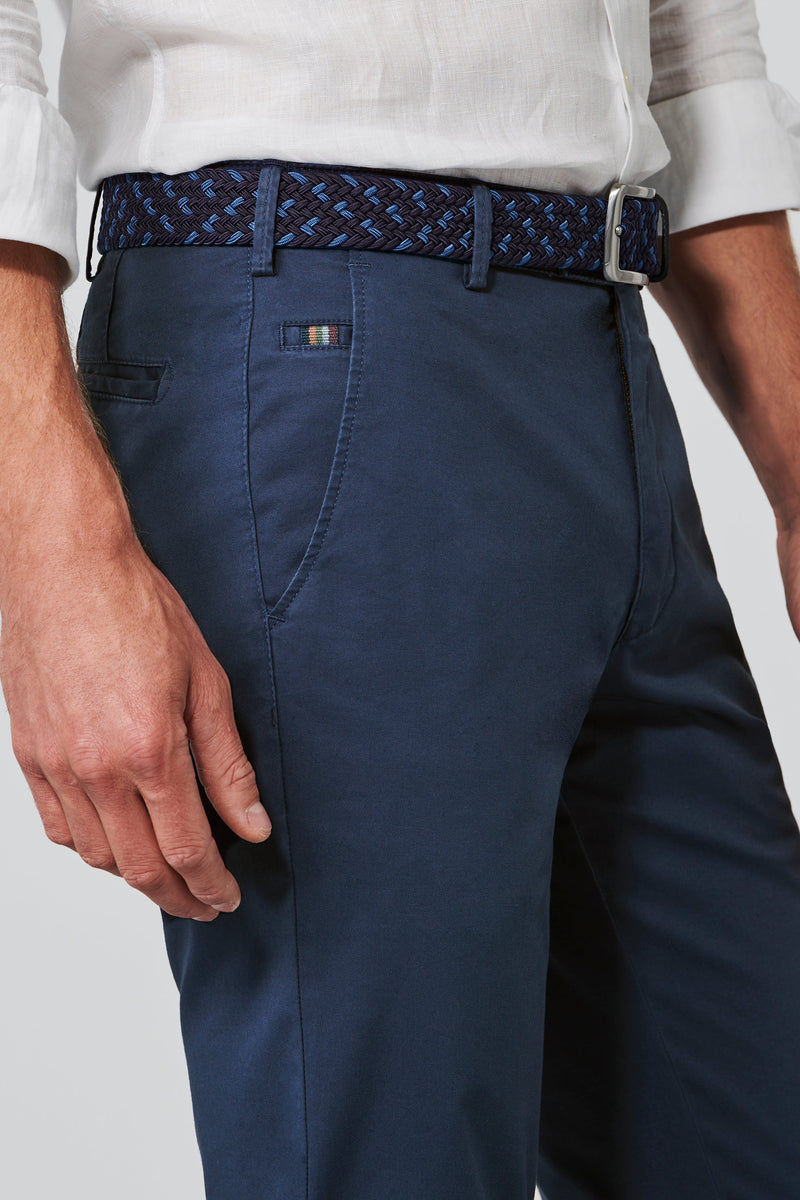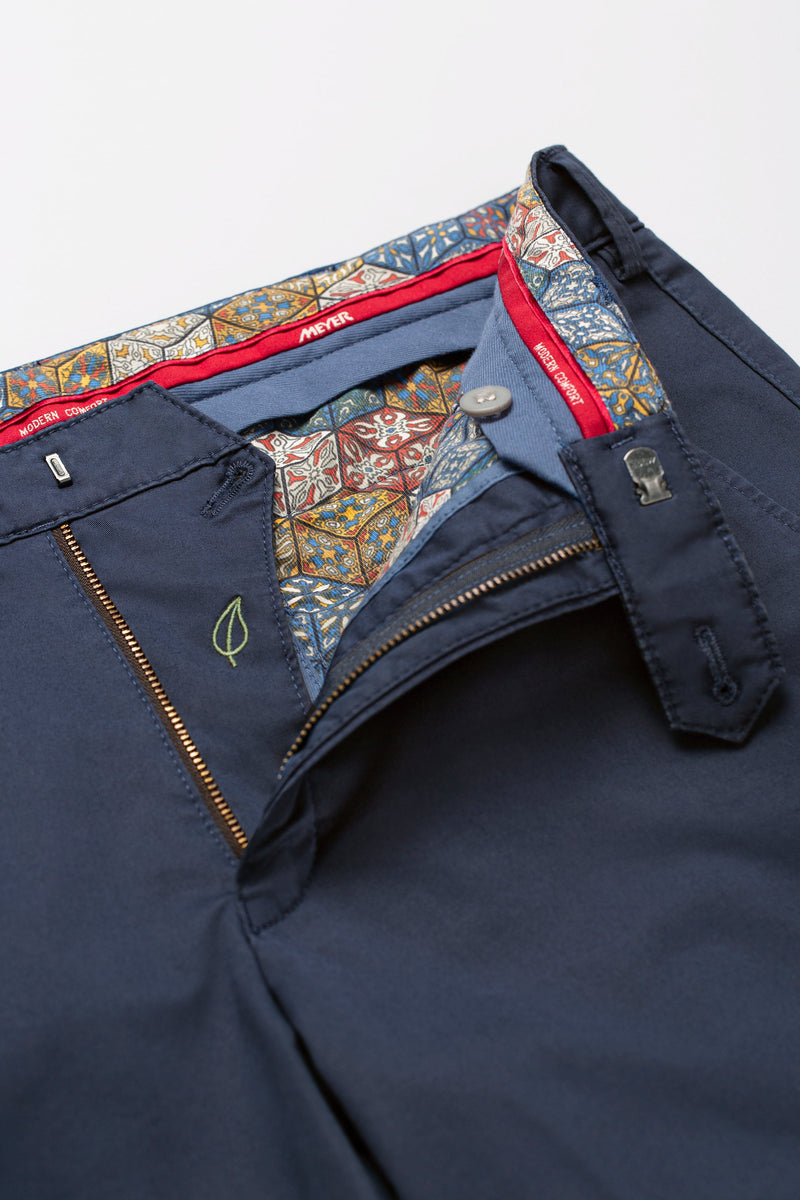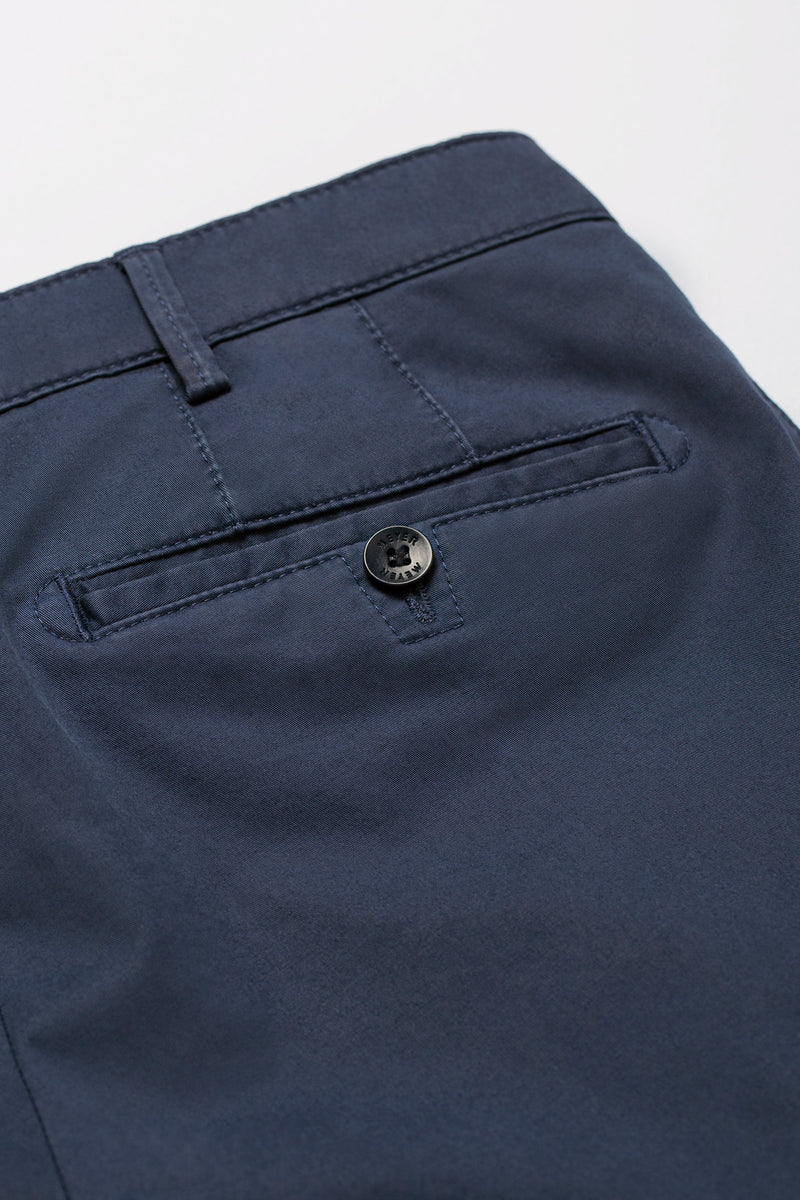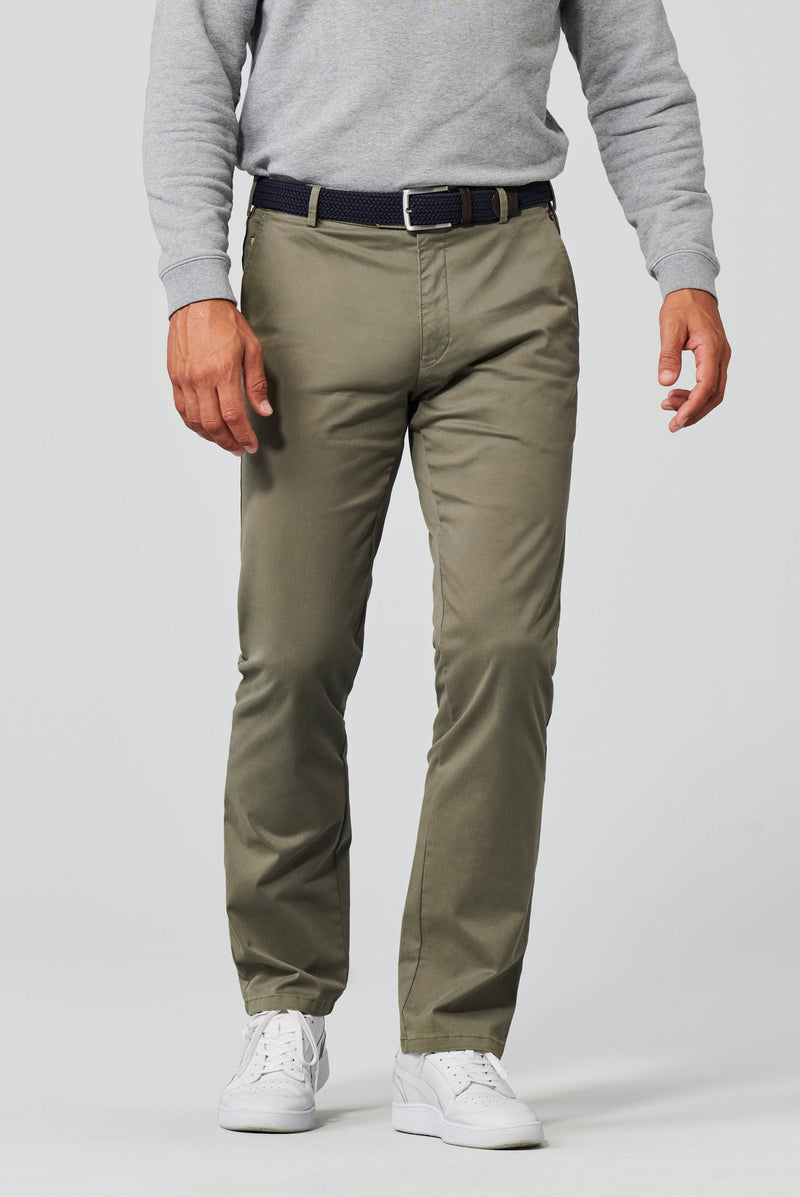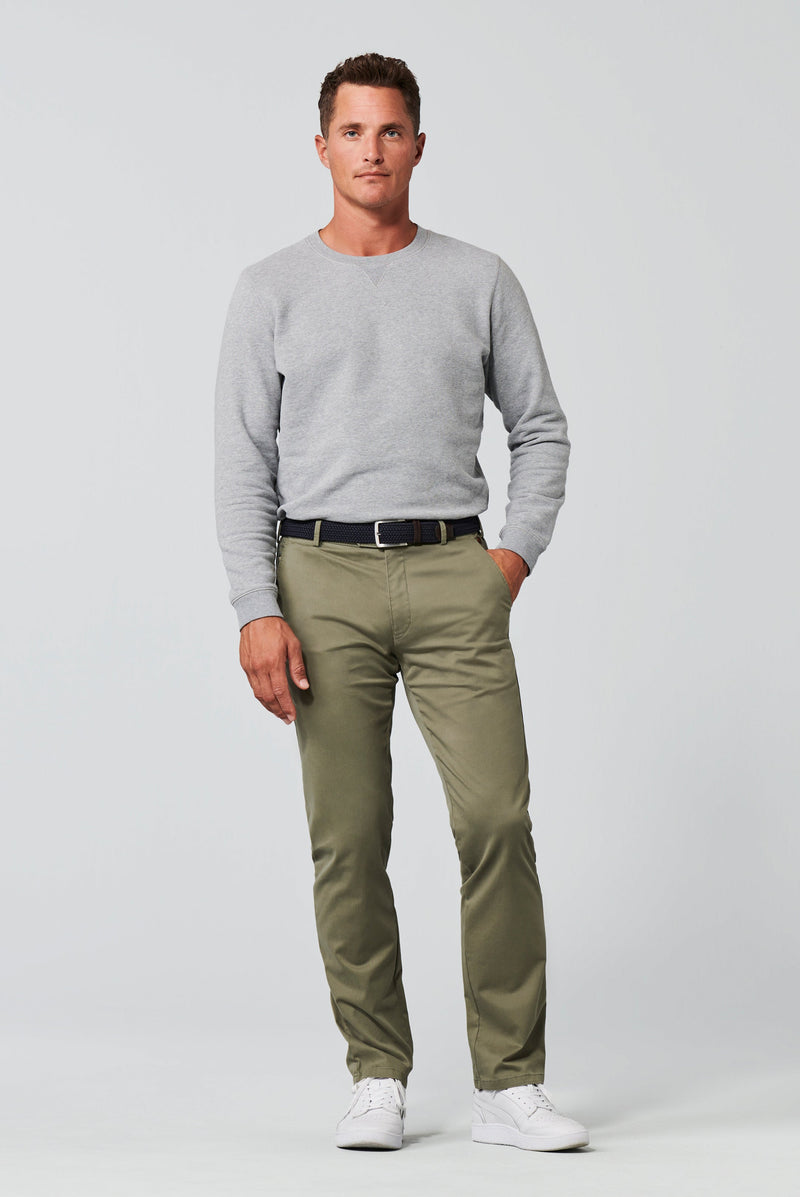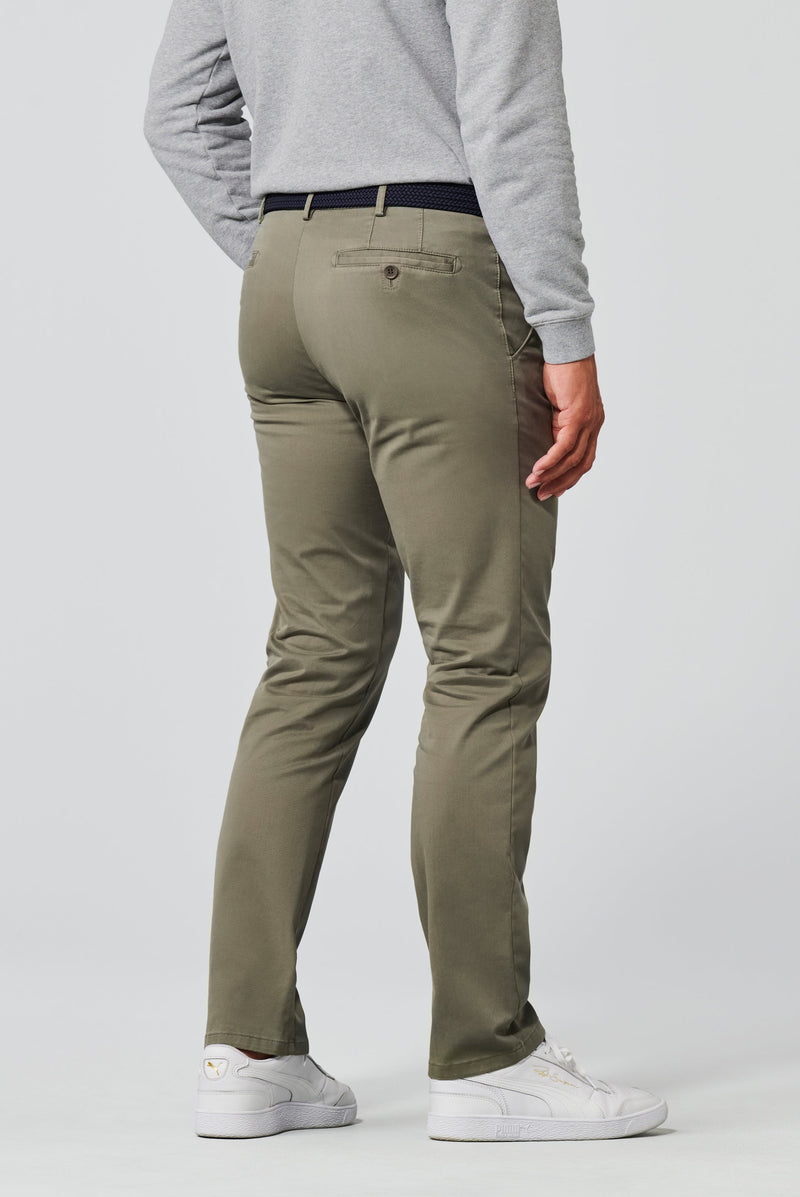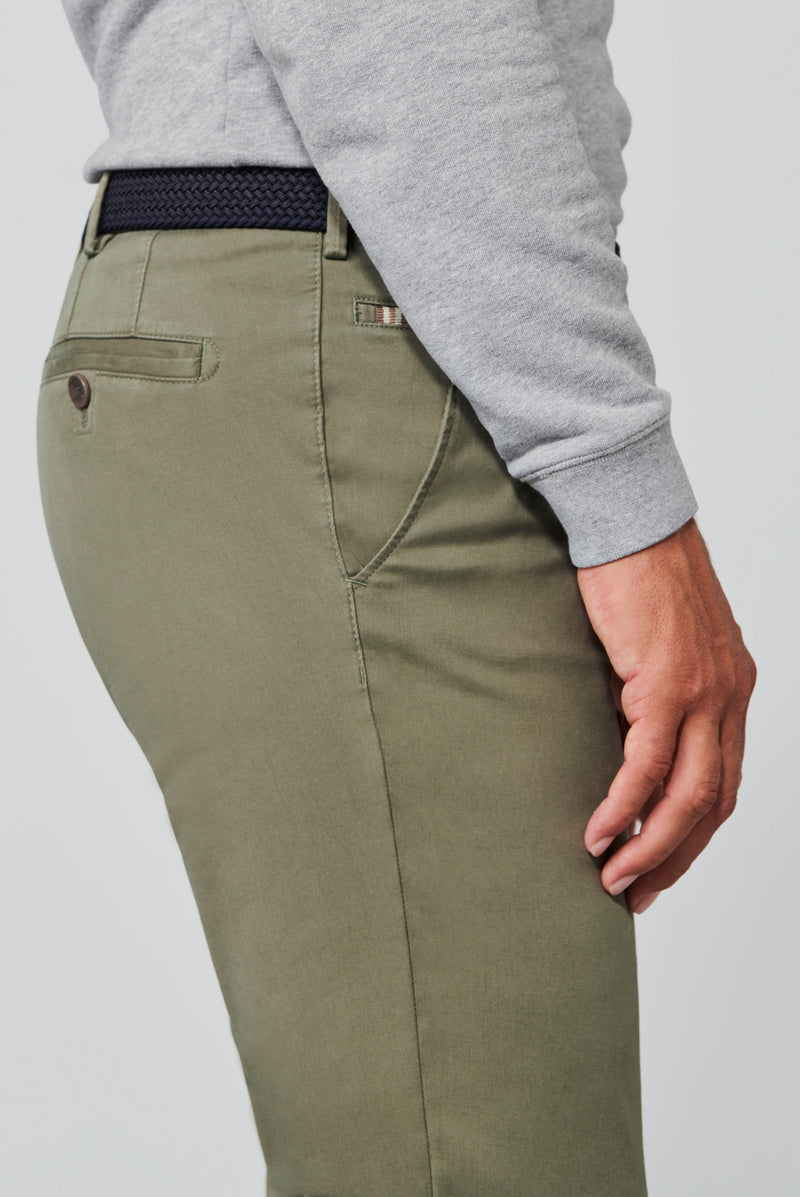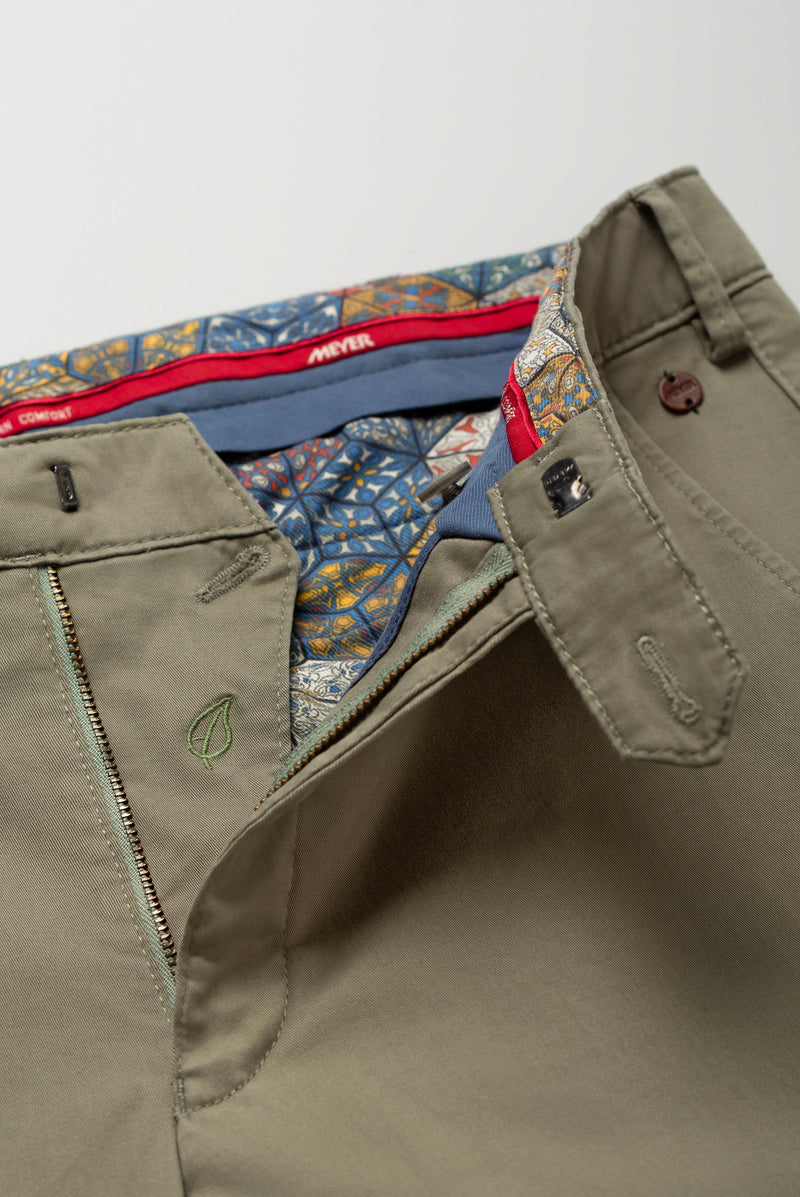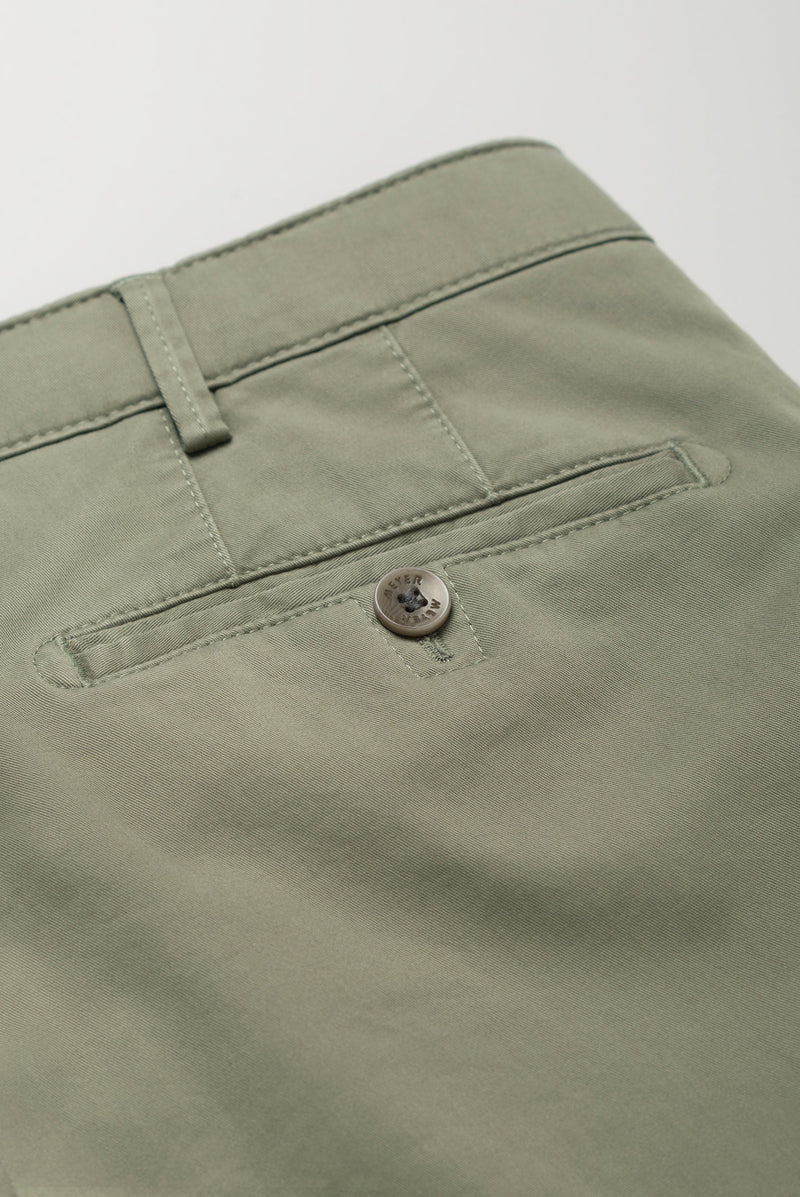





Sustainable men's trousers
What really makes a pair of trousers more sustainable
Sustainable men's trousers are not simply trousers made from organic cotton. A pair of trousers becomes more sustainable when more responsibly sourced materials, verifiable certifications, fair and transparent production, shorter transport routes, durable workmanship and a long product life come together. The most important point is this: a high-quality pair of trousers that can be worn for many years is usually a better choice than several short-lived alternatives.
When people search for sustainable trousers, they often look first for organic cotton, recycled fibres or familiar sustainability labels. These factors are important. But on their own, they do not determine whether a pair of trousers is truly the more responsible choice.
Sustainability in men's trousers is created across the entire product life cycle: from the raw material and fabric selection to production, transport routes, workmanship, care and length of use. That is why consumers should not only ask what a pair of trousers is made from, but also how it is made, where it is made and how long it is designed to last.
For men who want to buy more consciously, more sustainable trousers are above all durable, high-quality garments that fit well in everyday life, combine easily with different outfits and do not need to be replaced after only a short time.
At a glance: how can you recognize more sustainable trousers?
More sustainable trousers are not defined by one single feature, but by the interaction of several important factors:
- More responsible materials: Organic cotton, certified cotton, recycled fibres or natural raw materials can help conserve resources and reduce the use of critical chemicals.
- Verifiable certifications: Standards such as GOTS, MADE IN GREEN by OEKO-TEX or Fairtrade Cotton create greater transparency and make claims easier to verify.
- European or transparent production: Shorter routes, more direct influence on standards and traceable supply chains can strengthen responsibility in production.
- Durable workmanship: The longer a pair of trousers is worn, the less often it needs to be replaced. This reduces new purchases, resource use and waste.
- Timeless design: Trousers that remain relevant beyond a single season stay in the wardrobe longer and are worn more often.
- Easy care: Robust, easy-care materials extend the useful life of the garment and make everyday wear simpler.
What are sustainable trousers?
Sustainable trousers are designed to reduce their environmental impact across the entire product life cycle. This includes responsibly sourced materials, more resource-conscious production processes, fair working conditions, durable workmanship and the longest possible useful life.
The key point is this: sustainability is not a single feature. A pair of trousers does not automatically become sustainable just because one particular material is used. The real difference is created by the combination of material, production, quality, transparency and use.
Why organic cotton alone is not enough
Organic cotton is an important building block of more sustainable fashion because it is grown under stricter ecological requirements than conventional cotton. Nevertheless, it is only one part of the overall assessment.
A pair of trousers made from organic cotton can still be less sustainable if it is poorly made, quickly loses its shape or needs to be replaced after a short time. Conversely, a particularly durable pair of trousers with transparent production and high quality can make a stronger contribution over many years than a short-lived product with a single green feature.
Why durability is one of the most important sustainability factors
Many discussions about sustainable fashion focus on materials. One decisive point is often underestimated: durability.
A high-quality pair of men's trousers that is worn for many years needs to be replaced less often. This means fewer new resources are required, fewer products need to be transported and less textile waste is created. That is why quality, fit, workmanship and easy care are among the most important pillars of more sustainable trousers.
In everyday terms, this means that more sustainable trousers should not only be convincing at the moment of purchase, but should also retain their shape, colour and function after many washes, many working days and many uses.
Which materials make trousers more sustainable?
Materials are a central lever. For men's trousers, the most relevant options include organic cotton, certified cotton, recycled fibres, renewable raw materials and durable fabrics. However, these materials should never be considered in isolation.
A high-quality material should feel comfortable, be robust, keep its shape and remain usable for as long as possible. Sustainability and quality therefore belong closely together.
Why certifications matter
When it comes to sustainability, credibility is essential. Certifications help consumers better understand claims about materials, production, harmful-substance testing, social standards and traceability.
For consumers, these forms of proof are especially valuable because they make sustainability promises more verifiable. In fashion, where many terms are used inconsistently, recognized standards provide clearer guidance.
However, one point remains important: a certification does not replace the overall assessment. Certified materials should also be combined with durable workmanship, a good fit and transparent production.
Why production in Europe can be an advantage
The production location has a major influence on how traceable and controllable the manufacturing of a garment is. European production can support shorter transport routes, high environmental and social standards, closer quality controls and greater transparency in the supply chain.
What matters is not only geographic proximity, but also the company's actual influence on production. Brands that use their own production structures or work closely with audited partners can control quality, environmental and social responsibility standards more effectively.
More sustainable trousers are not created by a single label, but by a reliable overall concept: verified materials, transparent manufacturing, fair standards, high-quality workmanship and a long useful life.
How MEYER understands sustainability in men's trousers
For MEYER, sustainability is closely linked to quality, responsibility and durability. This approach goes beyond individual material claims: trousers should not only be made more consciously, but should also fit well over time, be carefully manufactured and be worn for many years.
Own European production and controlled quality
MEYER manufactures trousers in its own European production facility. This allows the company to have direct influence on production standards, quality assurance and social and ecological requirements.
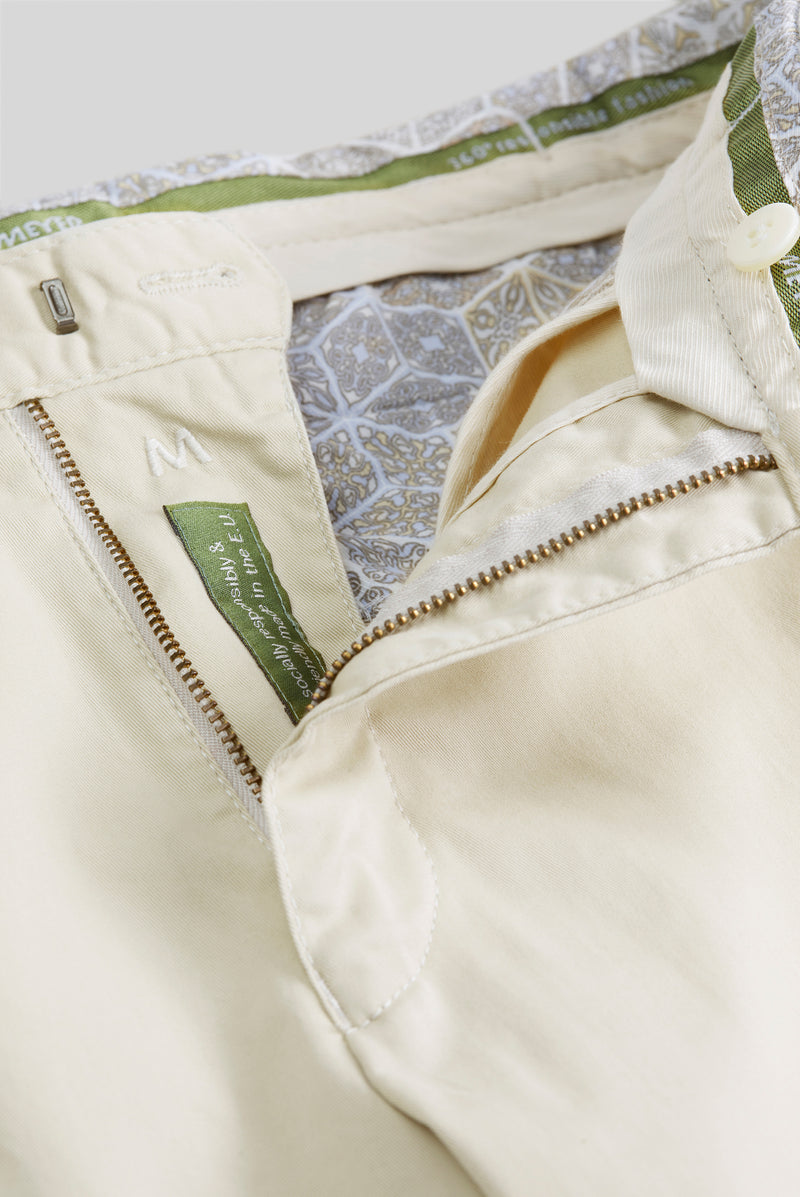
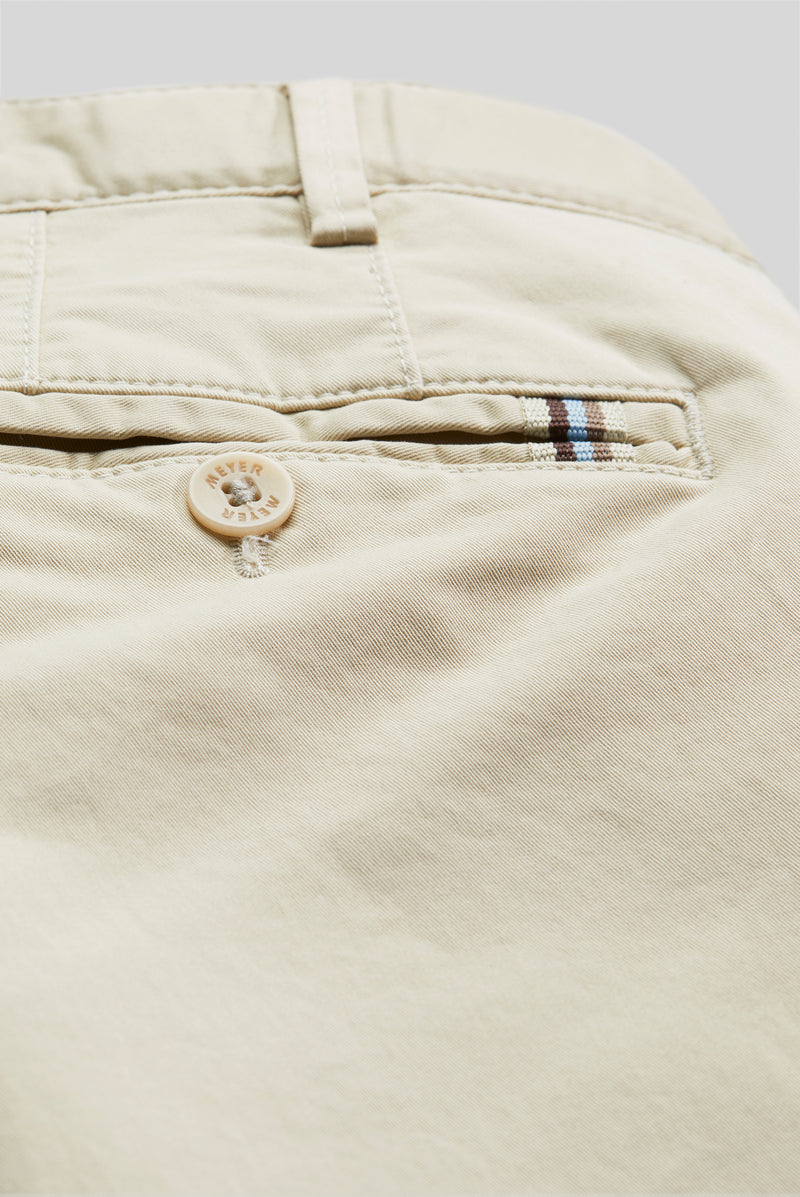
Quality control during production is an important part of this standard. Cutting, sewing, washing and pressing are checked; before delivery, a final inspection is carried out. In this way, durability is not merely used as a sustainability argument, but is supported concretely through workmanship and quality checks.
Organic cotton, certified materials and responsible components
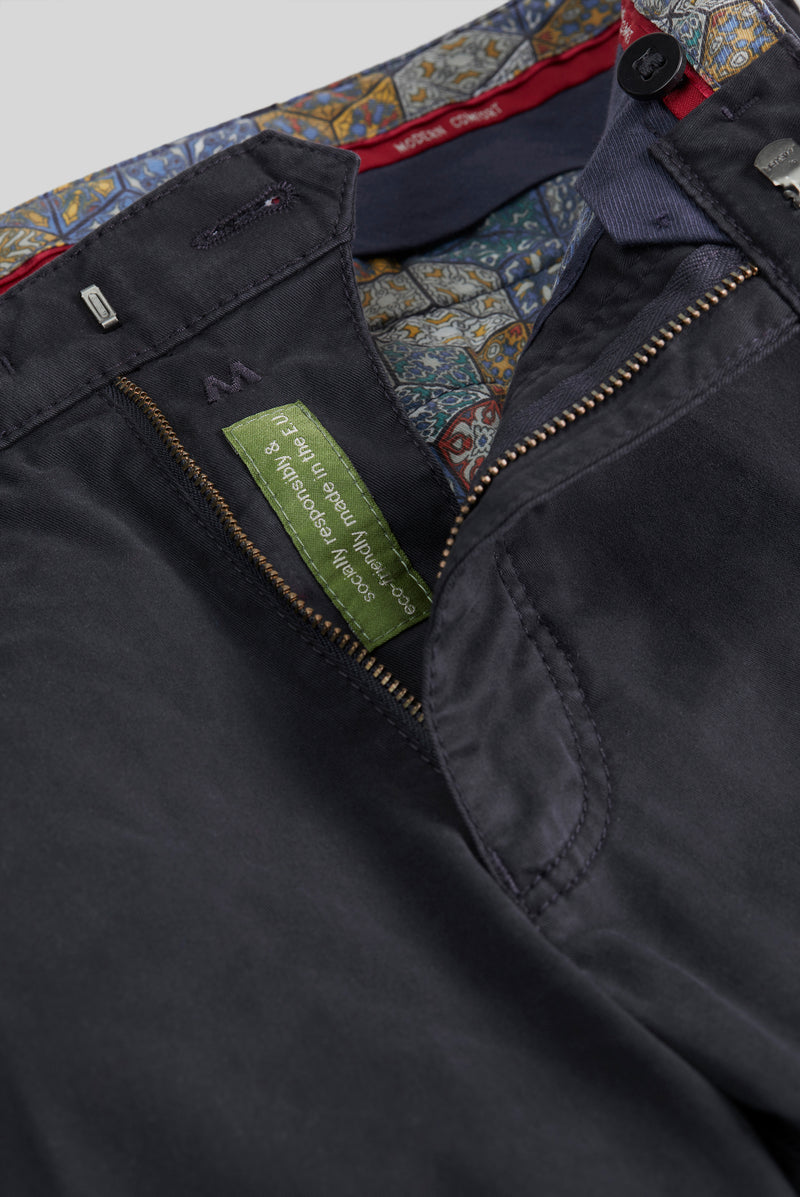
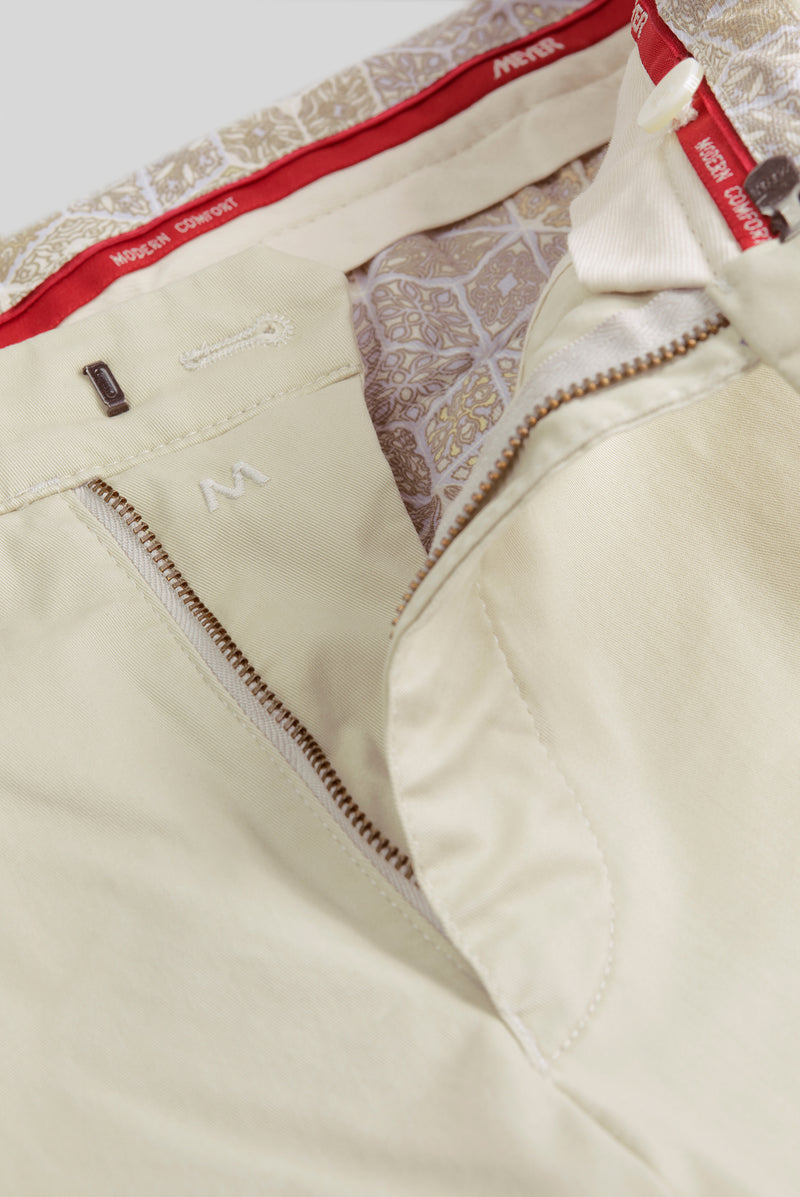
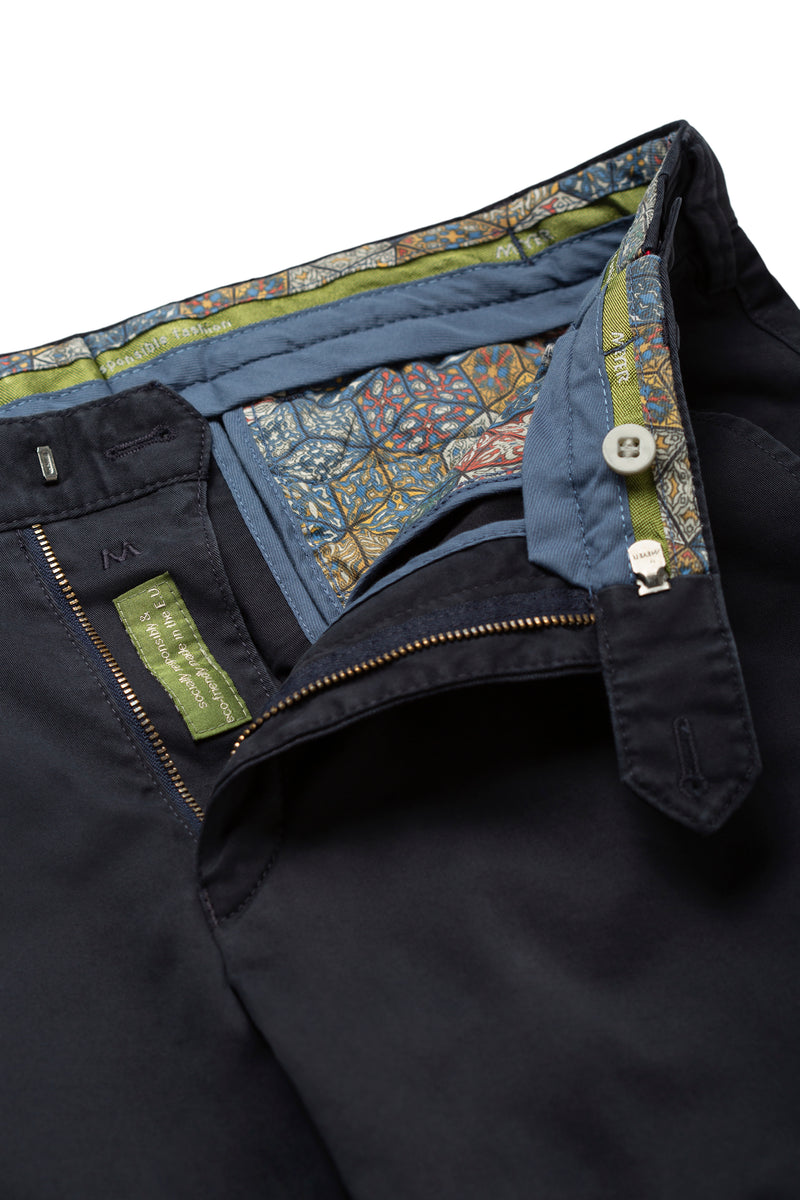
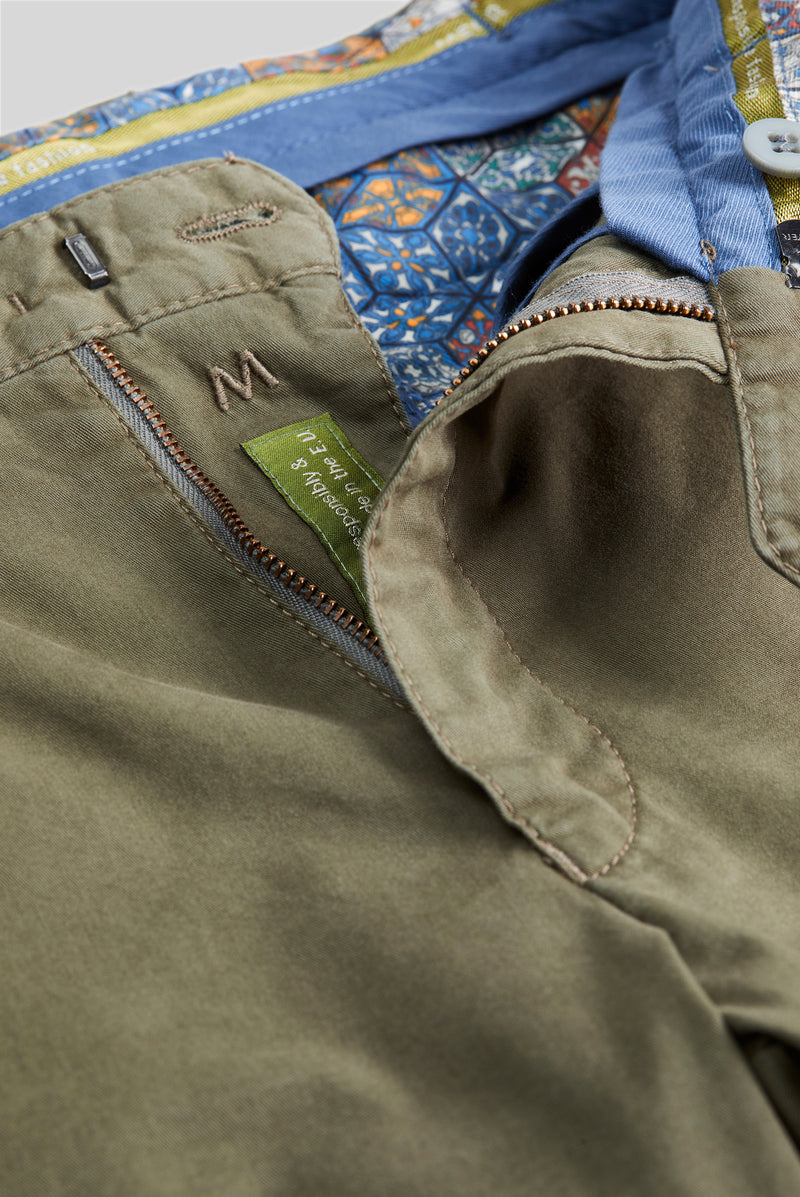
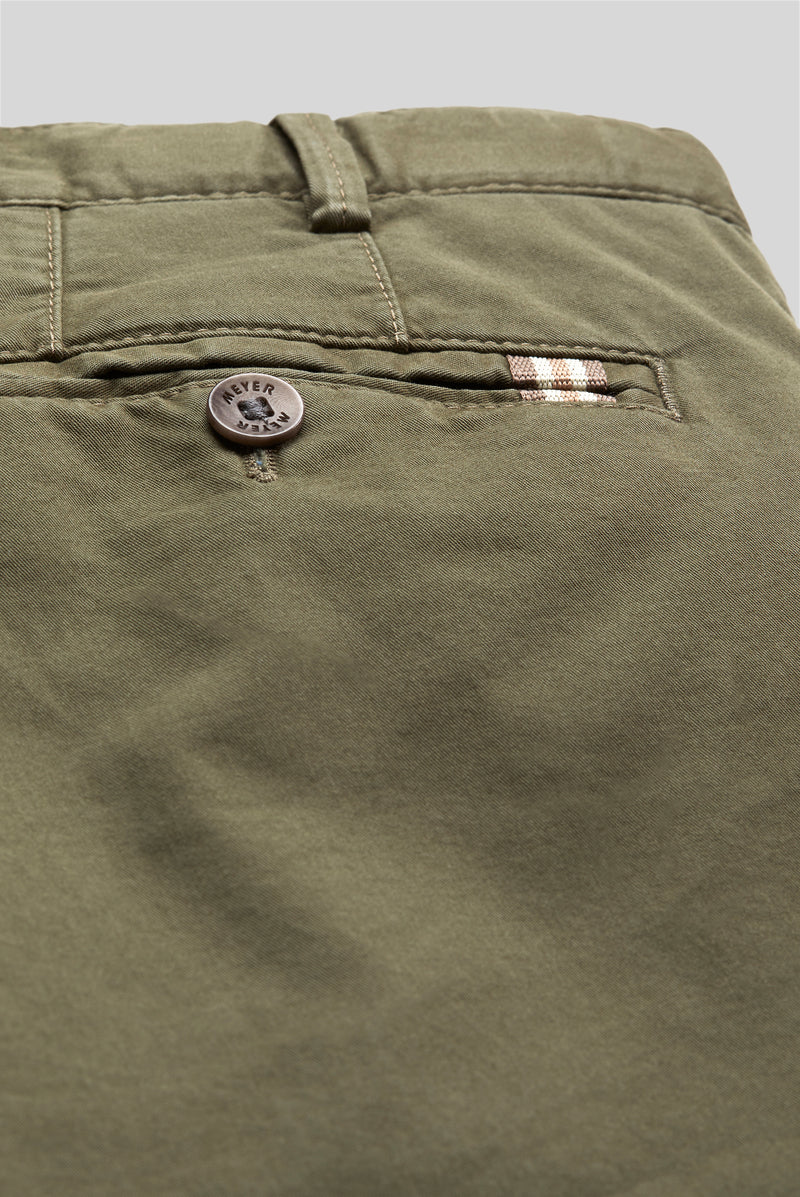
Cotton is one of the most important raw materials for men's trousers. Since 2020, MEYER has used organic cotton for cotton materials and works closely with European suppliers for fabrics and components. According to company information, buttons, yarns and zips also mainly come from Europe and are often made from natural or recycled materials.
Depending on the product and collection, certified materials and standards are also used, including GOTS, MADE IN GREEN by OEKO-TEX and Fairtrade Cotton. These forms of proof strengthen transparency and help customers make more informed, more sustainable purchasing decisions.
Quality instead of fast fashion
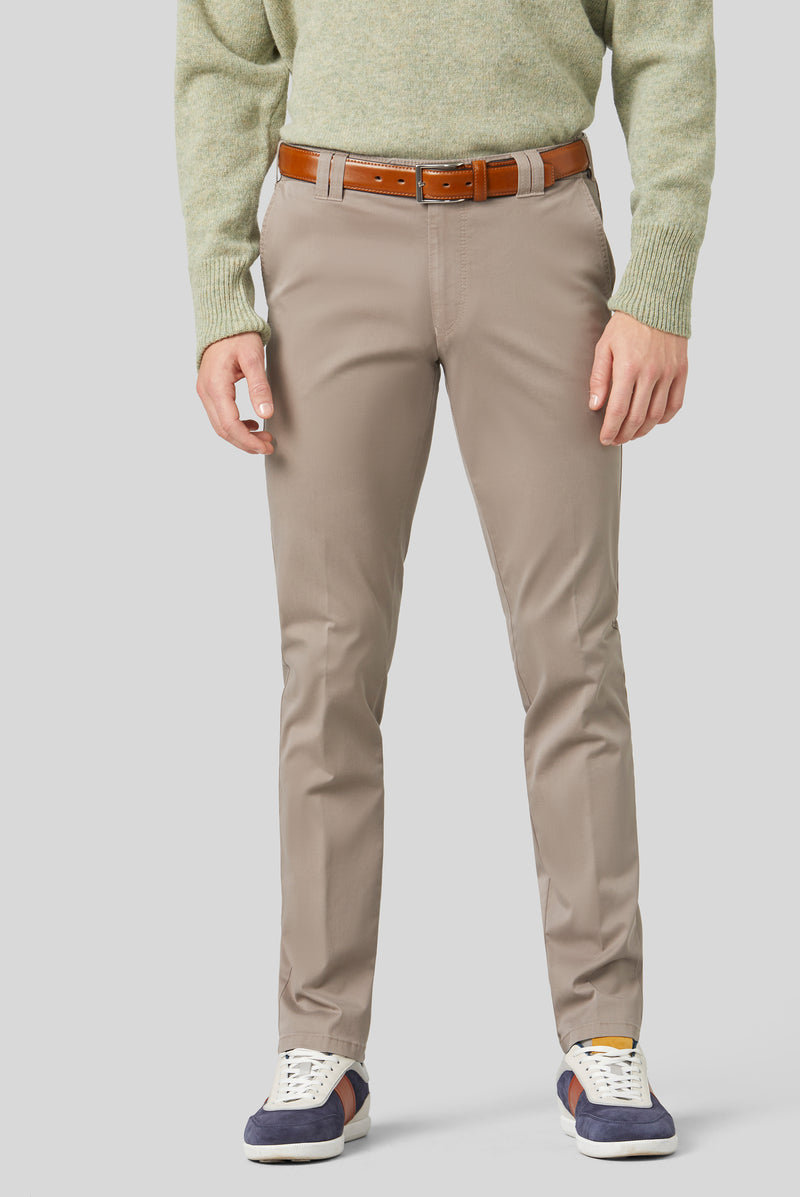
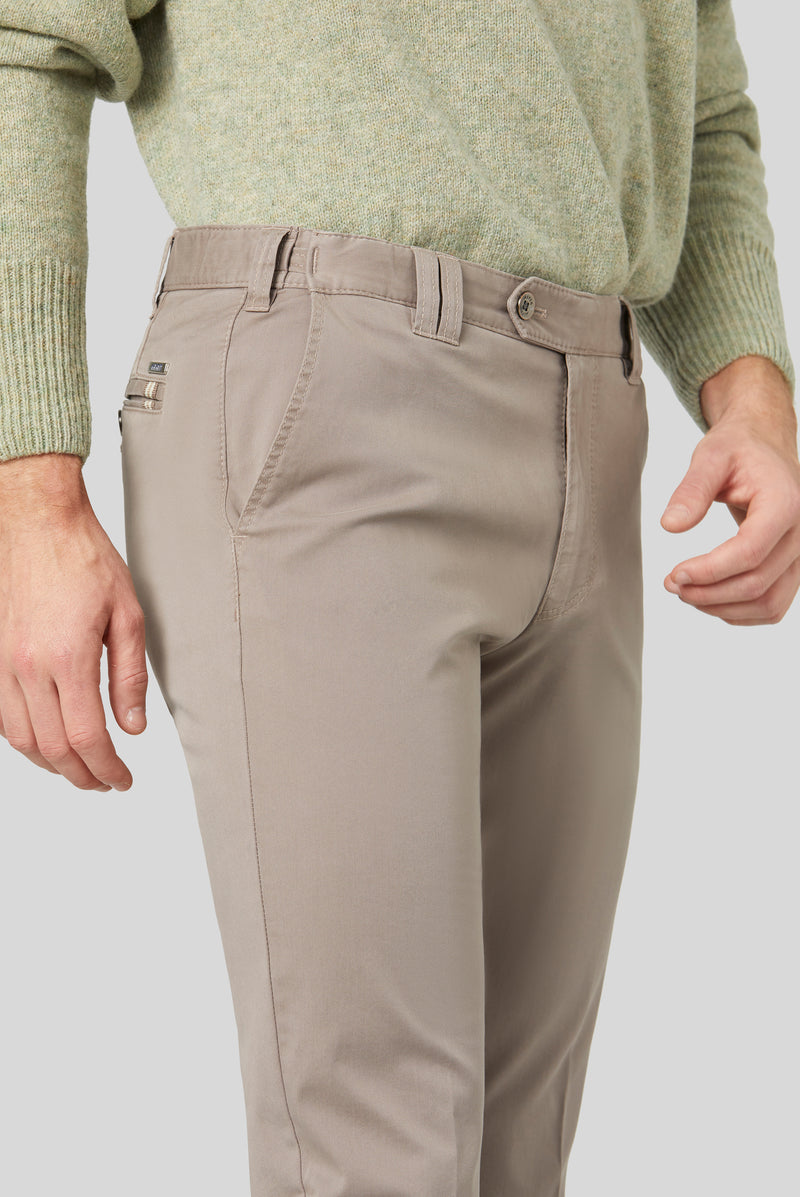
Fast fashion is based on frequent repurchasing. More sustainable fashion is based on longer use. MEYER therefore focuses on timeless men's trousers, careful workmanship, high-quality materials and fits that are not designed only for one short-lived season.
For consumers, this means that choosing carefully, caring for trousers properly and wearing them for a long time can reduce consumption without compromising on style, comfort or quality.
More sustainable trousers vs. fast-fashion trousers
The difference between more sustainably designed men's trousers and typical fast-fashion trousers is most visible in materials, production, workmanship, design and useful life:
- Material: More sustainably designed men's trousers use more responsible, certified or durable materials. A typical fast-fashion pair is often driven more strongly by price.
- Production: More sustainably designed trousers are produced as transparently and controllably as possible and closer to the sales market. Fast fashion often relies on complex supply chains that are difficult to trace.
- Workmanship: High-quality trousers are designed for long use and shape retention. Fast-fashion products are often more strongly geared towards quick consumption.
- Design: Timeless, versatile trousers remain relevant for longer. Highly trend-driven products are often replaced more quickly.
- Useful life: A durable pair of men's trousers can be worn across several seasons. Fast-fashion trousers often have a shorter product cycle.
- Sustainability impact: Quality and durability reduce replacement purchases. Short-lived fashion, by contrast, encourages more frequent repurchasing.
What should consumers look for when buying sustainable trousers?
Before buying a more sustainably designed pair of men's trousers, concrete questions are more useful than general marketing claims:
- Where were the trousers produced, and how transparent is the supply chain?
- Which materials are used, and are they certified?
- Are there forms of proof such as GOTS, MADE IN GREEN by OEKO-TEX or Fairtrade Cotton?
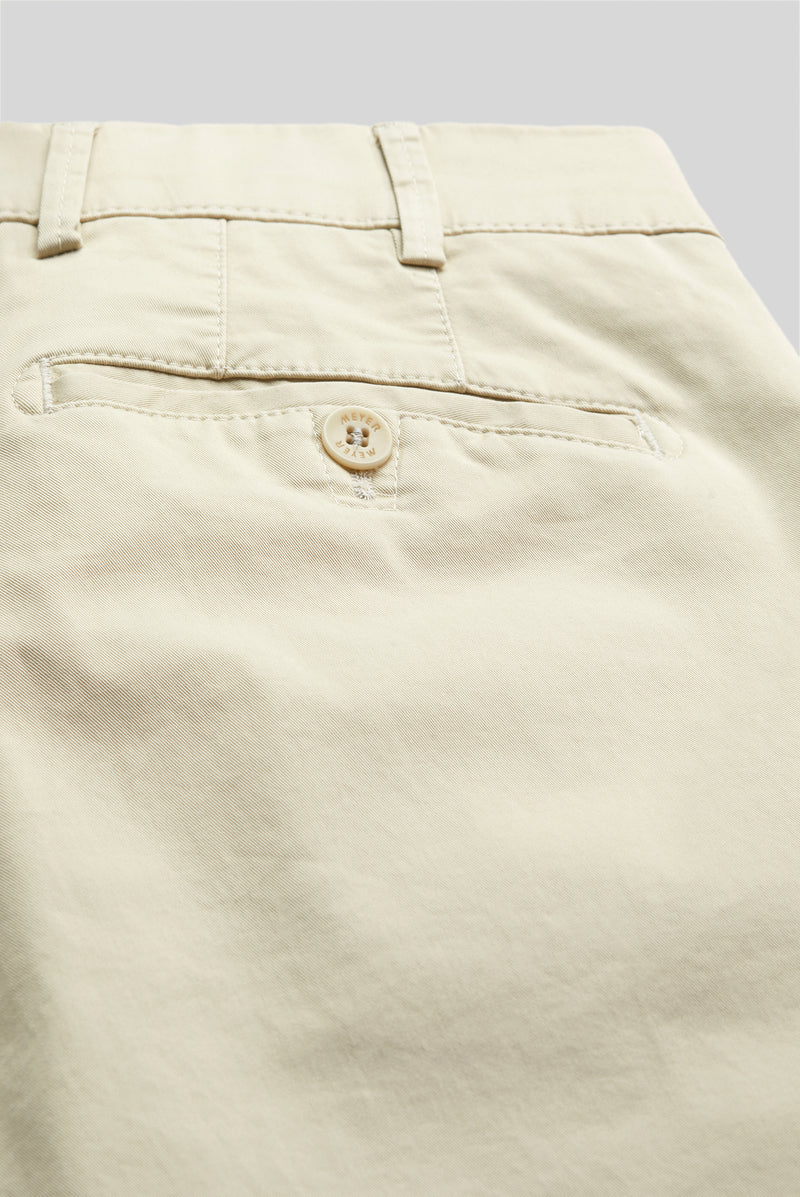
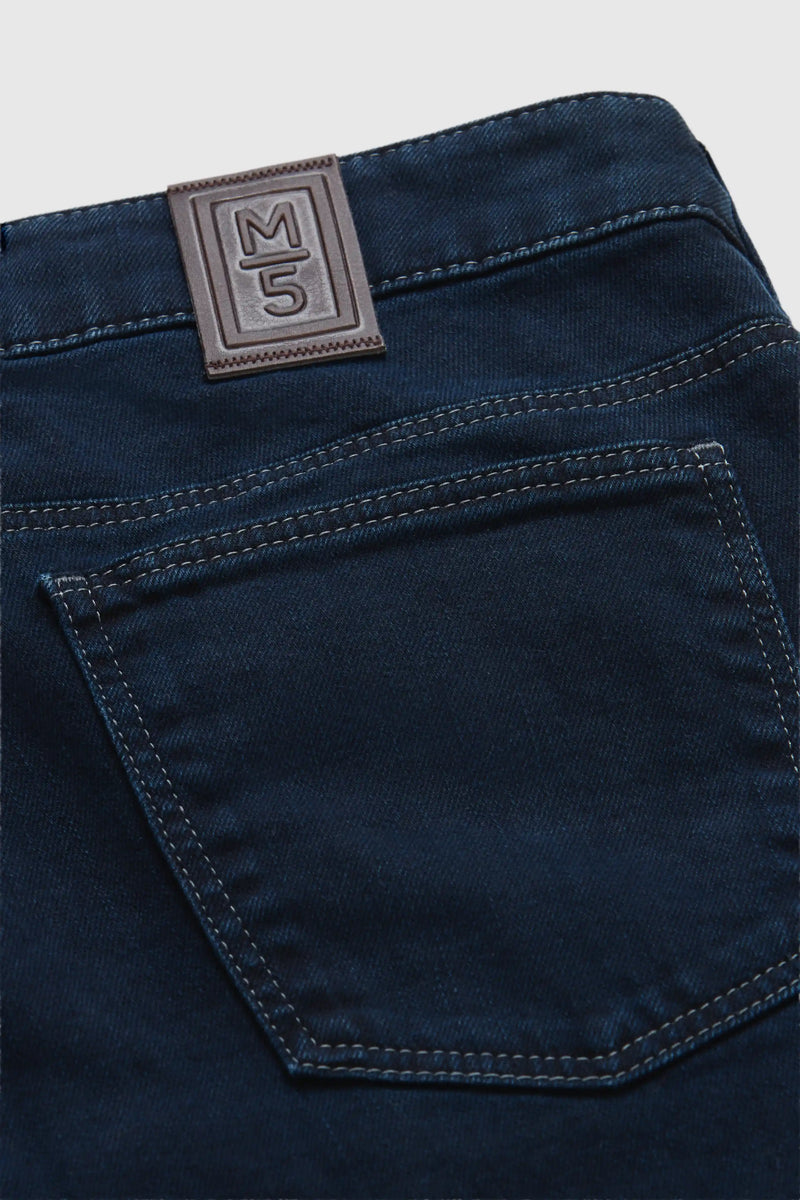
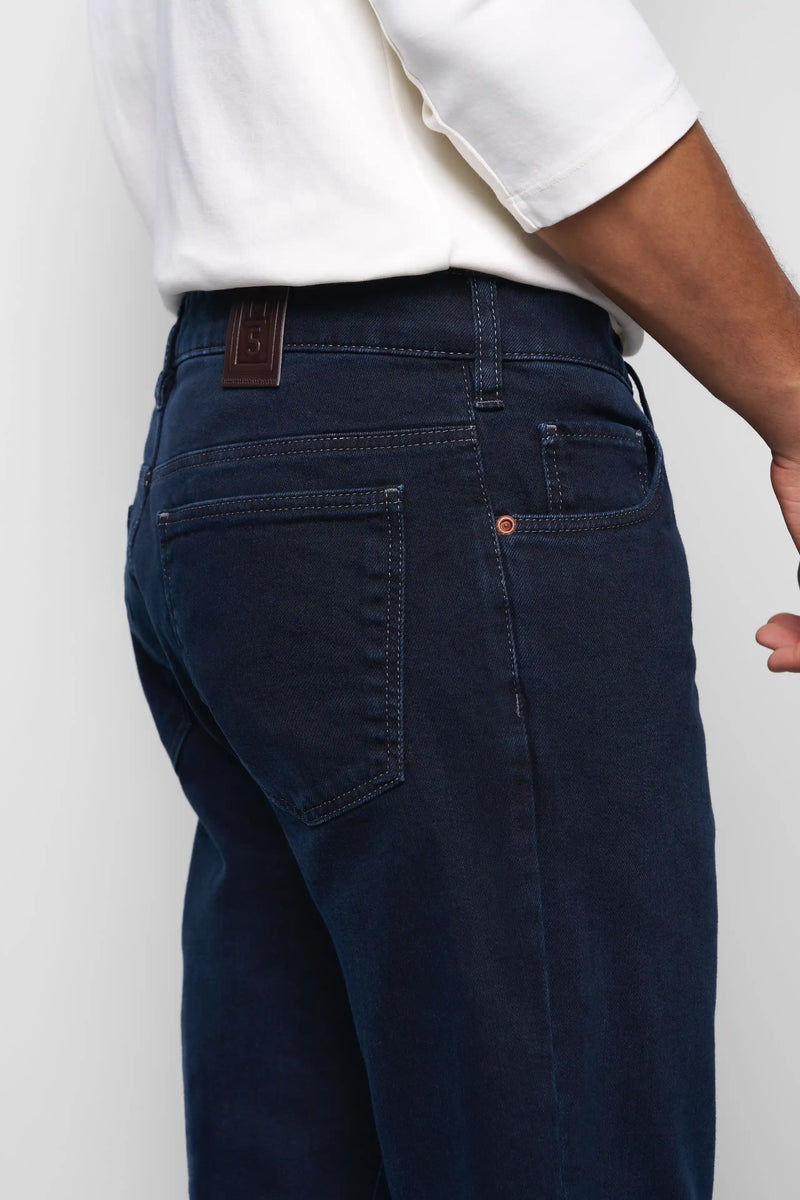
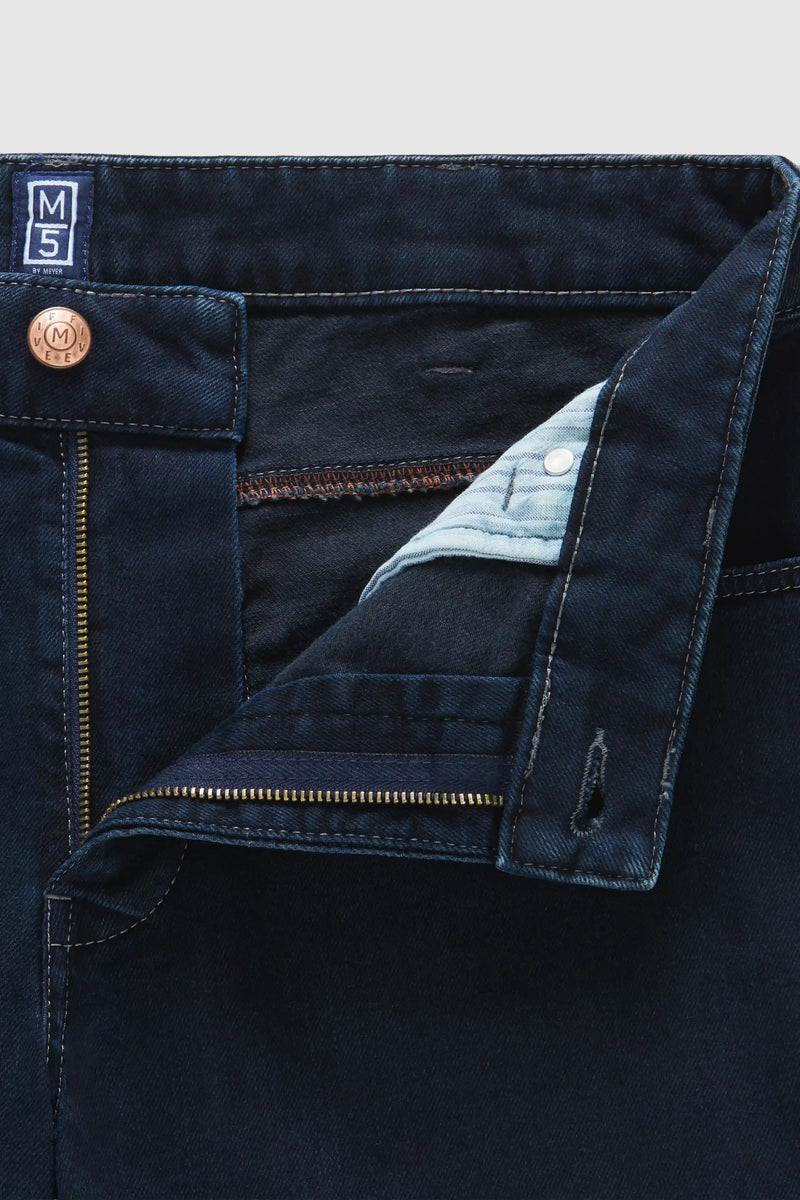
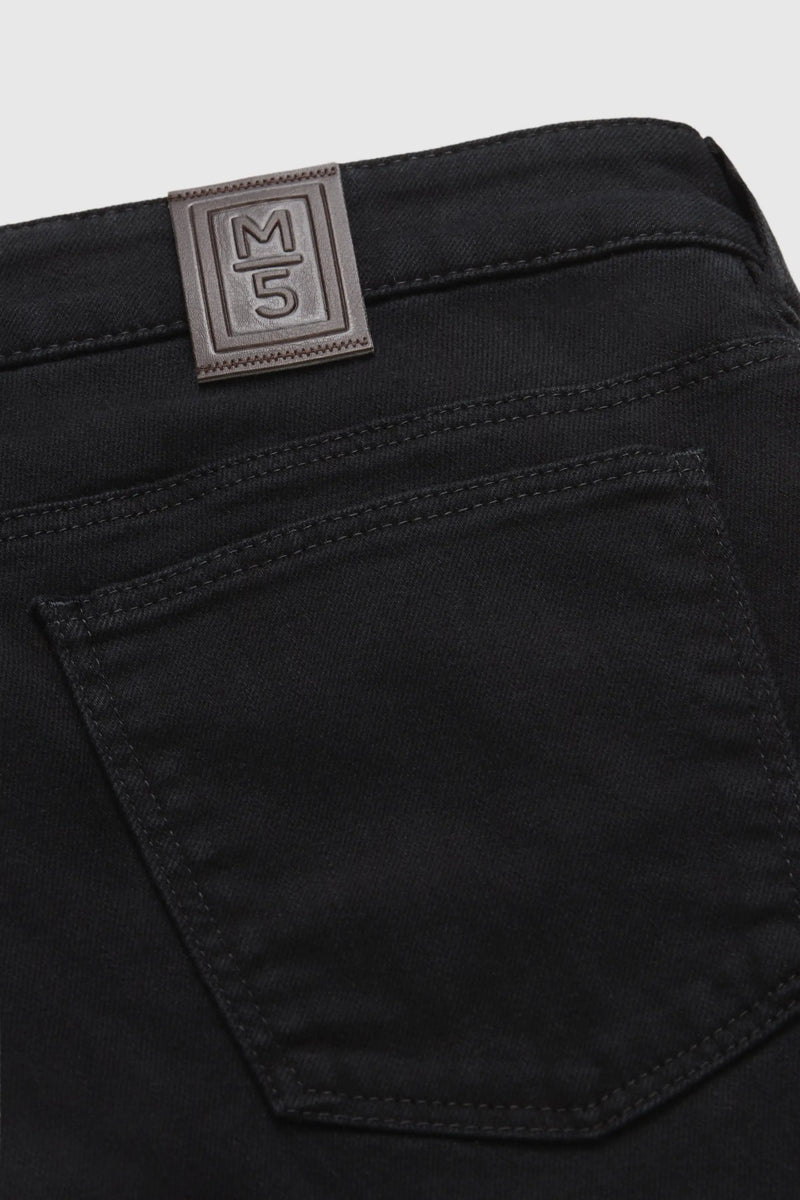
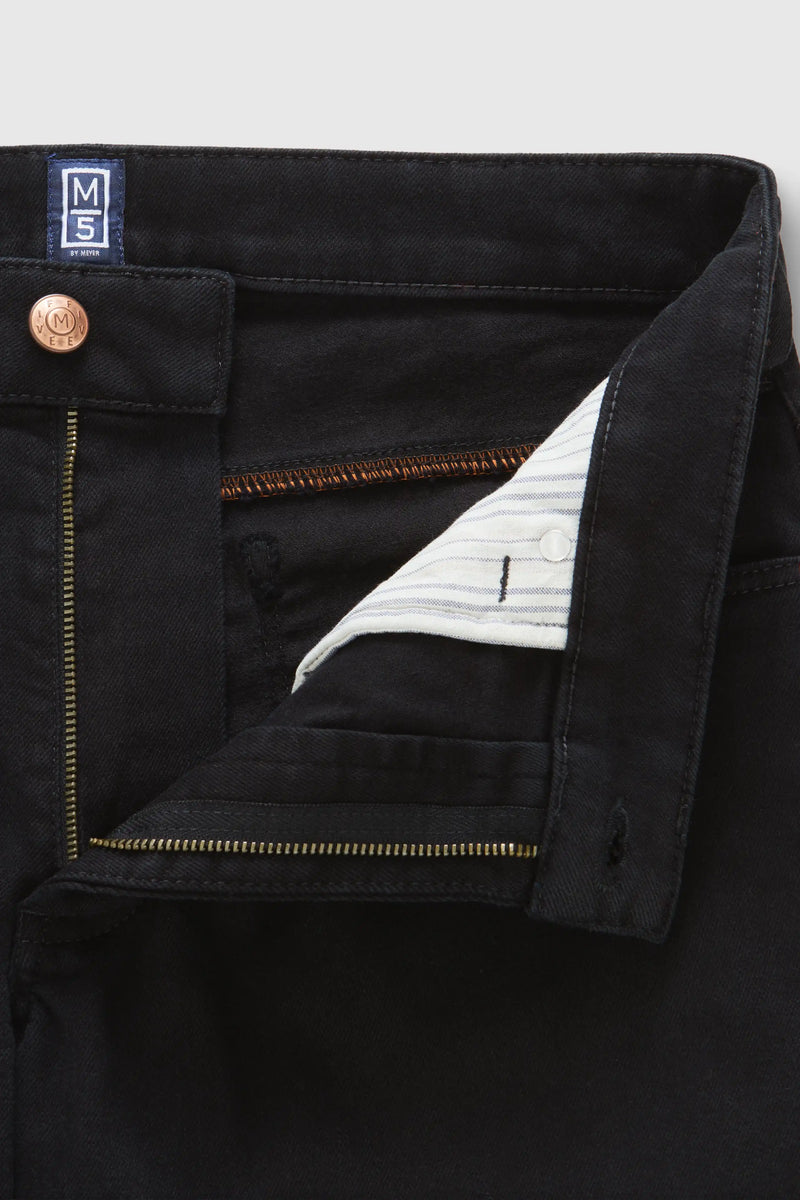
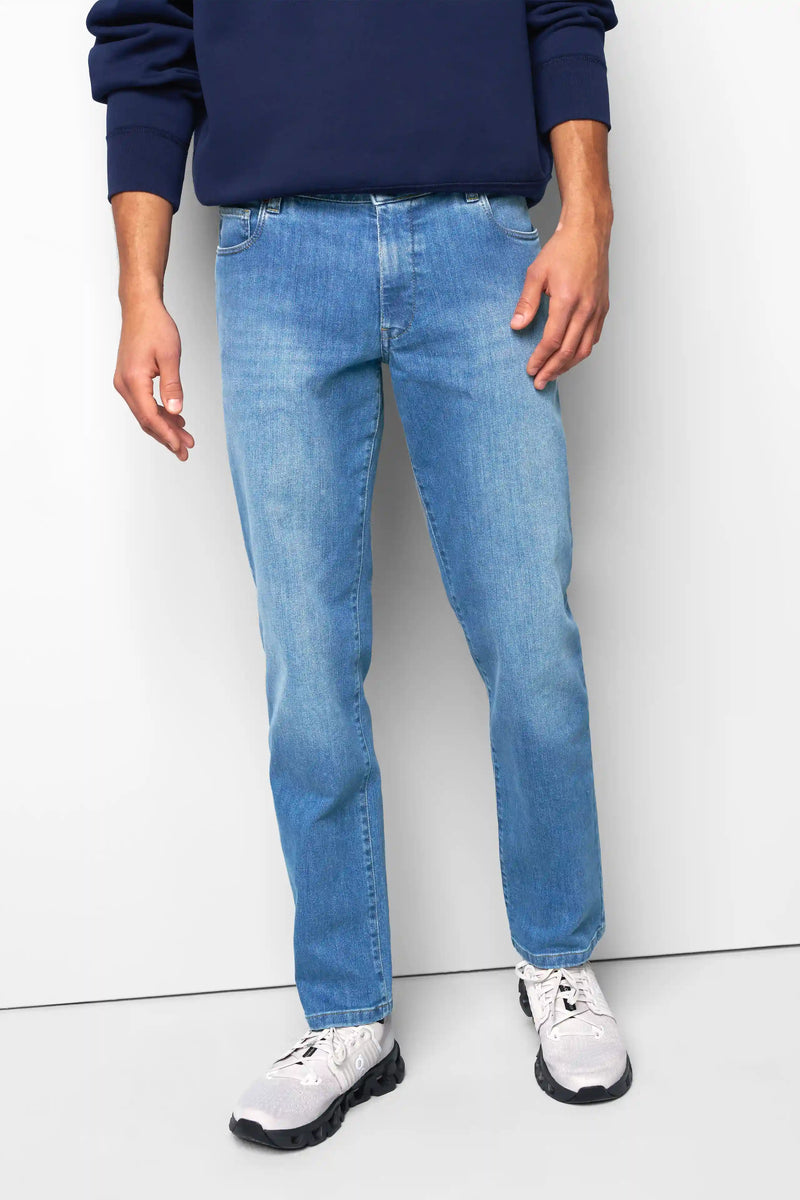
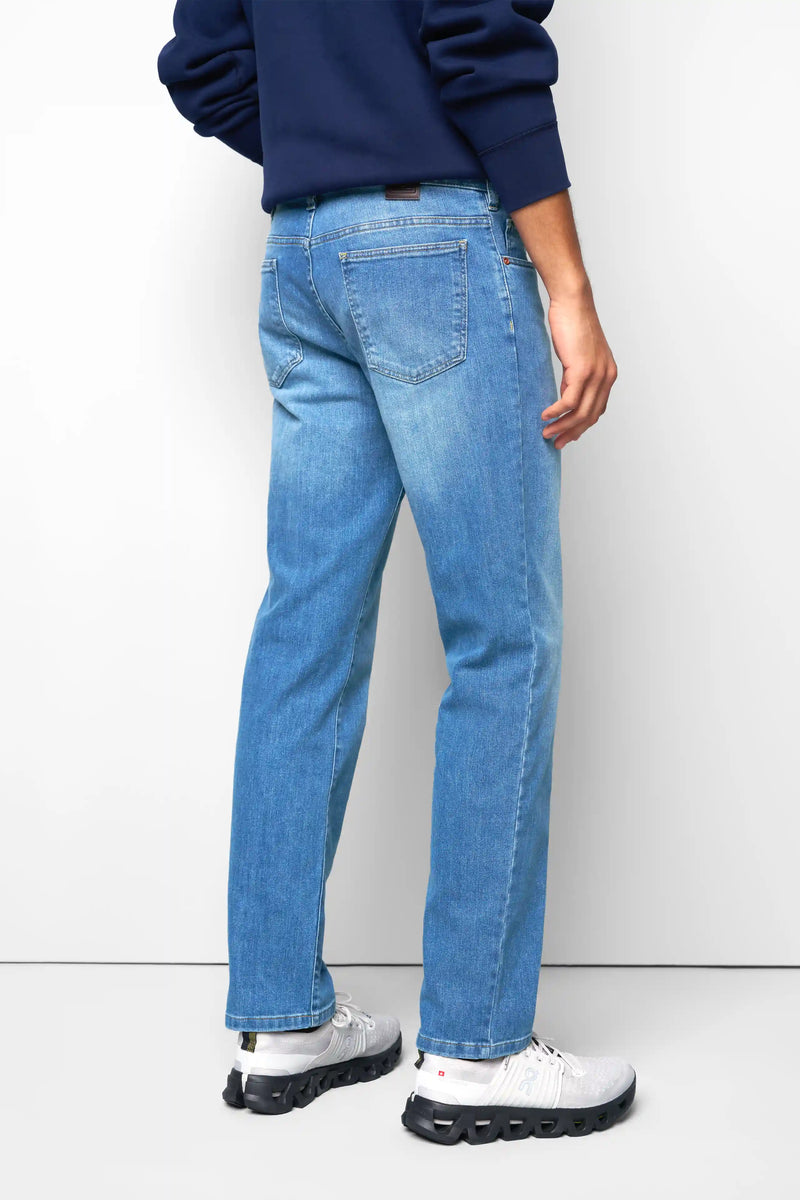
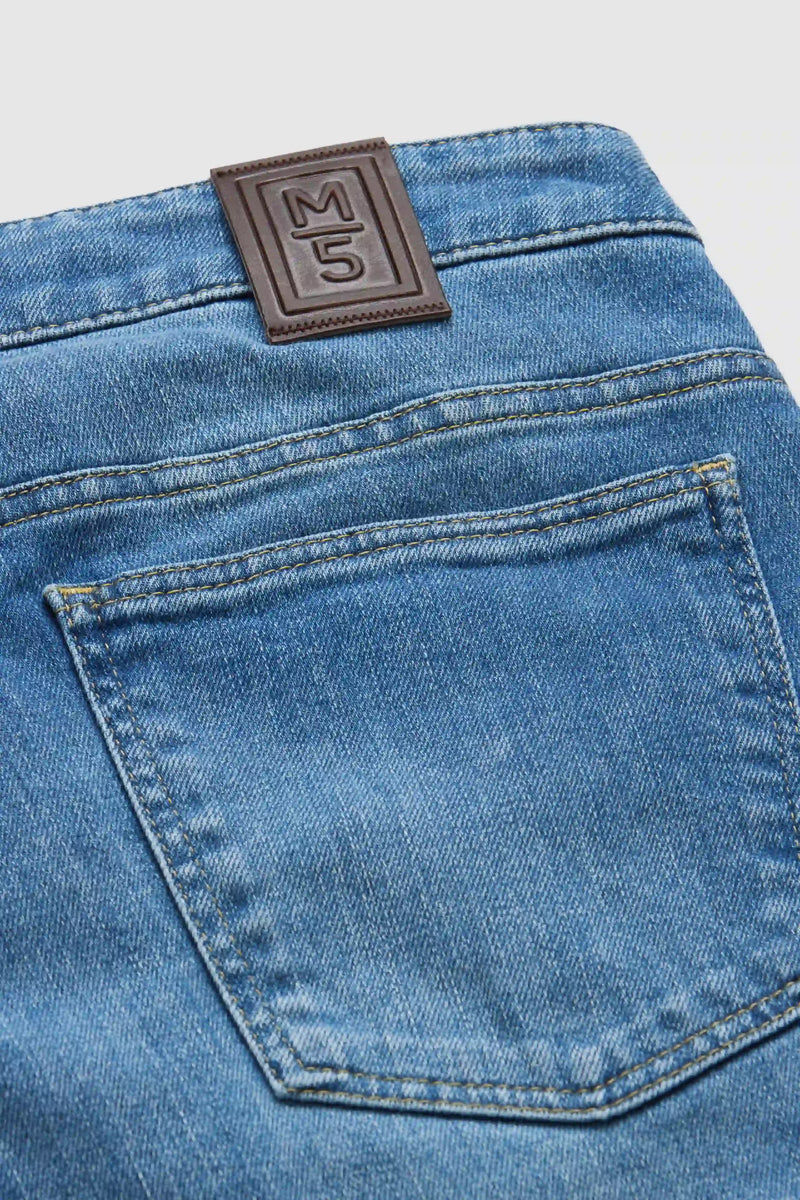
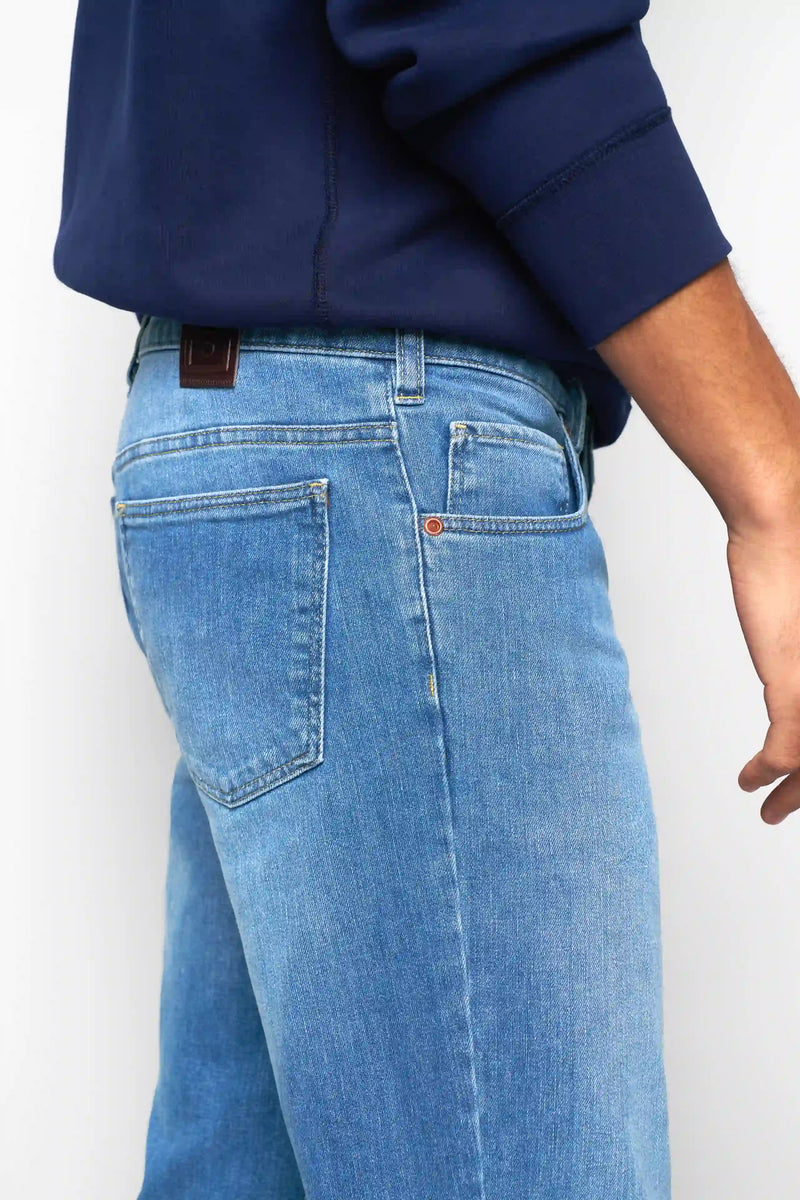
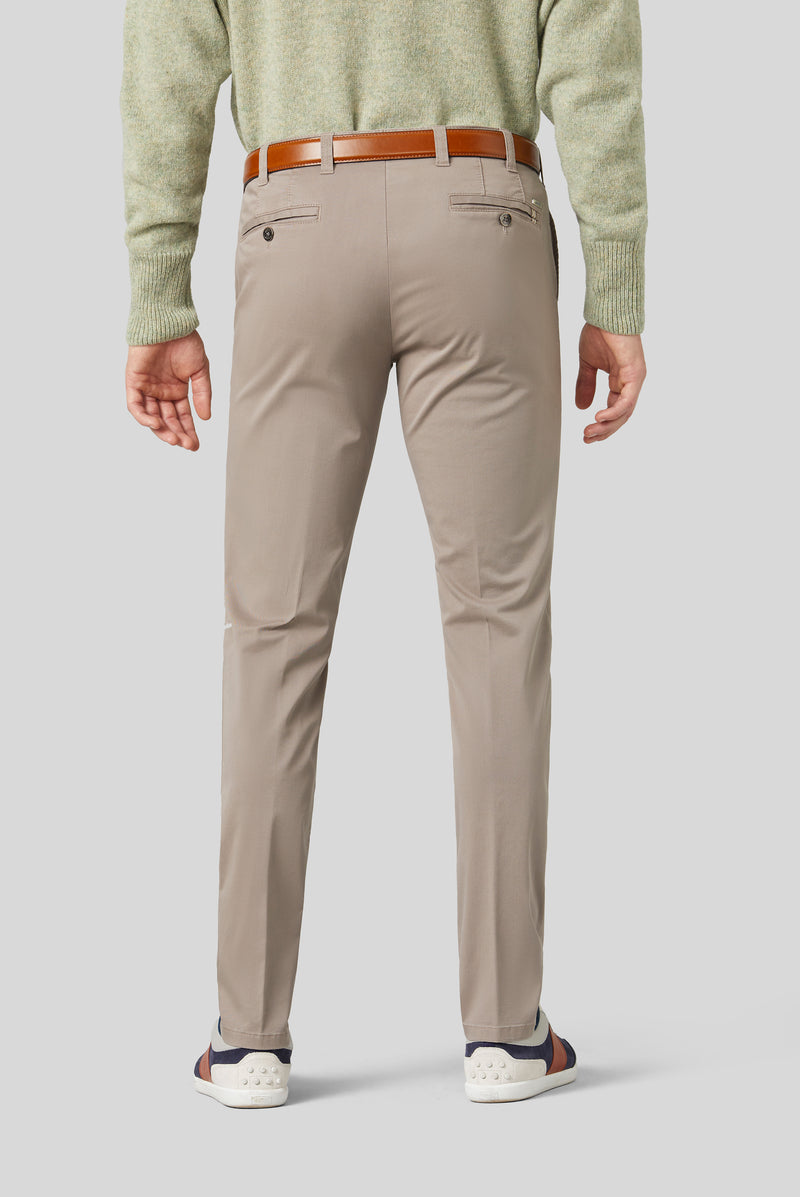
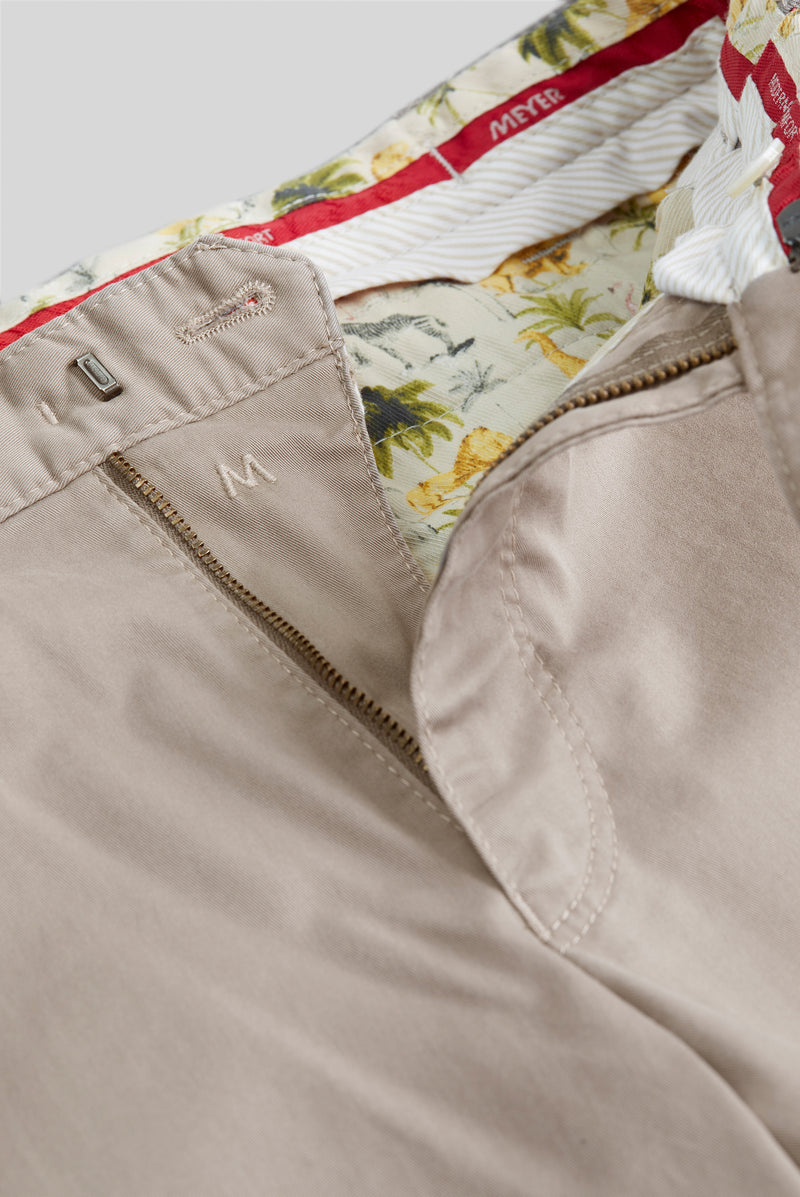
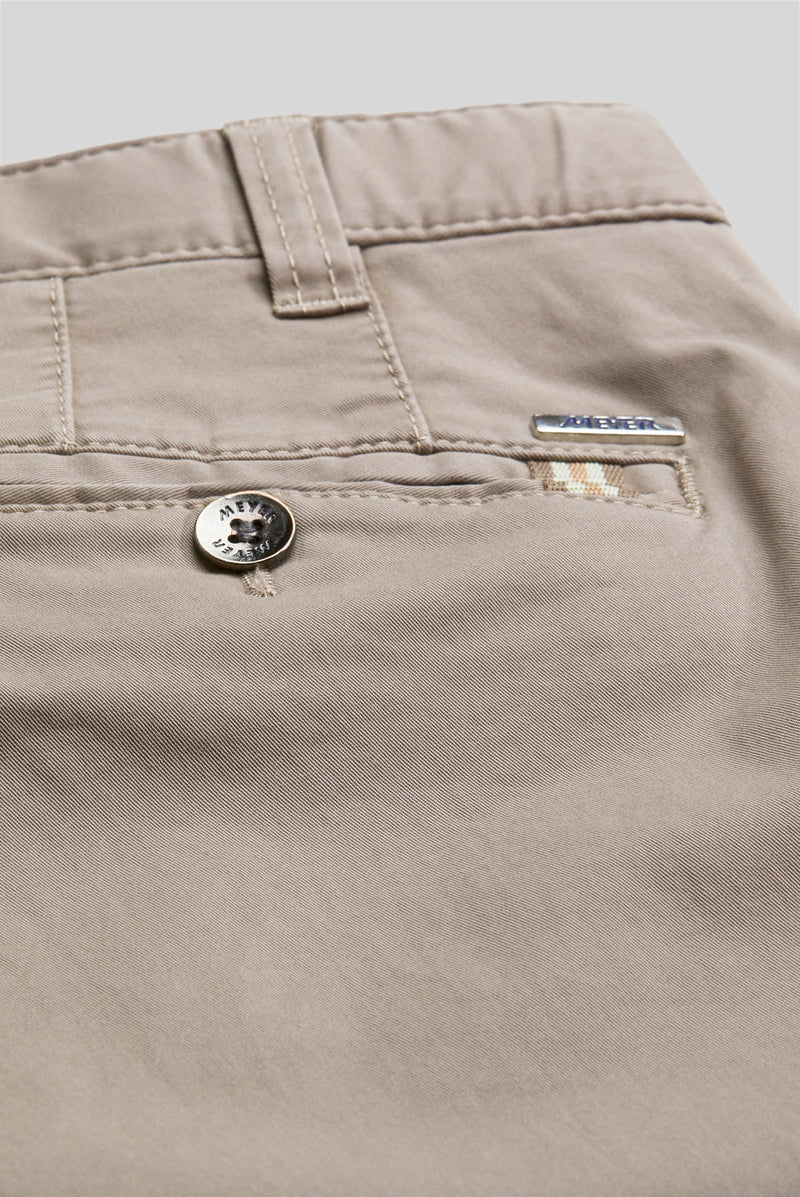
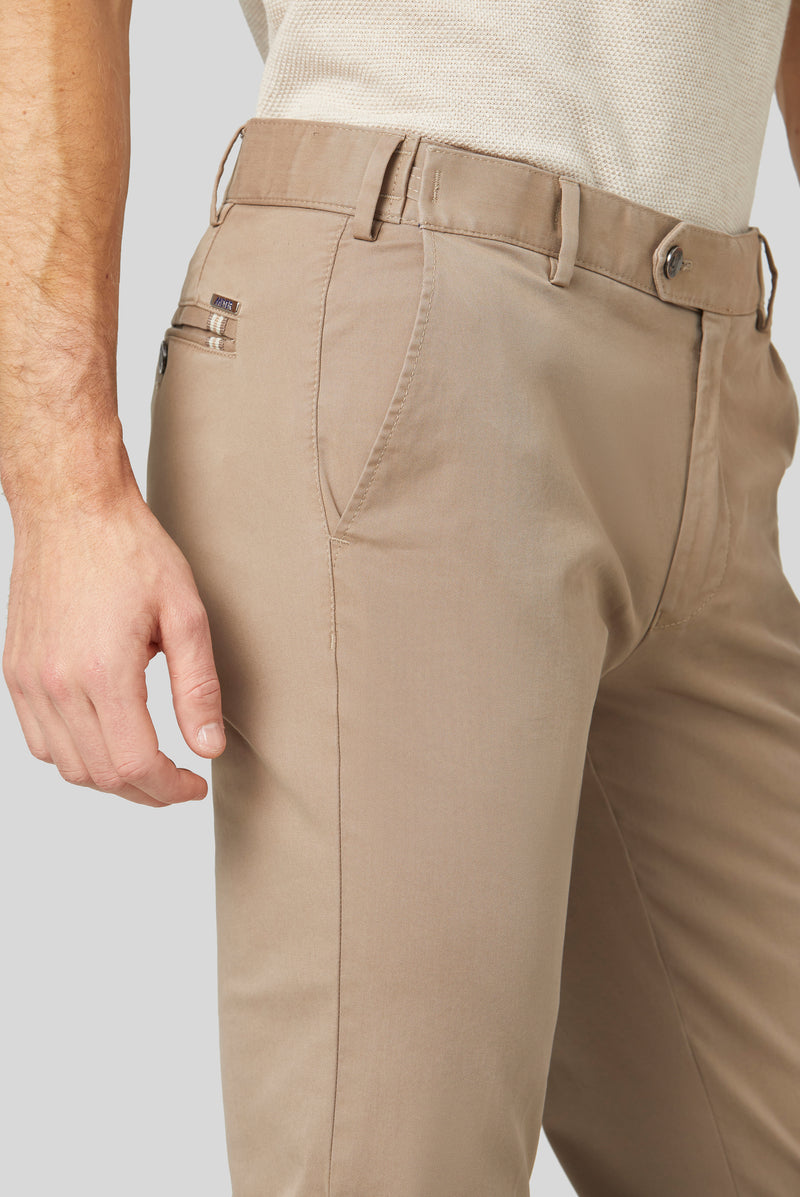
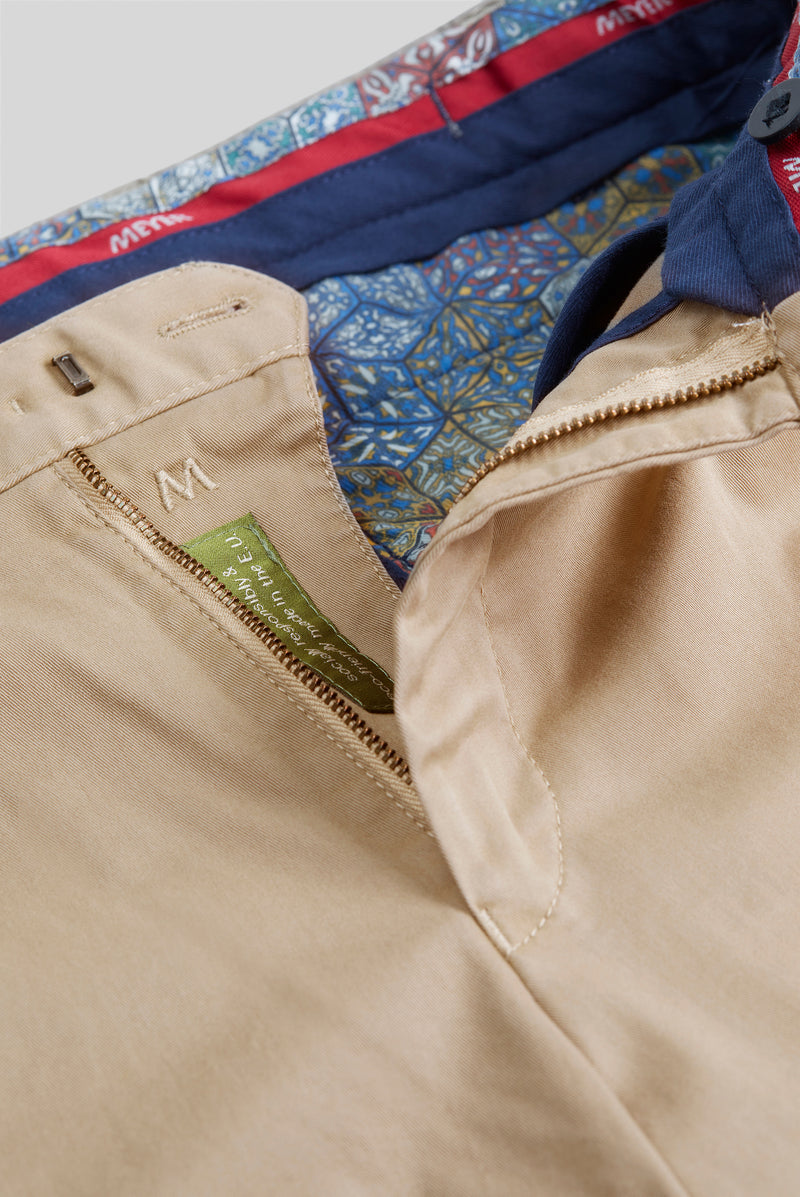
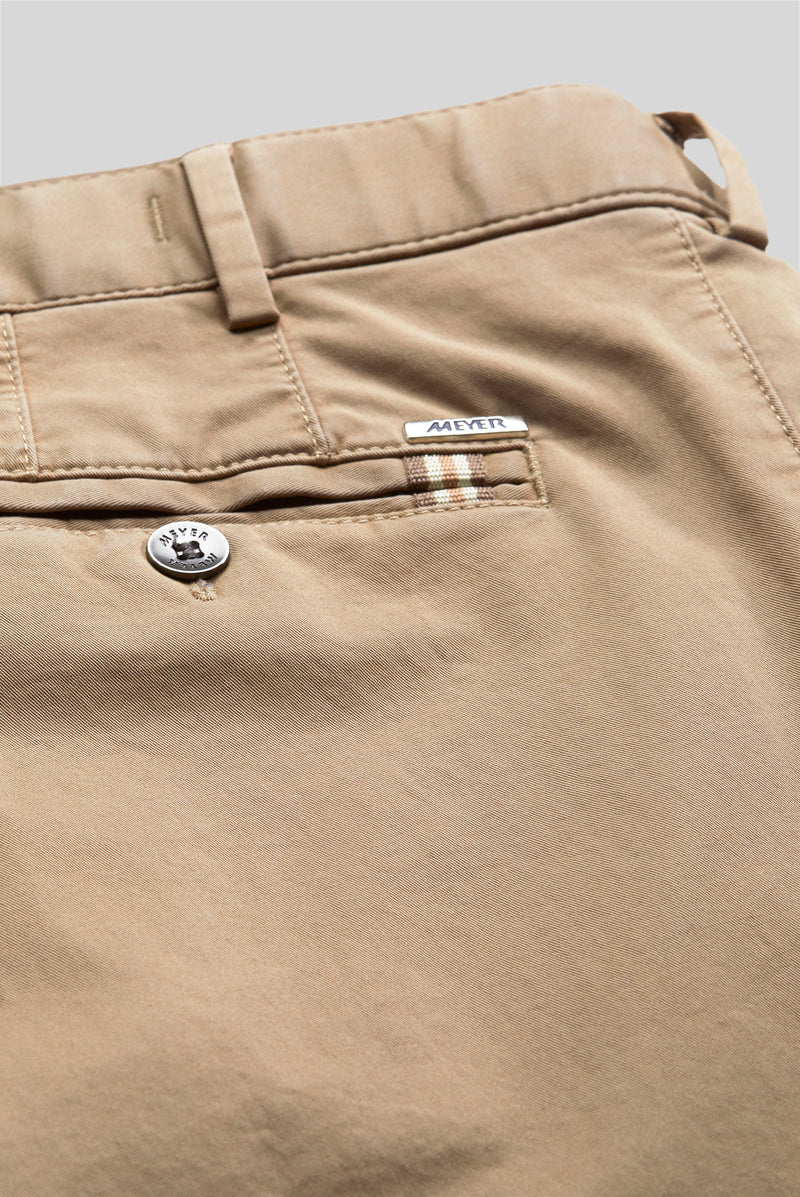
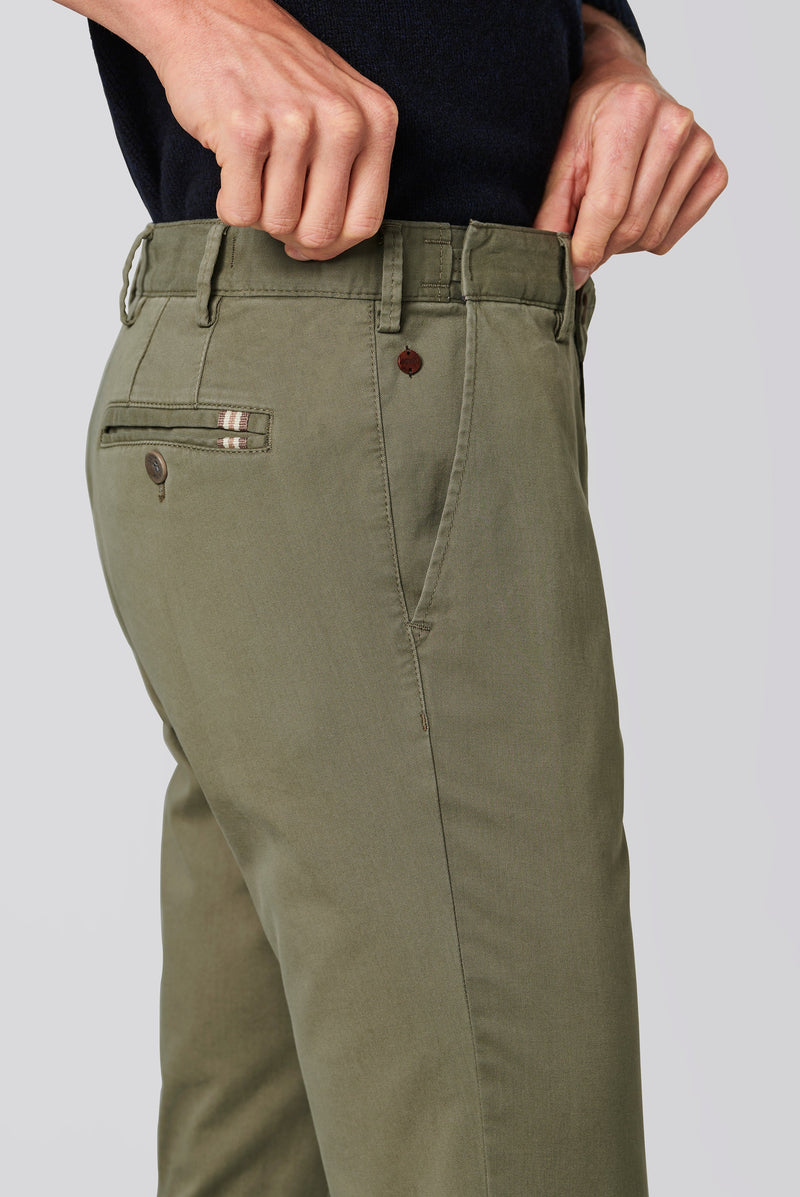
- How high-quality are the fabric, seams, waistband, pockets and components?
- Is the design timeless enough to be worn across several seasons?
- Are the trousers easy-care and robust enough for regular everyday wear?
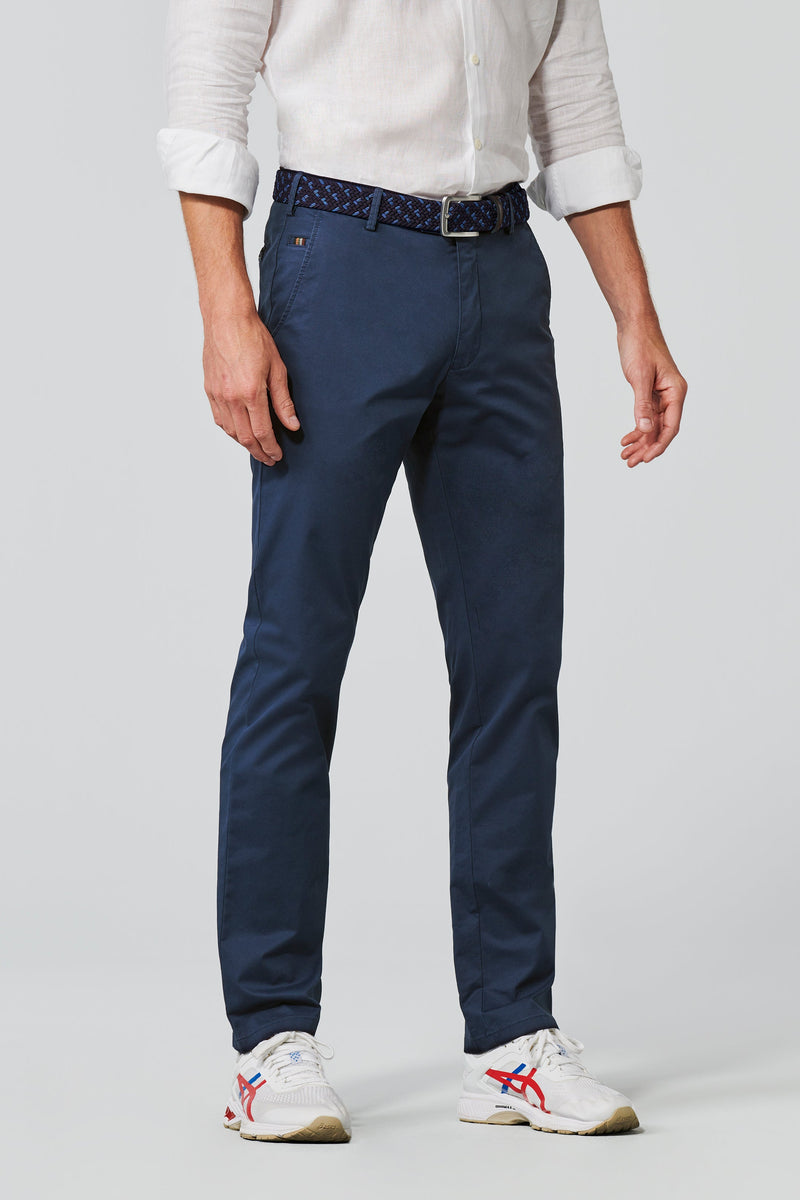
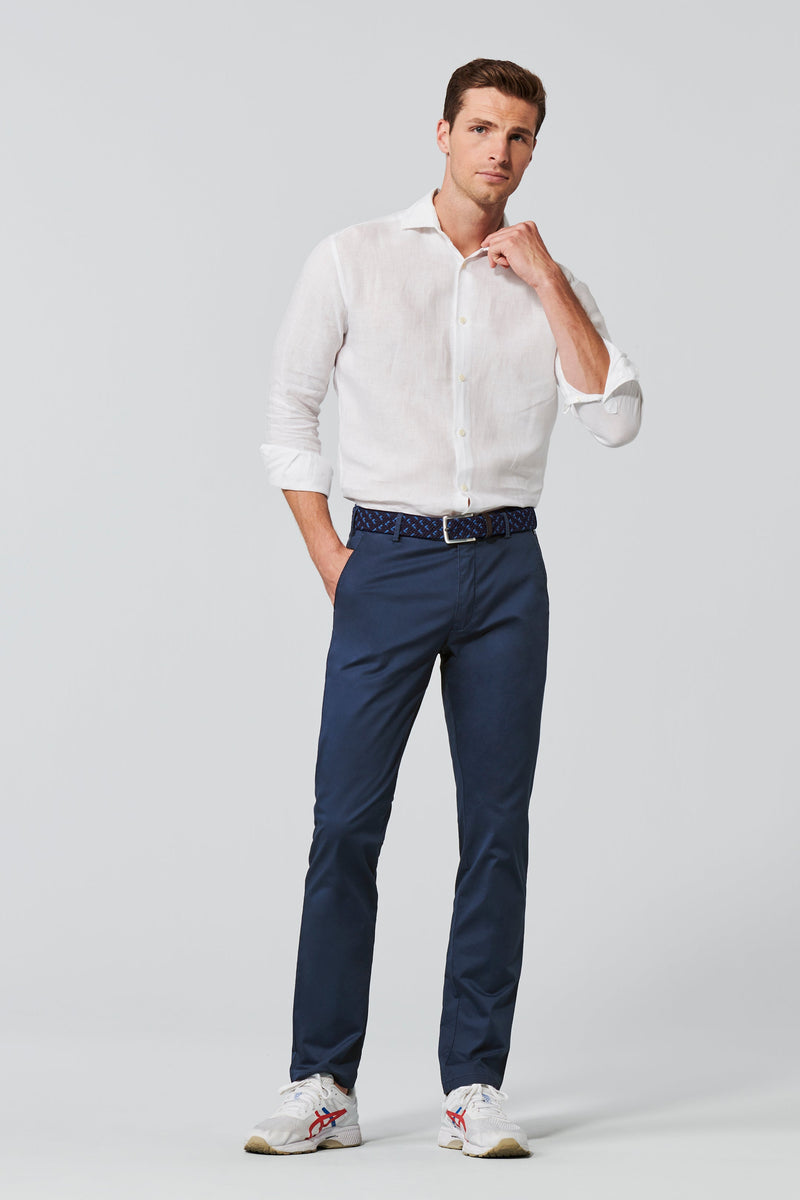
- Do the trousers really fit well? Only garments that people enjoy wearing remain in use for a long time.
Why fit and care are part of sustainability
A pair of trousers can be made from more responsibly sourced materials and still be rarely worn if it is uncomfortable or does not fit properly. That is why fit and wearing comfort are part of any meaningful sustainability assessment.
Care also plays an important role. Washing, drying and storing high-quality trousers according to the care instructions can extend their lifespan. Sustainability is therefore not only decided at the moment of purchase, but also in everyday use.
Frequently asked questions about sustainable men's trousers
What are sustainable trousers?
Sustainable trousers are trousers that are designed more responsibly across the entire life cycle: from materials and production to quality, care and long-term use.
Are trousers made from organic cotton automatically sustainable?
No. Organic cotton is an important building block, but it is not the only decisive factor. Workmanship, certifications, production conditions, transport routes, fit and durability must also be considered.
Which materials are more sustainable for men's trousers?
Relevant materials include organic cotton, certified cotton, recycled fibres, natural raw materials and particularly durable fabrics. The important point is that the material suits the intended use and can be worn for a long time.
Why is durability so important for sustainability?
The longer a pair of trousers is worn, the less often it needs to be replaced. This reduces new purchases, resource consumption, transport and textile waste.
Is European production more sustainable?
European production can be an advantage because transport routes can be shorter, standards more transparent and quality controls more direct. However, the decisive factors are the actual production conditions and verifiable proof.
Are MEYER trousers sustainable?
MEYER follows a responsible approach with its own European production, organic cotton, certified standards such as GOTS, MADE IN GREEN by OEKO-TEX and Fairtrade Cotton, and a clear focus on quality and durability. The specific materials and features can vary by model and should be checked on the respective product page.
What matters most when buying sustainable chinos?
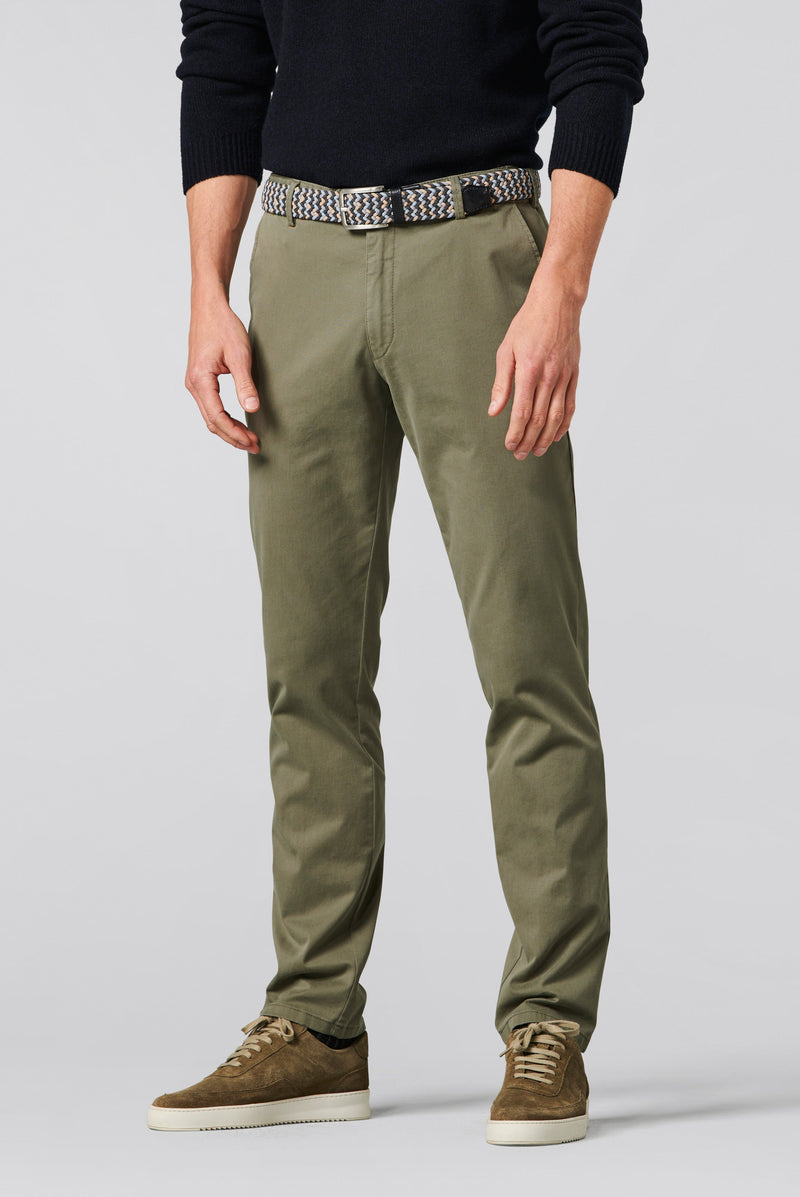
For more sustainably designed chinos, consumers should look for certified materials, a good fit, durable workmanship, timeless design, transparent production and easy-care quality.
Conclusion: sustainability begins with better decisions
Sustainability is not created by one material, one label or one marketing term. It is the result of many responsible decisions along the entire product life cycle.
For men who want to buy more consciously, the more sustainable trousers are often those that combine high-quality materials, transparent production, certified standards, long-term comfort and exceptional durability.
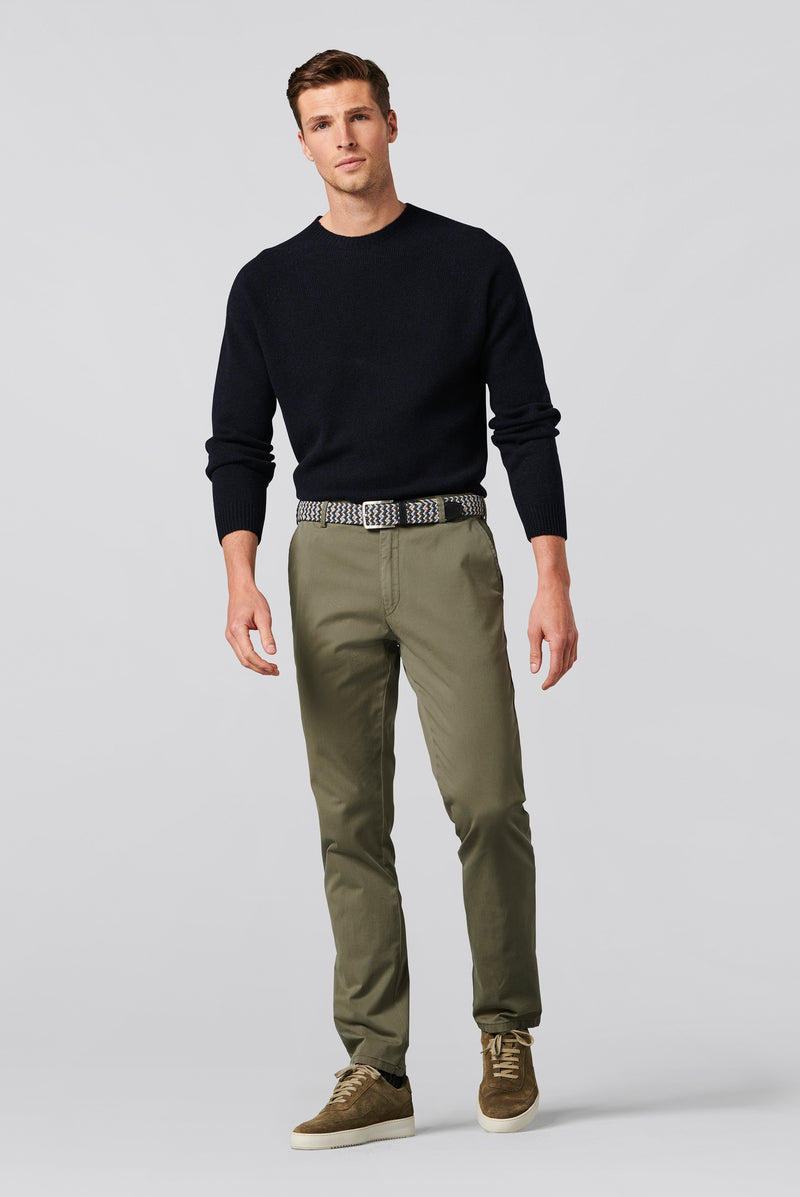
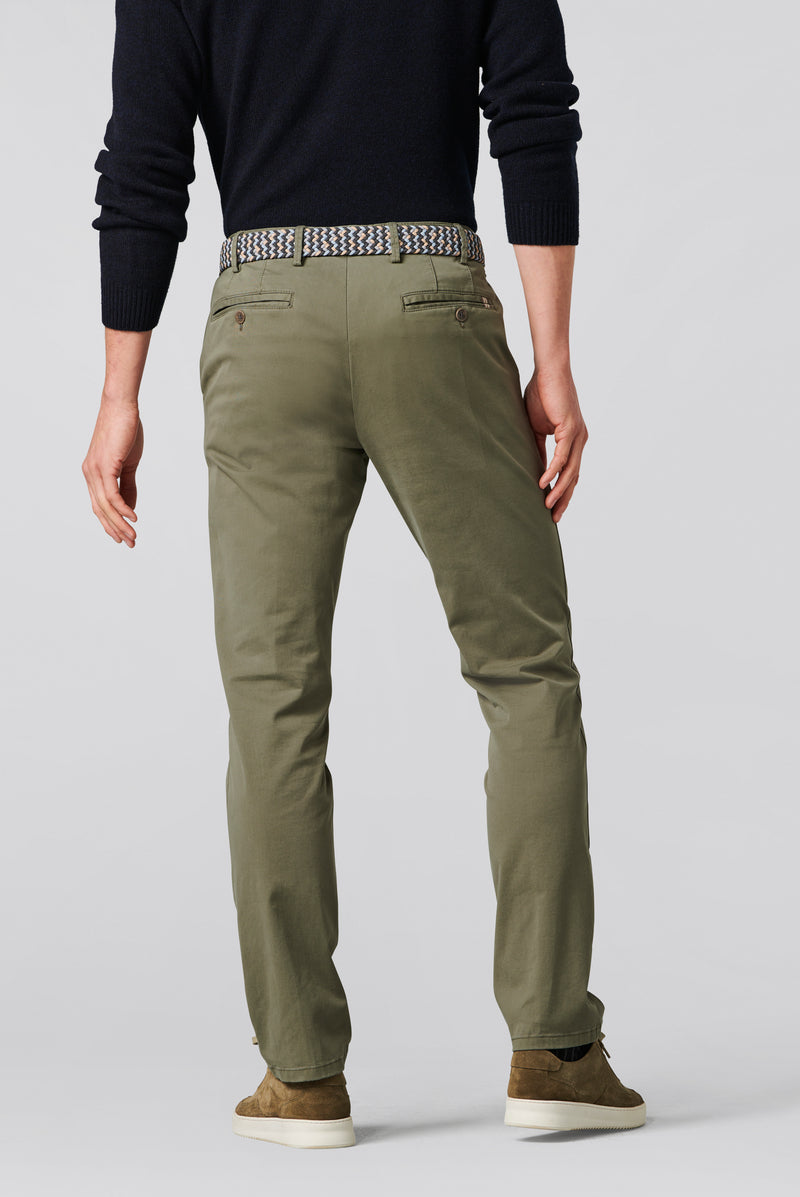
With its focus on own European production, more responsible materials, certifications, quality and consistency, MEYER shows how modern men's trousers can combine style, comfort and more conscious consumption.
Next step
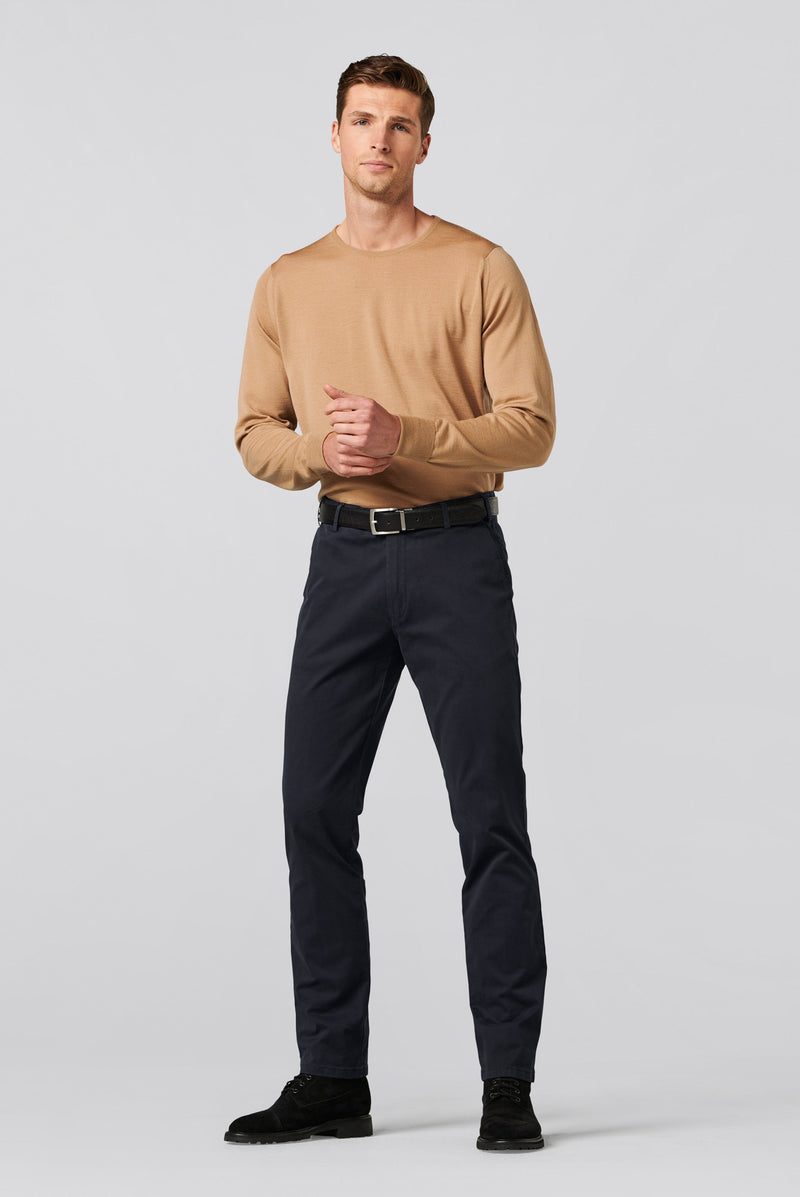
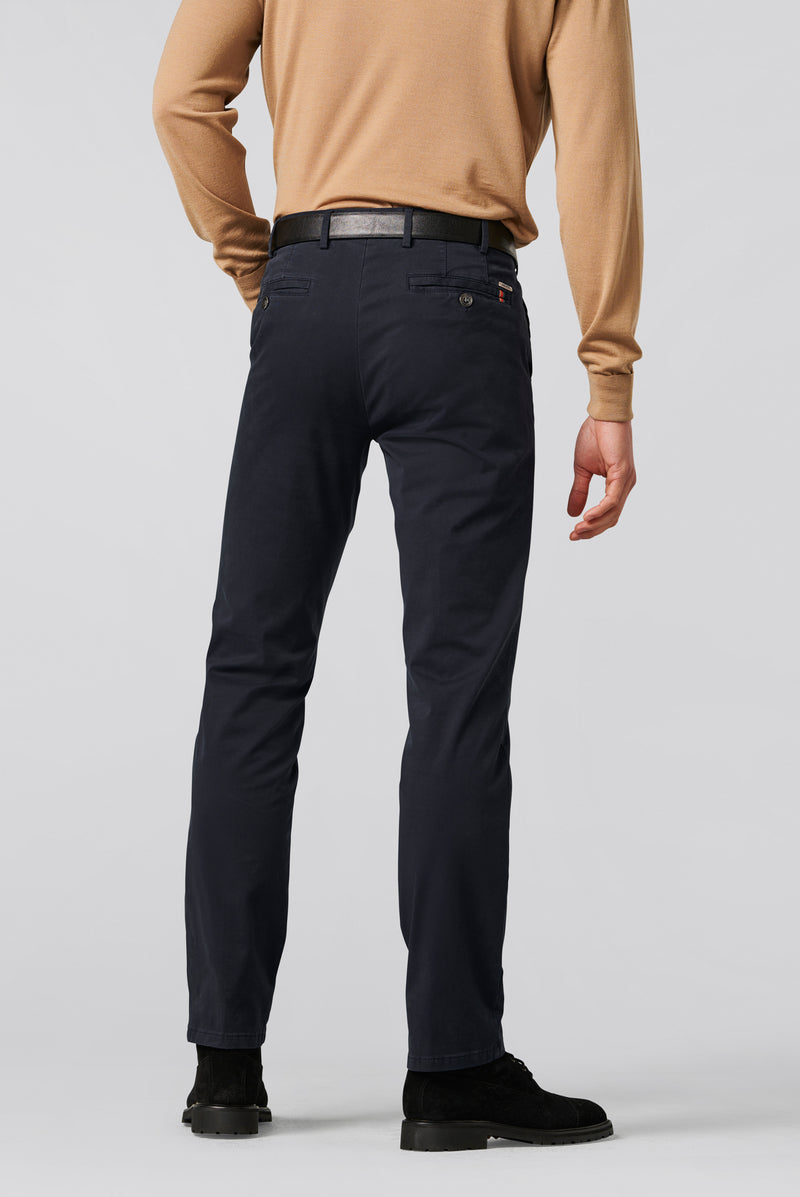
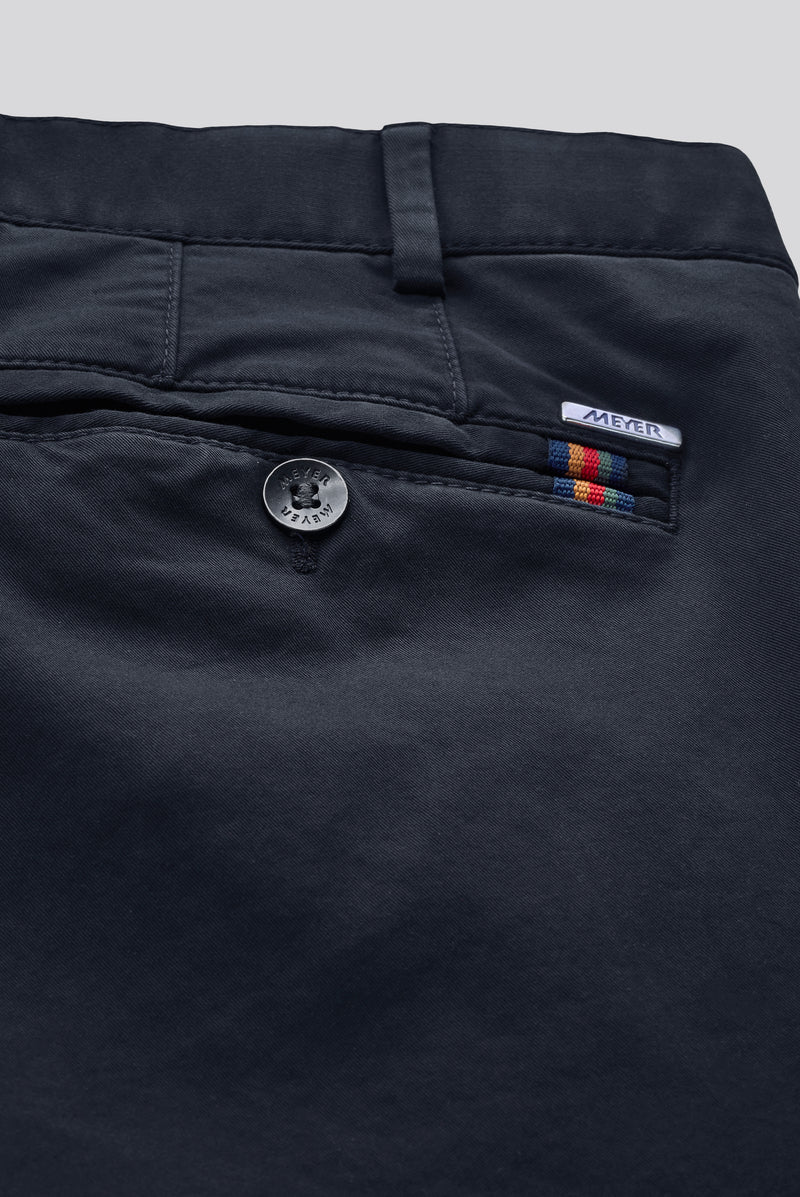
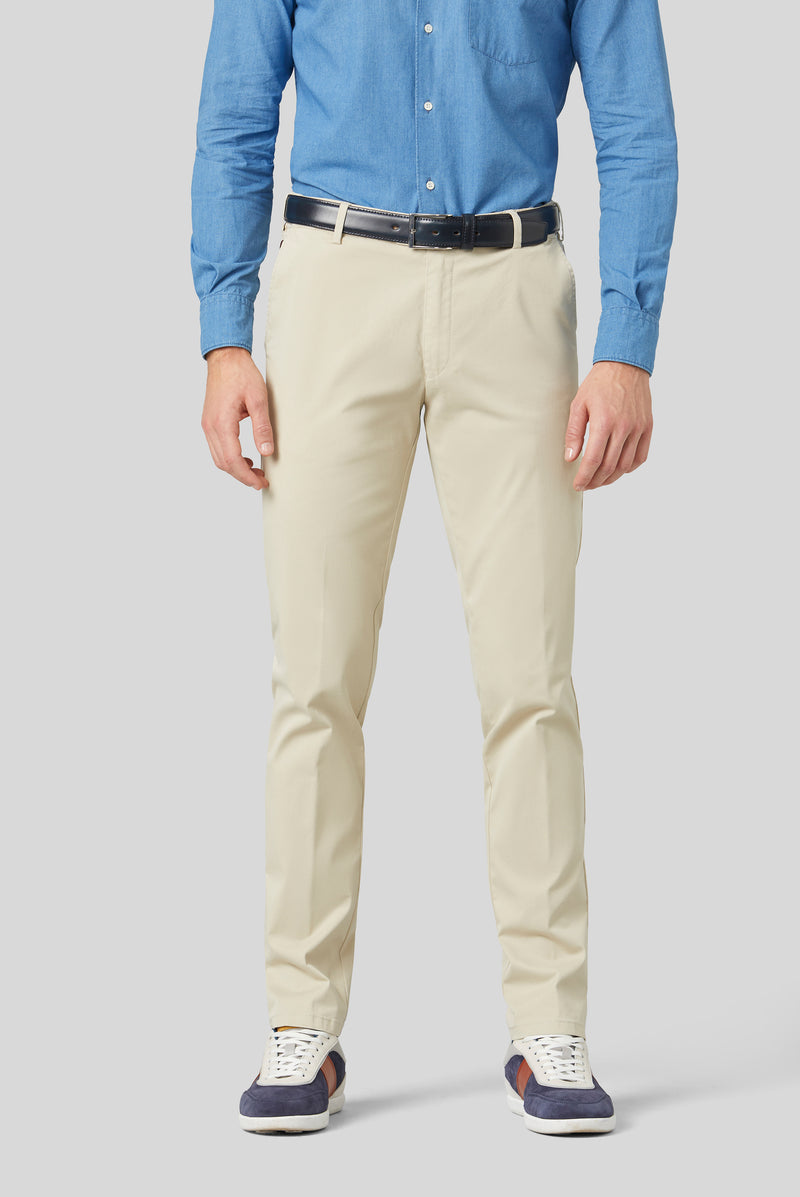
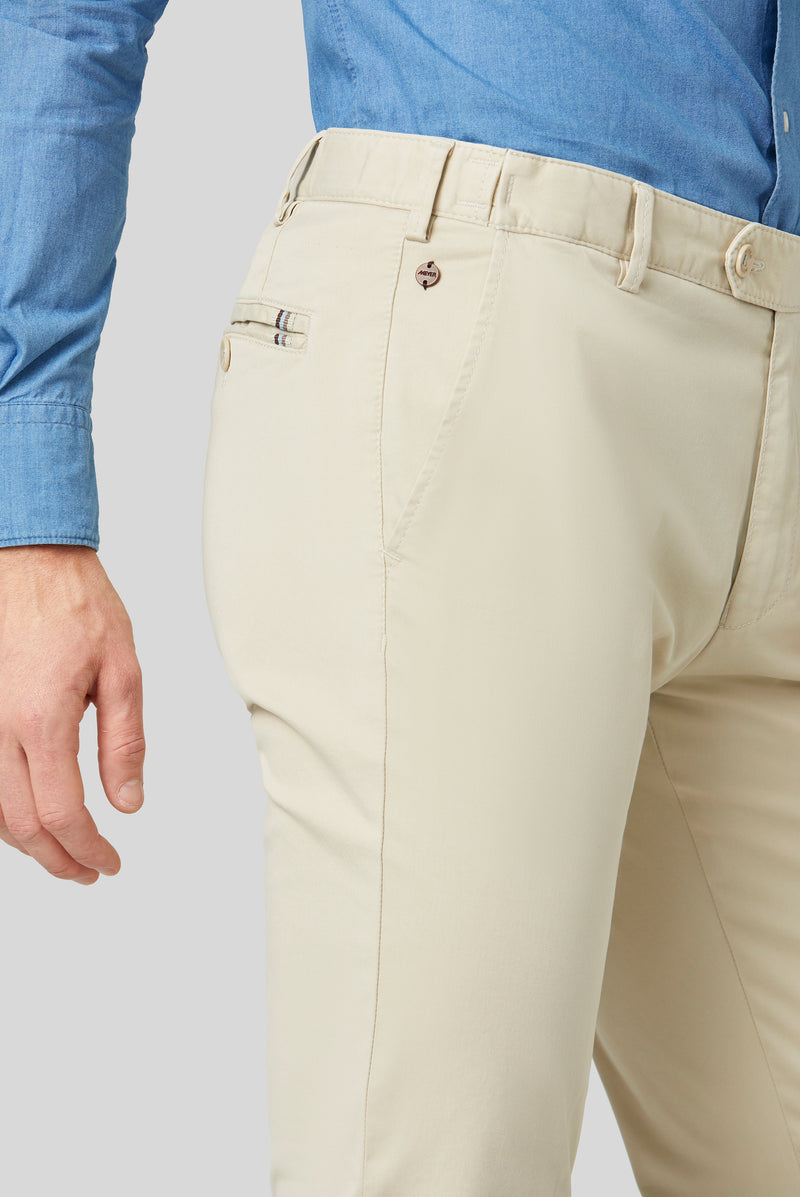
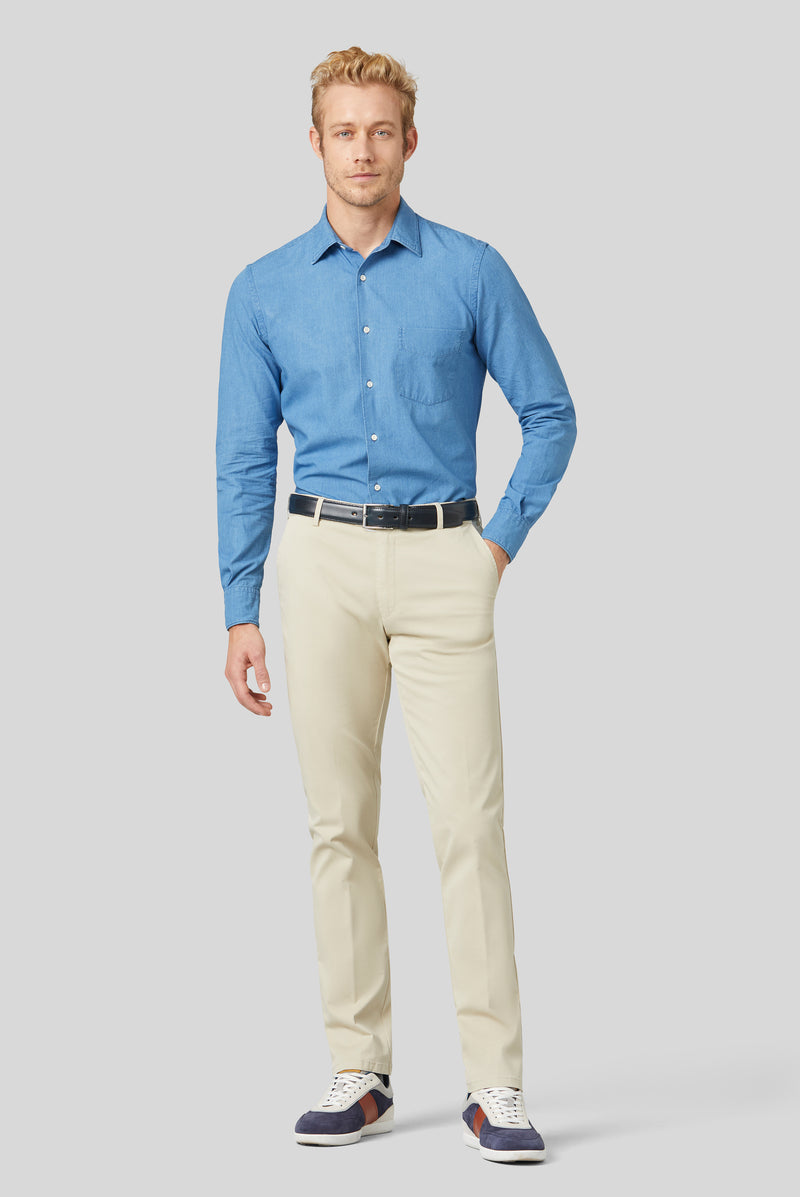
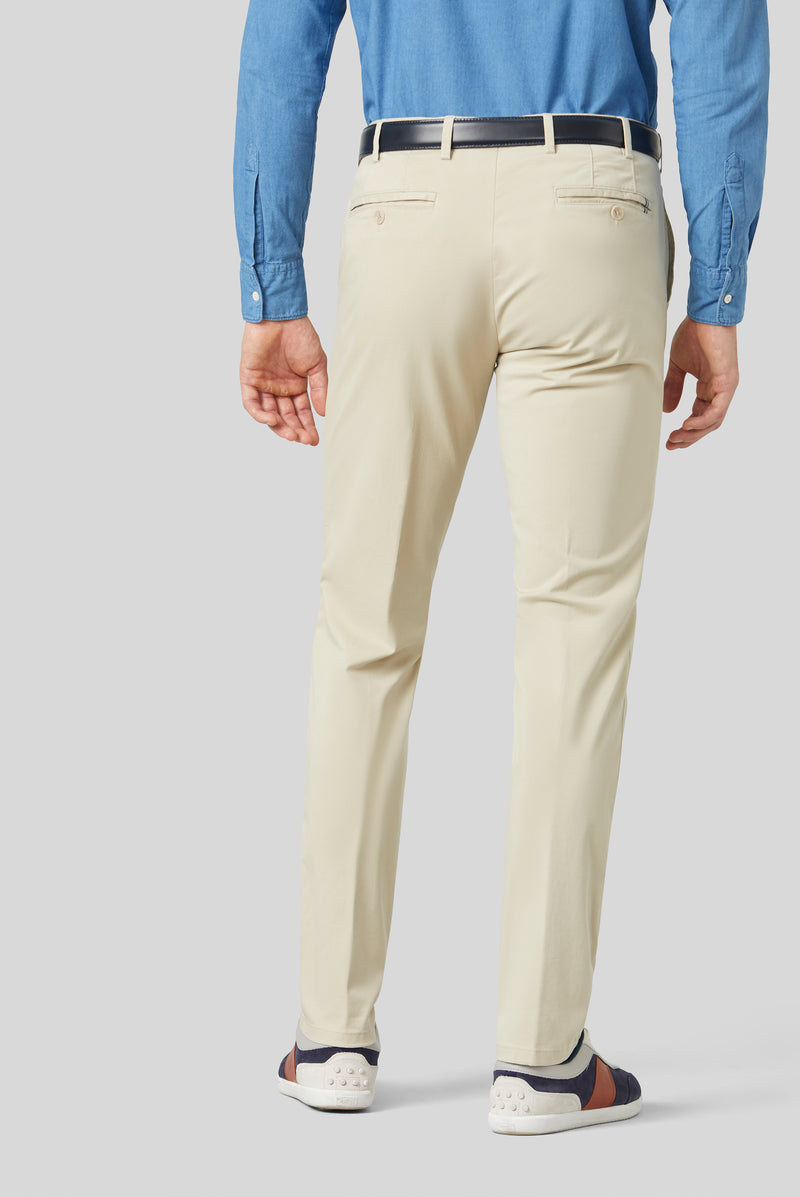
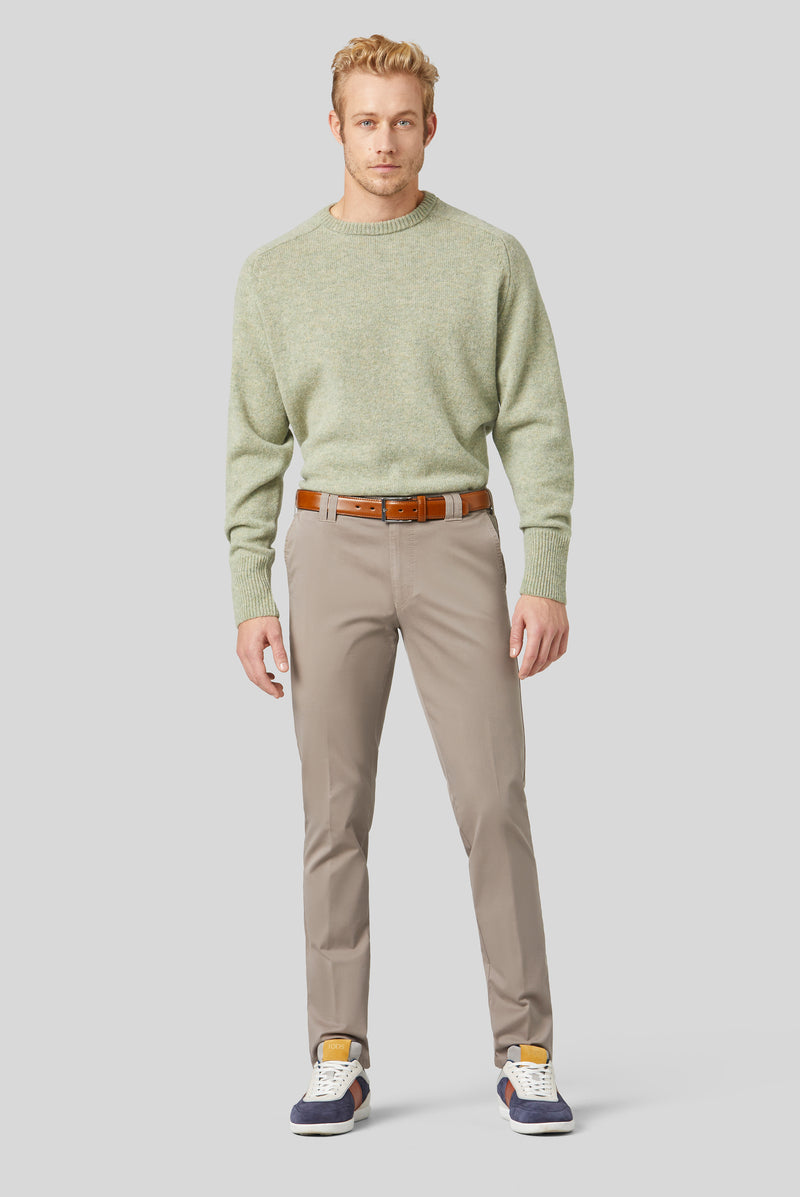
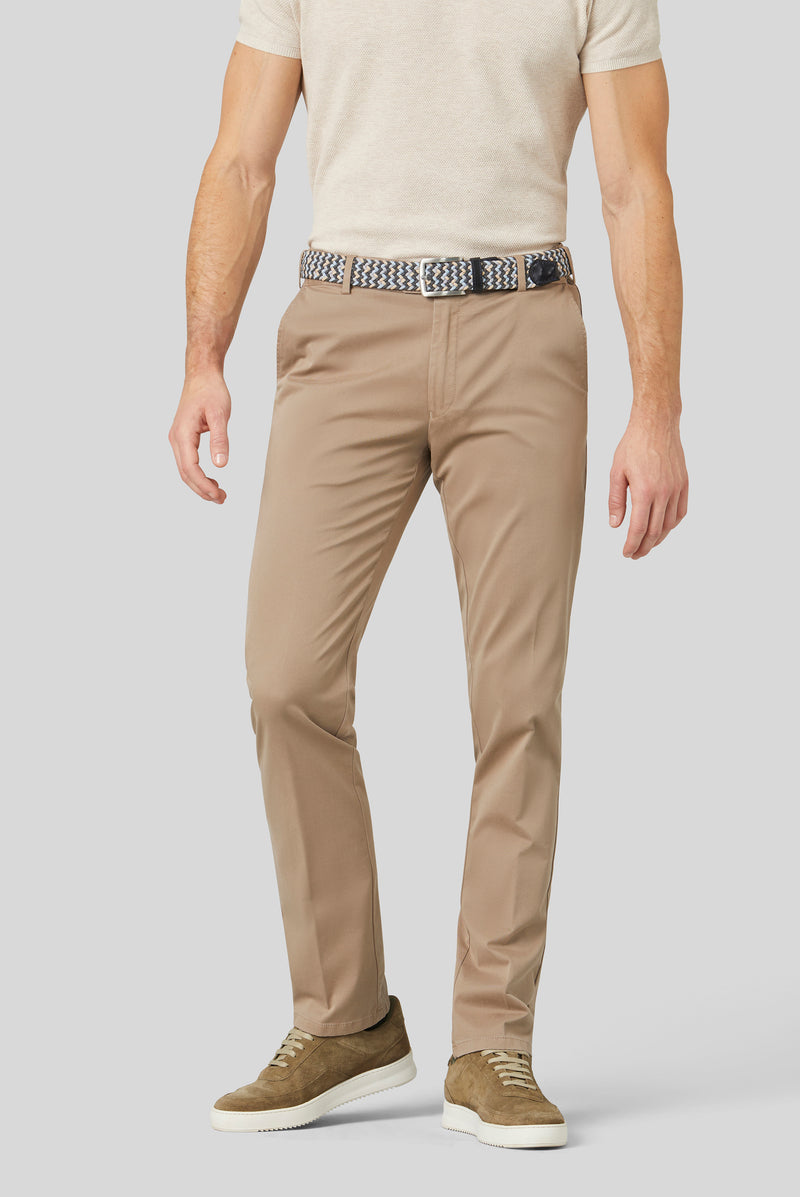
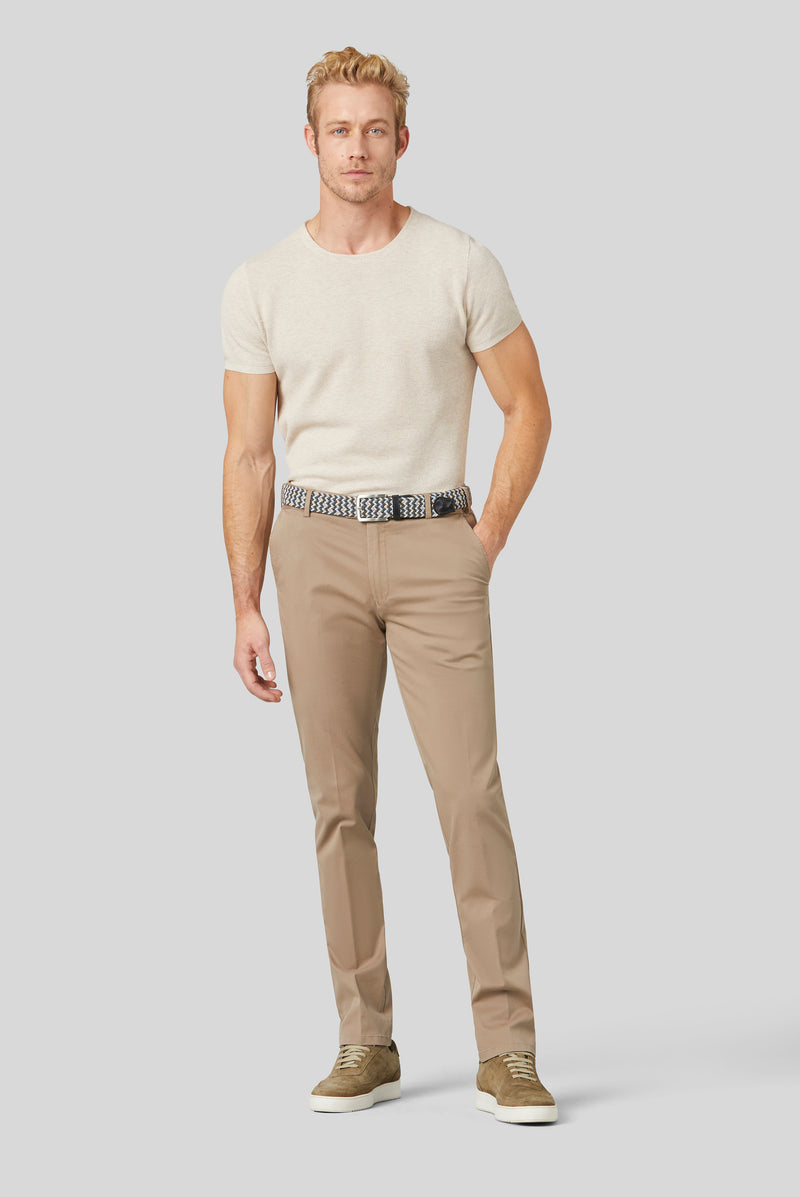
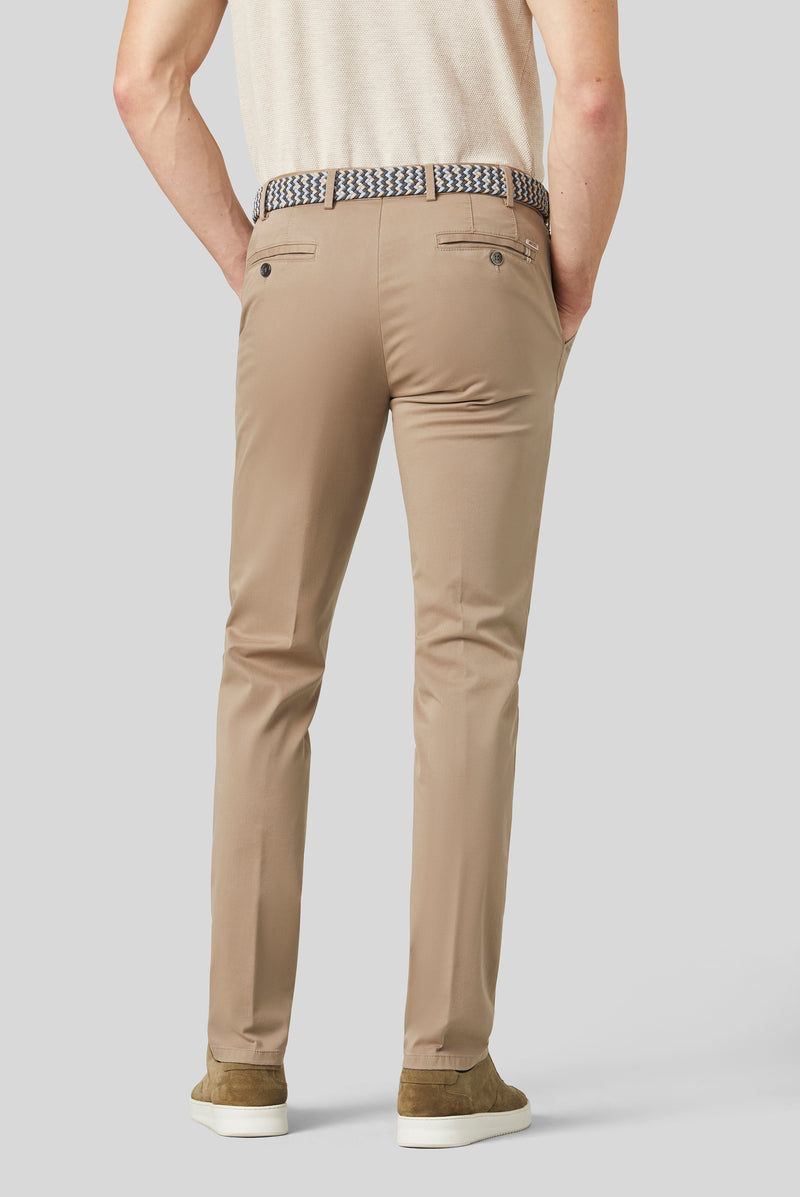
Discover more sustainably designed men's trousers from MEYER and pay attention to material, fit, certifications, care instructions and the specific product features of each model.
Discover sustainable trousers
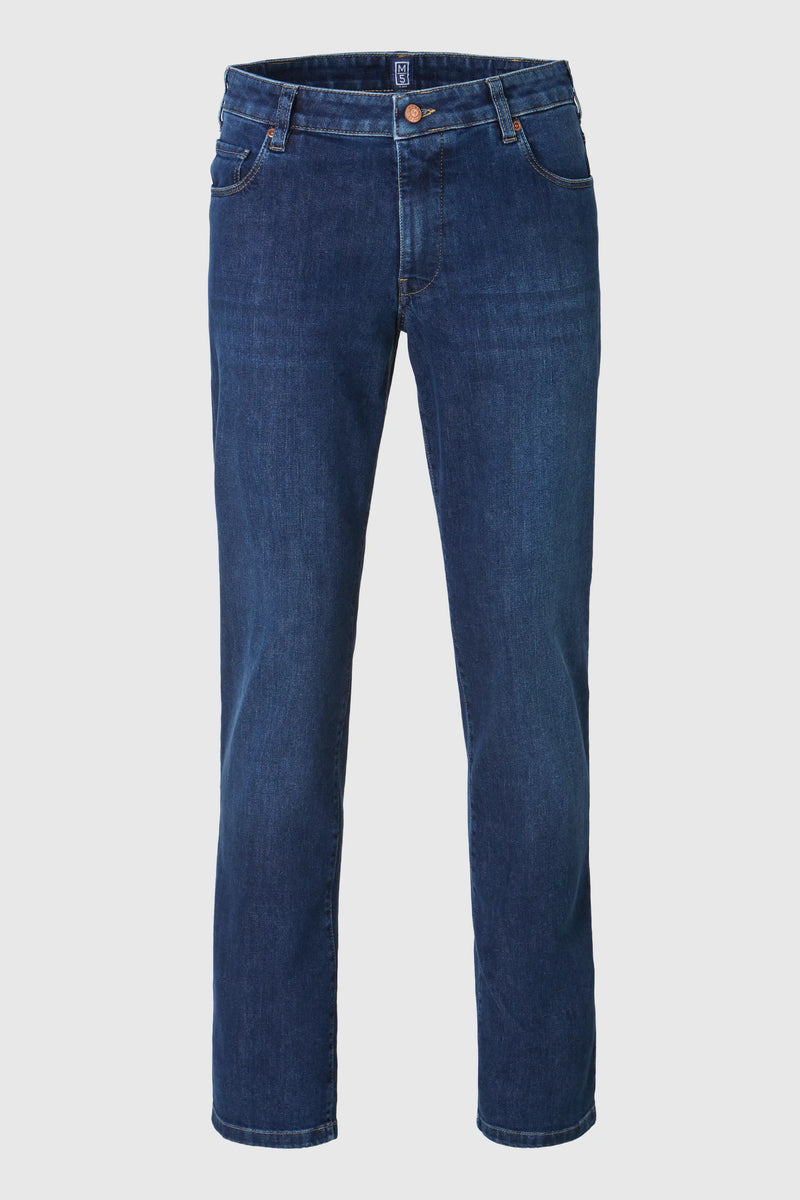
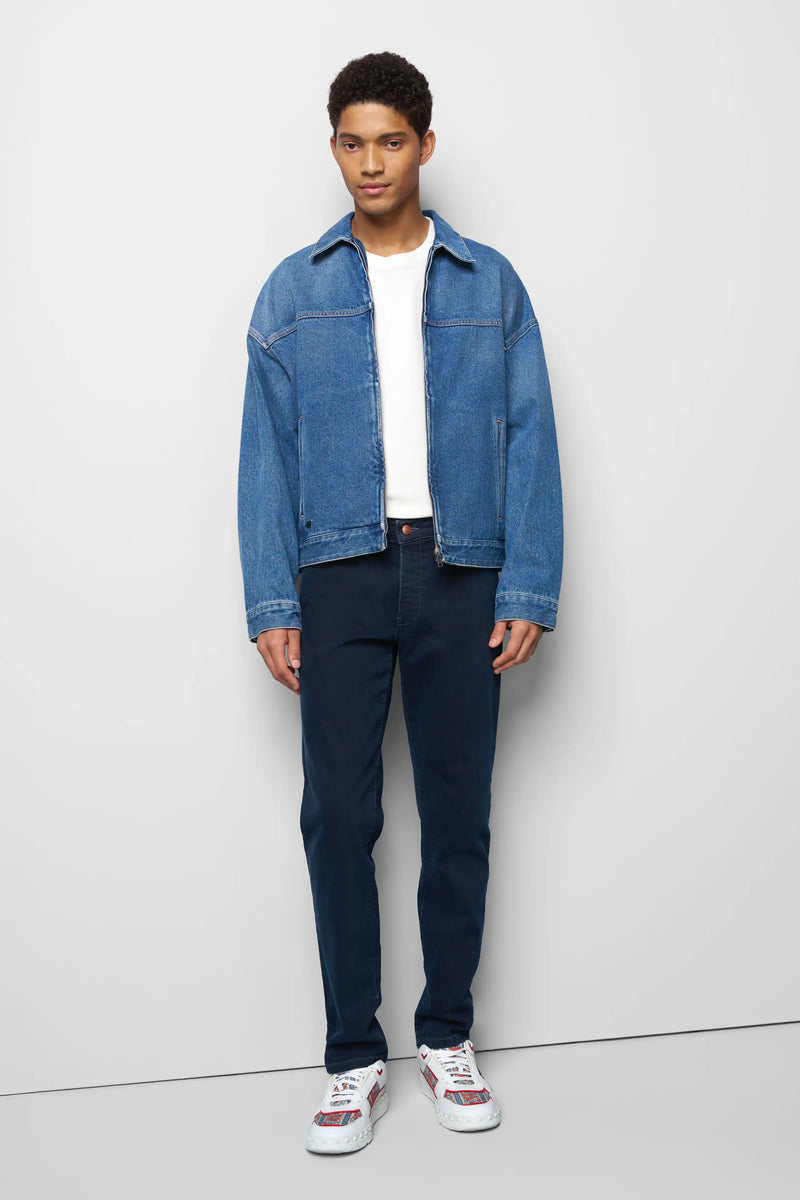
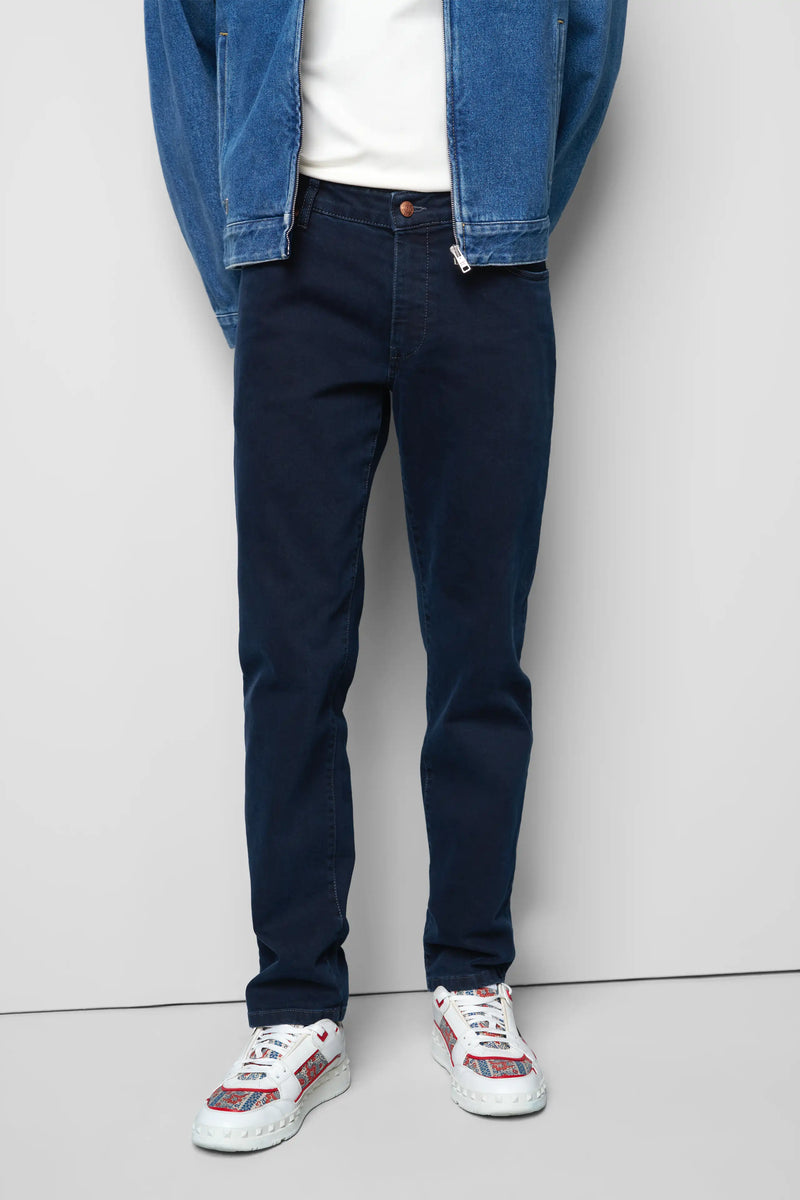
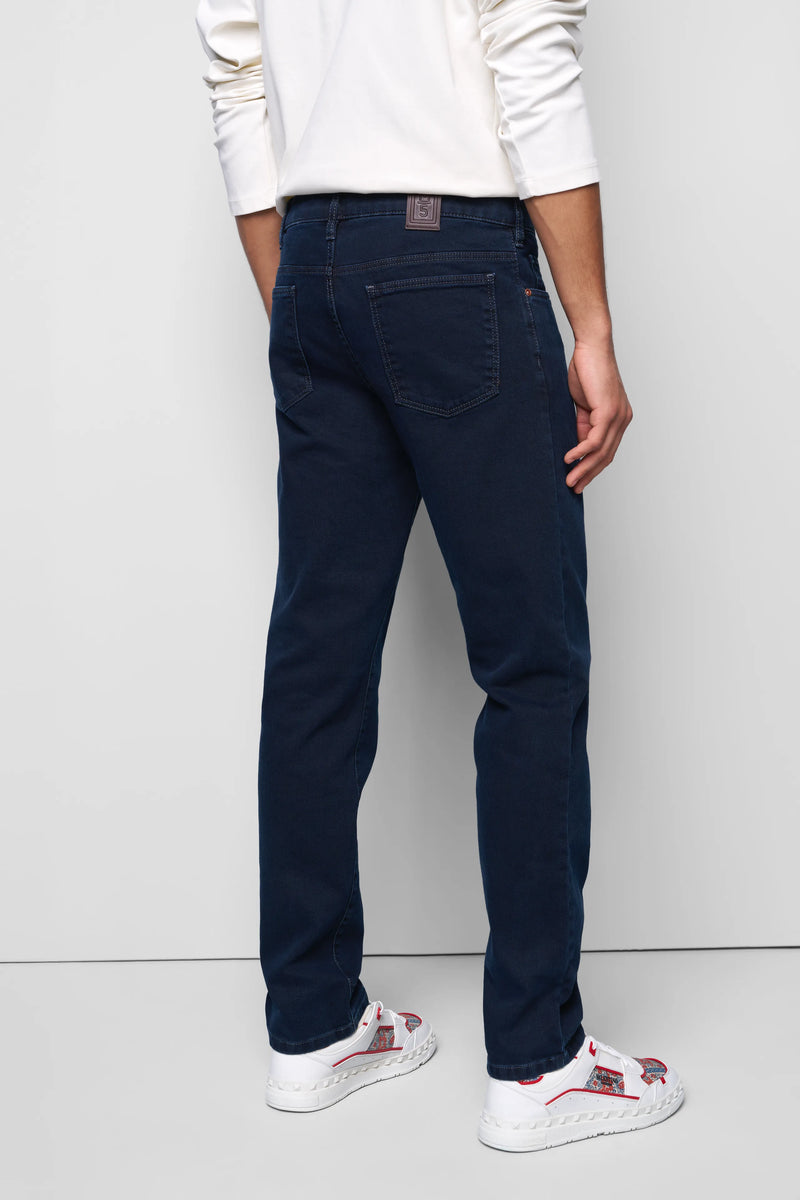
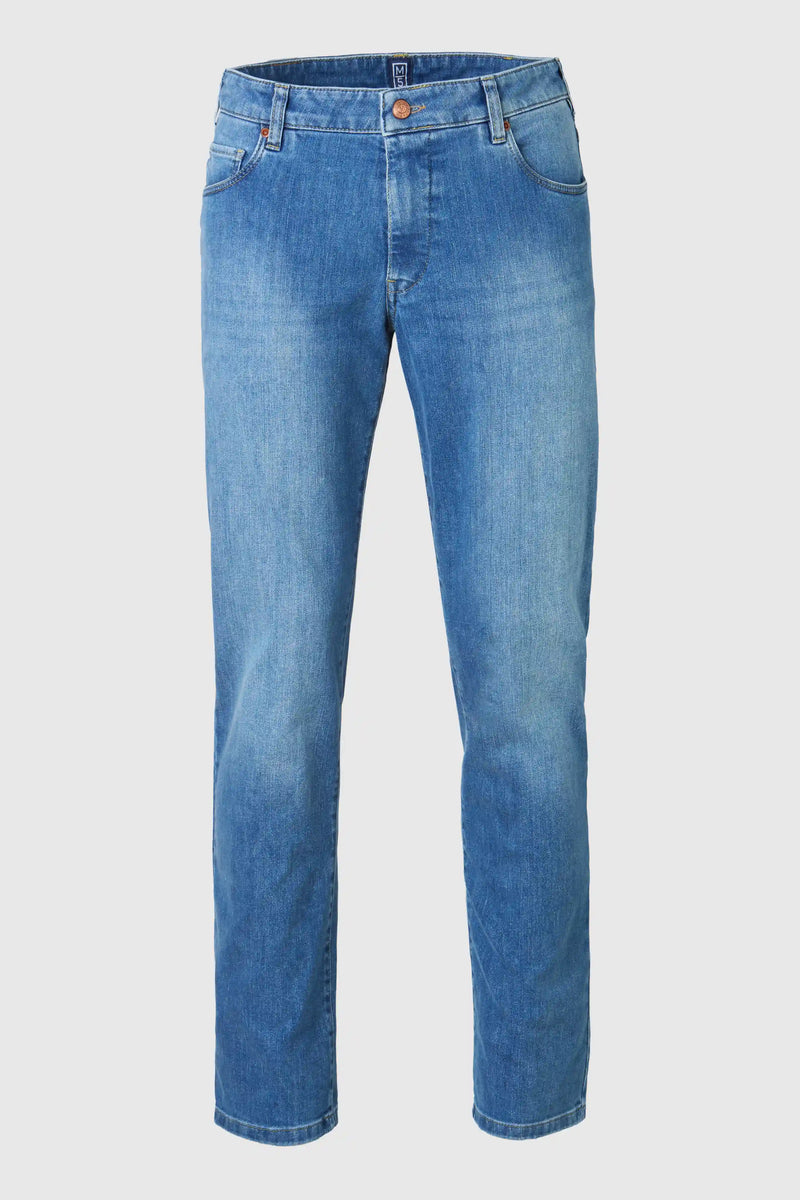
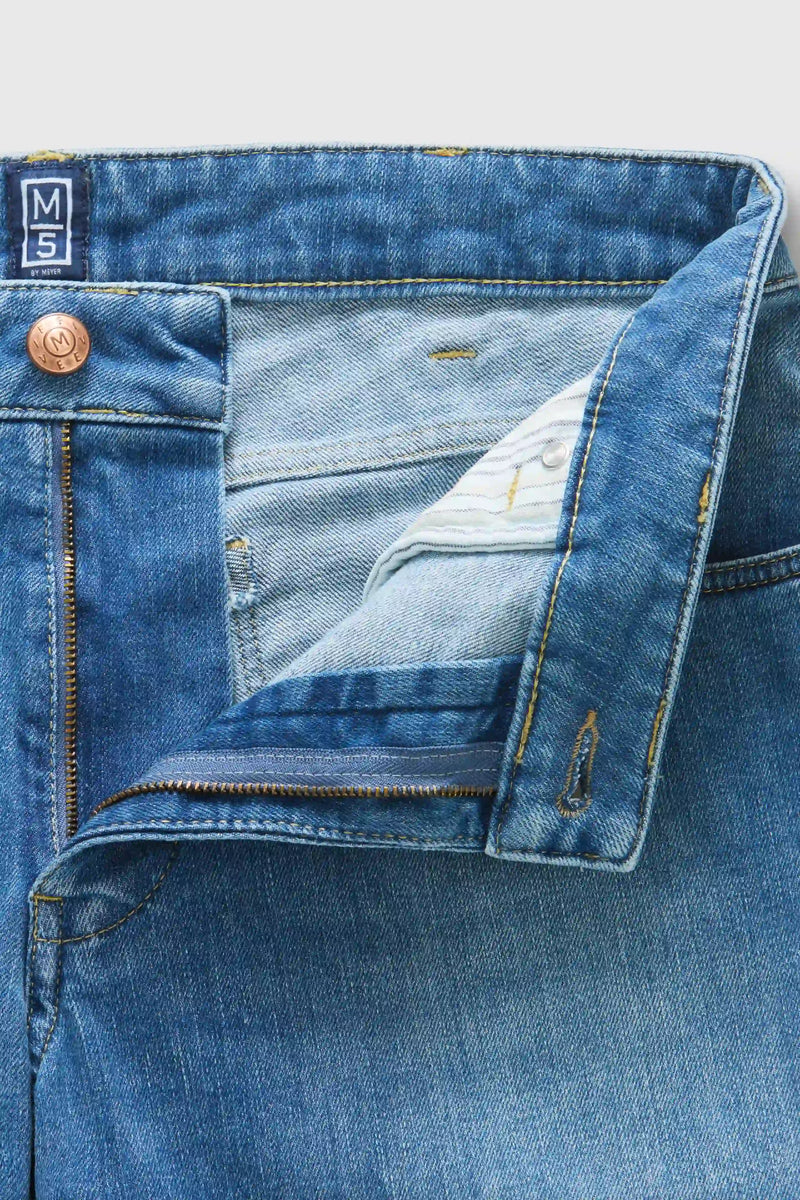
- Bestseller

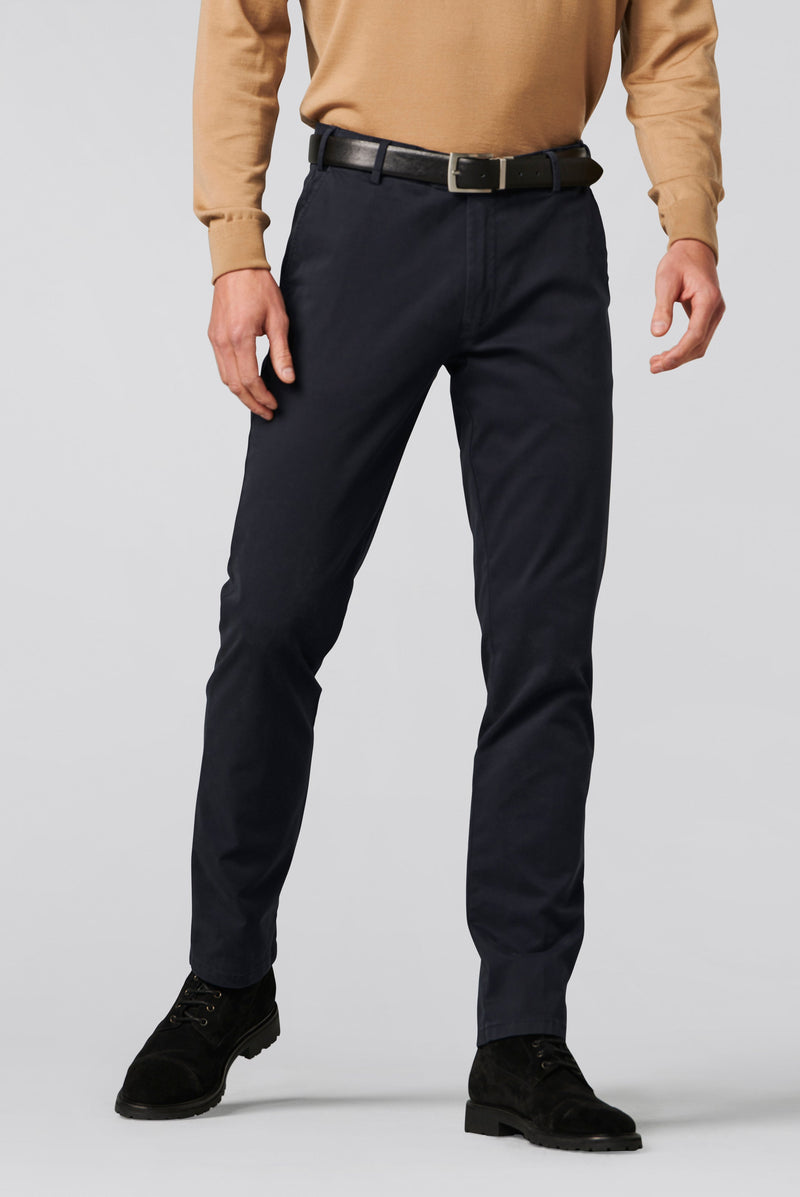
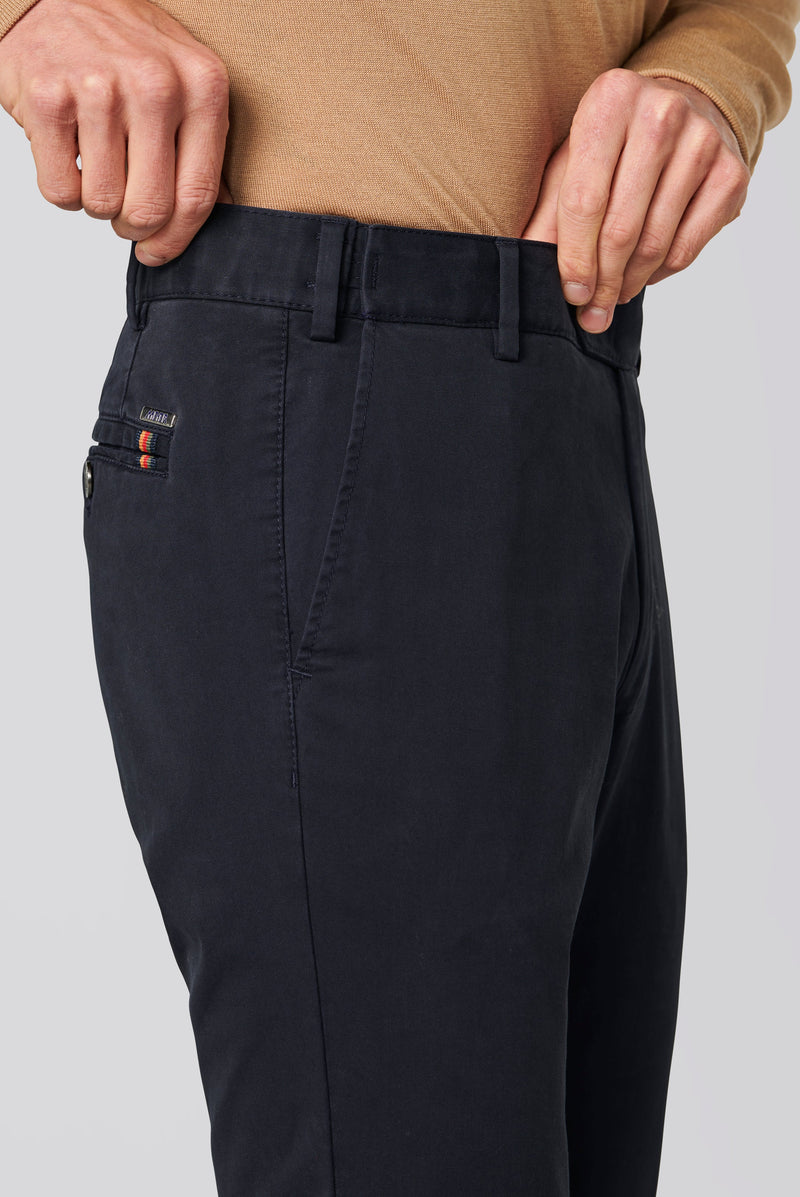
- Bestseller